
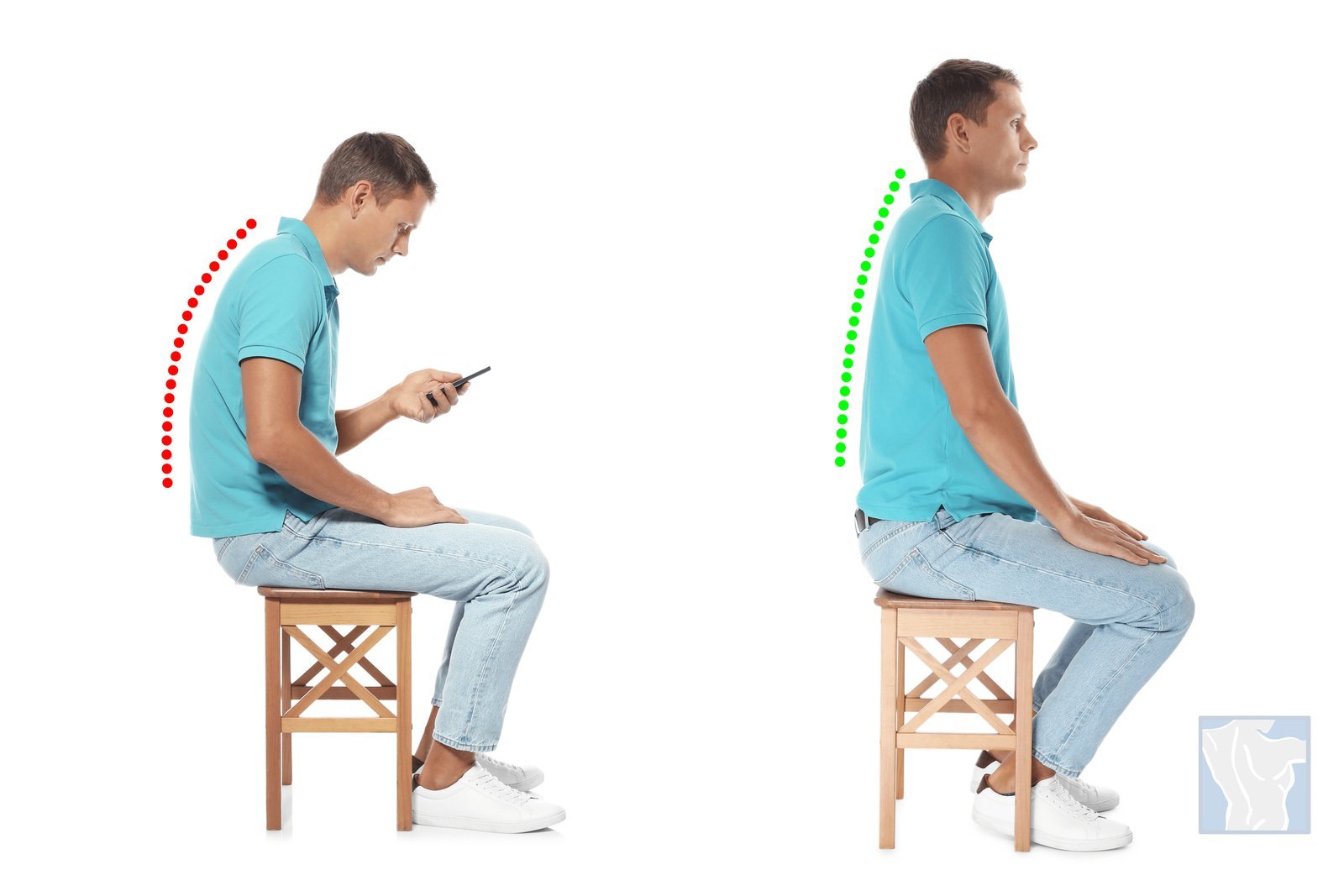
You can improve your daily comfort and reduce strain by aligning your spine and supporting your pelvis to sit with a straight back. The most common cause of slouching is a chair that’s too low or lacks proper lumbar support, forcing your shoulders to round forward.
Why your back struggles to stay straight
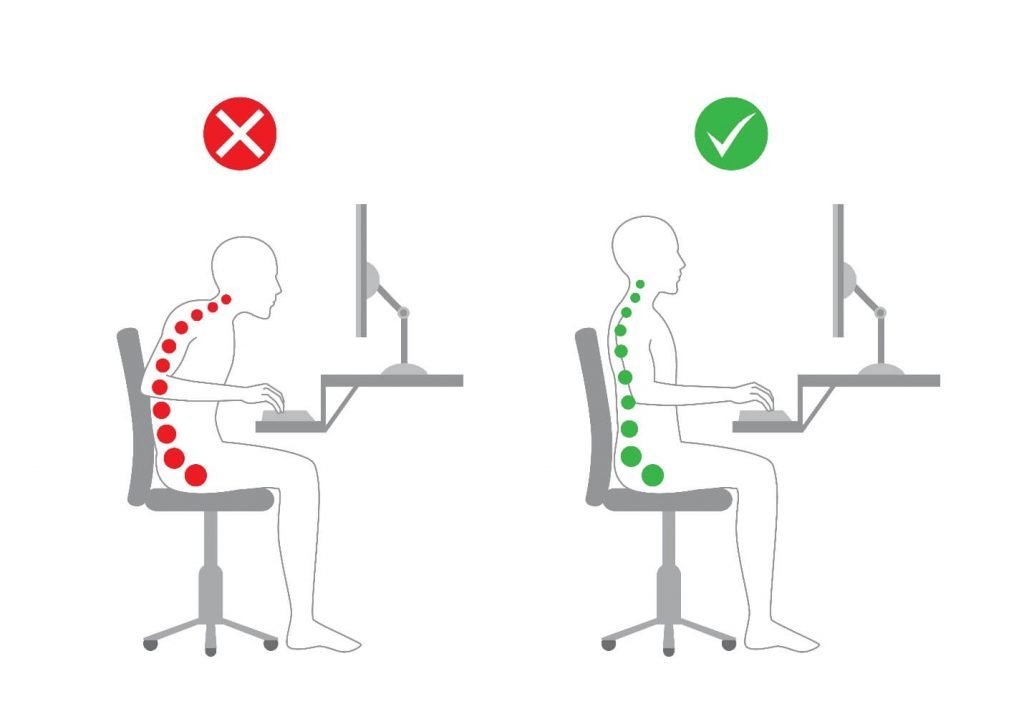
Your body isn’t designed to stay in one position for eight hours a day, which is why your muscles tire and your spine begins to curve. When you sit without support, your lower back loses its natural inward curve, known as the lumbar lordosis. This shifts the weight of your torso onto your spinal discs rather than the bony structures of your pelvis. If you work in an office, you may notice that your head drifts toward your screen as the day goes on. This is a sign that your core muscles are fatigued and are no longer holding your upright position.
Align your pelvis and spine
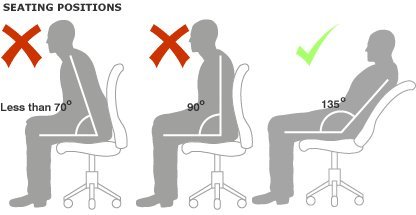
To start, push your hips all the way to the back of your chair so your lumbar spine touches the backrest. If your chair has a fixed back, place a small, firm cushion or a rolled-up towel behind your lower back to maintain the natural curve. Keep your feet flat on the floor, about hip-width apart, and ensure your knees are at a 90-degree angle. If your feet dangle, use a footrest or a sturdy box to raise them until your thighs are parallel to the floor. You’ll know this is correct when you feel the weight of your torso evenly distributed through your sitting bones.
Adjust your screen and desk
Your eye level should align with the top third of your monitor to keep your neck in a neutral position. If you use a laptop, place it on a stand and connect an external keyboard and mouse so your wrists remain straight. According to the Occupational Safety and Health Administration ergonomics guidelines, you should keep your upper arms close to your body and your elbows bent at an angle between 90 and 120 degrees. If you feel tension in your shoulders, your desk is likely too high; lower it until your forearms rest comfortably without your shoulders shrugging upward.
Strengthen your core for stability

Sitting upright requires active engagement from your abdominal and back muscles, not just a rigid pose. If you find yourself collapsing after only twenty minutes, your core strength is likely the limiting factor. You can build this endurance by doing gentle pelvic tilts while seated: rock your pelvis forward to arch your back slightly, then rock it backward to flatten it against the chair. This movement helps distribute synovial fluid within your joints and prevents stiffness. If you have existing chronic back pain, consult a physical therapist before starting any new strengthening routine, as they can identify specific muscle imbalances that require professional guidance.
Mistakes that ruin your posture
- Crossing your legs at the knees, which twists your pelvis and forces your spine into an uneven, rotated position.
- Leaning on one elbow, which causes your spine to curve laterally and puts excessive pressure on your shoulder blade.
- Slumping toward your monitor, which creates “tech neck” and strains the muscles at the base of your skull.
- Sitting on the edge of the seat, which removes all support from your lumbar spine and forces your muscles to do all the work.
How to maintain better alignment
If you’re currently working, check your position every hour to reset your form. The following table shows how to correct common daily habits that lead to slouching.
| If you’re doing this | Do this instead | Why |
|---|---|---|
| Slouching at the desk | Move hips to the back | Activates lumbar support |
| Legs crossed at knees | Keep feet flat on floor | Keeps pelvis level |
| Looking down at laptop | Raise screen to eye level | Prevents neck strain |
| Shoulders pulled forward | Roll shoulders down/back | Opens the chest cavity |
| Arms reaching for mouse | Bring mouse closer to body | Relaxes the trapezius |
Frequently asked questions
How long can I sit with a straight back before I get tired?
Most people can maintain an active, straight posture for about 20 to 30 minutes before their muscles begin to fatigue. If you feel discomfort, stand up, stretch for one minute, and then return to your seat to reset your alignment.
Is it safe to use a kneeling chair for my back?
Yes, it’s safe for most people, as these chairs encourage an open hip angle that helps maintain the natural curve of your spine. However, they aren’t for everyone; if you have knee issues, the pressure on your shins may cause pain.
What happens if I keep my back too straight?
You might experience muscle fatigue or tension if you hold a rigid, military-style posture for too long. A “straight” back should feel relaxed and balanced, not locked or tense, so allow for subtle, natural movements throughout your day.
How do I know if my chair is the right height?
Your chair is the correct height when your feet are flat on the floor and your thighs are parallel to the ground. If your knees are higher than your hips, you’ll round your lower back; if they’re lower, you’ll slide forward.
Can a standing desk fix my posture?
Yes, a standing desk can help if you alternate between sitting and standing every hour. It isn’t a permanent fix, however, as standing for too long without moving can cause its own set of leg and foot issues.
Why does my back hurt even when I sit correctly?
It happens because your muscles still need movement to stay healthy, regardless of your position. Even if your posture is perfect, you must take short breaks every hour to walk or stretch to avoid the negative effects of static loading.
Conclusion
Small changes to your workspace and regular movement are the best ways to ensure your back remains comfortable throughout the day. Listen to your body’s signals and adjust your chair or monitor whenever you feel tension building in your neck or shoulders.