
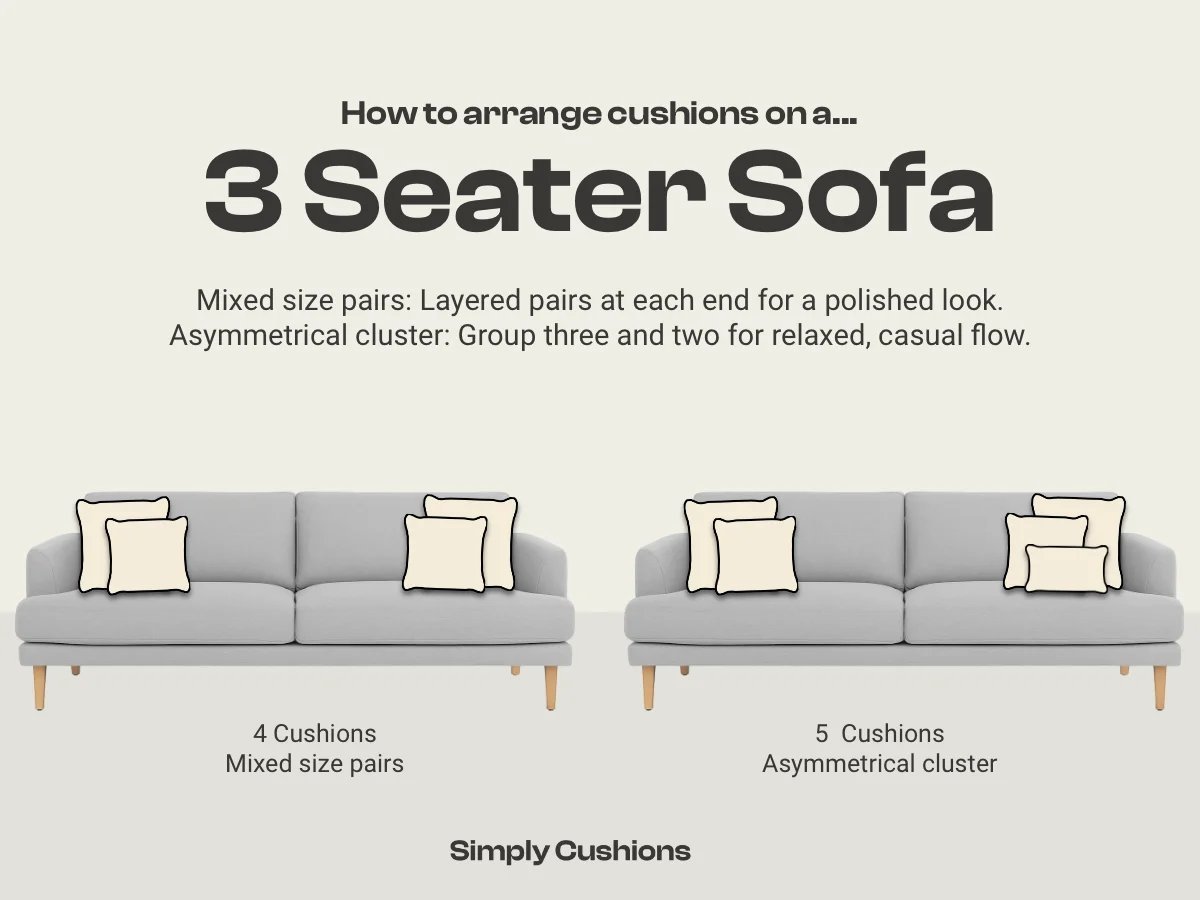
You should place between three and five throw cushions on a 3 seater sofa to achieve a balanced look. Most professional interior designers prefer an odd number of cushions on a 3 seater sofa, as this creates visual interest.
Styling your sofa cushions

- Use three cushions for a minimalist, clean look that doesn’t hide the sofa’s backrest.
- Select five cushions if you want a cozy, layered feel that fills the seating area.
- Place the largest cushions at the far ends of the sofa to frame the seating space.
- Layer smaller, decorative cushions in front of the larger ones to add depth and texture.
- Mix different fabric textures, such as linen, velvet, or wool, to keep the arrangement interesting.
- Choose colors that complement your room’s palette while adding a subtle contrast to the upholstery.
Why odd numbers work best
Visual symmetry is often less engaging than the purposeful imbalance created by odd-numbered groupings. When you arrange items in sets of three or five, the human eye tends to scan the arrangement more actively, which makes the sofa feel more inviting and intentional. This design principle, often called the rule of three, helps prevent a sofa from looking like a rigid showroom display.
If you have a very large, overstuffed sofa, you might find that four cushions look balanced because they fill the extra width. However, for most standard sofas measuring about 72 to 84 inches long, three to five cushions provide the ideal ratio of comfort to style. If you’re unsure about your specific sofa size, check the manufacturer’s dimensions to ensure your cushion choices don’t overwhelm the actual seating surface.
Adjusting for different sofa types
| Situation | What changes | What to do instead |
|---|---|---|
| Minimalist room | Fewer items | Use three plain cushions |
| Deep sofa seat | Needs more support | Add two extra large pillows |
| Patterned fabric | Visual noise | Use solid color cushions |
| Small apartment | Less available space | Stick to three small cushions |
| Leather sofa | Slippery surface | Use textured fabric covers |
If your sofa features a deep seat exceeding 24 inches, standard pillows will vanish into the frame. You must choose “lumbar” inserts that provide firm resistance against your back. Without this support, you risk slouching, which causes long-term strain on your lower spine.
When working with patterned fabric, the primary mistake is matching the cushion print to the sofa. This creates a cluttered, dizzying effect that shrinks the room’s perceived size. Instead, identify the least dominant color in the sofa’s pattern and select a solid cushion in that exact shade. This anchors the furniture without competing for attention.
Finally, leather sofas require high-friction fabrics like wool or heavy linen. If you use silk or polyester, the cushions will slide off every time you stand up. If the cushions drift constantly, switch to covers with a rubberized backing.
Arranging your cushions properly
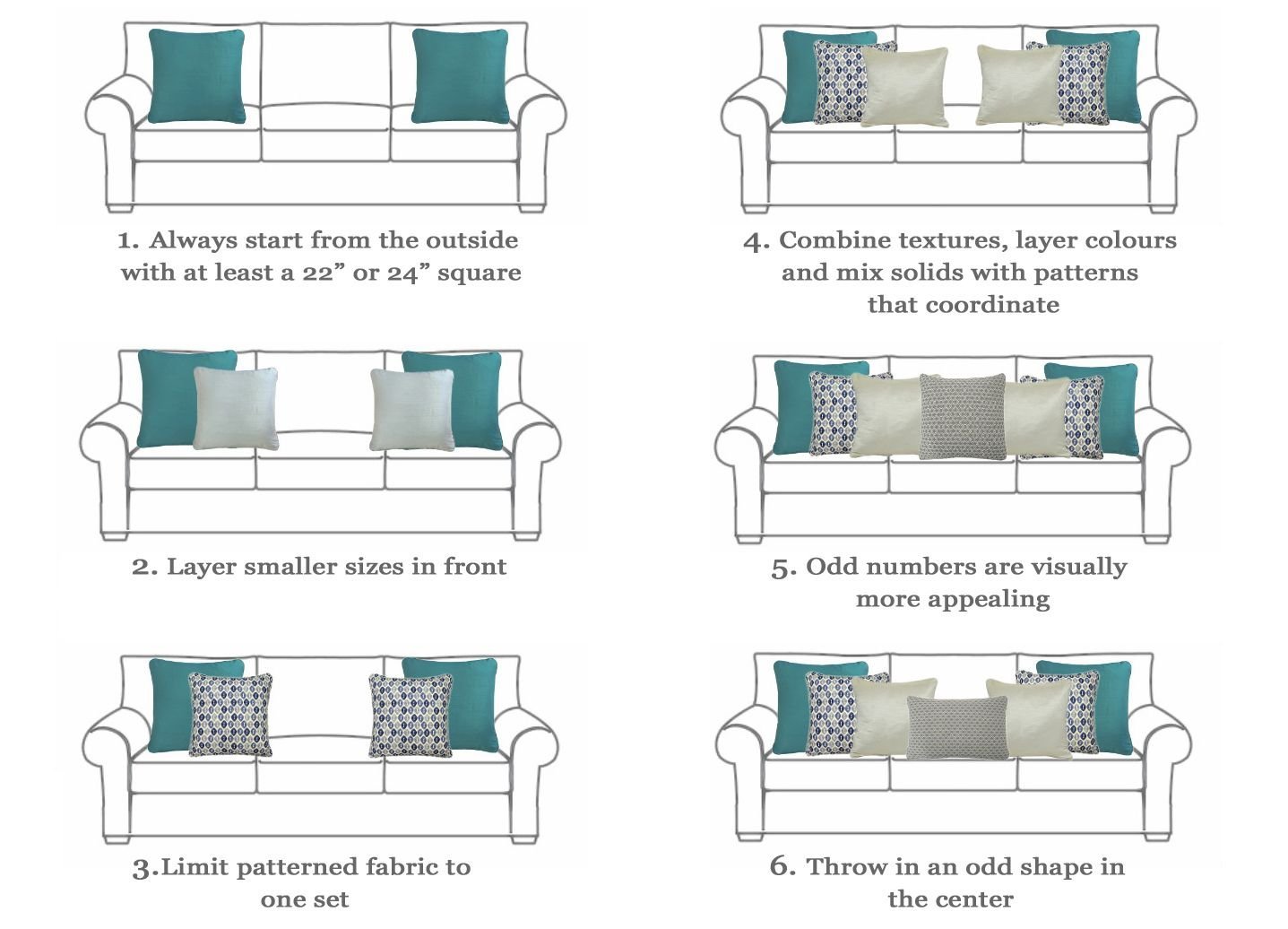
- Clear the sofa completely to start with a fresh surface for your new arrangement.
- Place one large cushion, about 20 inches square, in each of the two corners.
- Add a third, slightly smaller cushion, roughly 18 inches, in the center for a balanced look.
- If you prefer five, place two large cushions on each end and one smaller rectangular lumbar cushion in the middle.
- Fluff each cushion by punching the sides inward to restore its shape before placing it on the seat.
- Ensure the cushions don’t take up more than one-third of the total seat depth for comfort.
- Check that your arrangement allows at least two people to sit down without having to move the decor.
The mistakes that ruin it
- Using too many large cushions makes the sofa feel cramped and reduces usable seating space.
- Matching all cushion covers to the exact color of the sofa makes the furniture look flat.
- Picking cushions that are all the same size creates a boring, uniform line across the back.
- Ignoring the scale of the sofa leads to tiny pillows getting lost or oversized ones falling off.
Can I mix different shapes?
Yes, mixing square and rectangular cushions adds visual interest to a 3 seater sofa. Use square cushions for the base layer at the ends and place a smaller rectangular lumbar cushion in the center to create a professional look.
How do I stop cushions from sliding off?
Use cushions with high-friction fabrics like velvet or wool to keep them in place. If you have a leather sofa, place a small piece of non-slip rug pad underneath each cushion to provide the necessary grip.
Is there a rule for cushion color?
Choose two colors from your room’s existing palette and add one neutral color for balance. This creates a cohesive look without making your sofa feel like it’s clashing with the rest of your furniture.
What size cushion is best for a 3 seater?
Use 20-inch square cushions for the corners and 18-inch cushions for the front layers. This assumes a standard sofa depth of about 35 inches; if your sofa is shallower, reduce these sizes by two inches.
Does the sofa arm style matter?
Yes, sofas with track arms look better with structured, square cushions. If your sofa has rounded or rolled arms, softer, slightly oversized cushions help echo those curves and make the room feel more relaxed.
How often should I replace cushions?
Check the foam density by pressing down firmly; if it doesn’t spring back immediately, it’s time for new inserts.
Choosing the right amount of cushions is about finding the balance between your personal comfort and the overall look of your living area. Start with three and add more only if you feel the sofa looks empty or needs more support for lounging.
Related guides