
The Steelcase Gesture is a top executive office chair for long workdays because its wide adjustment range accommodates many postures. If you’re under 5’4″, the Herman Miller Aeron Size A fits better. Your height and desk setup change which model works.
Best executive office chairs at a glance
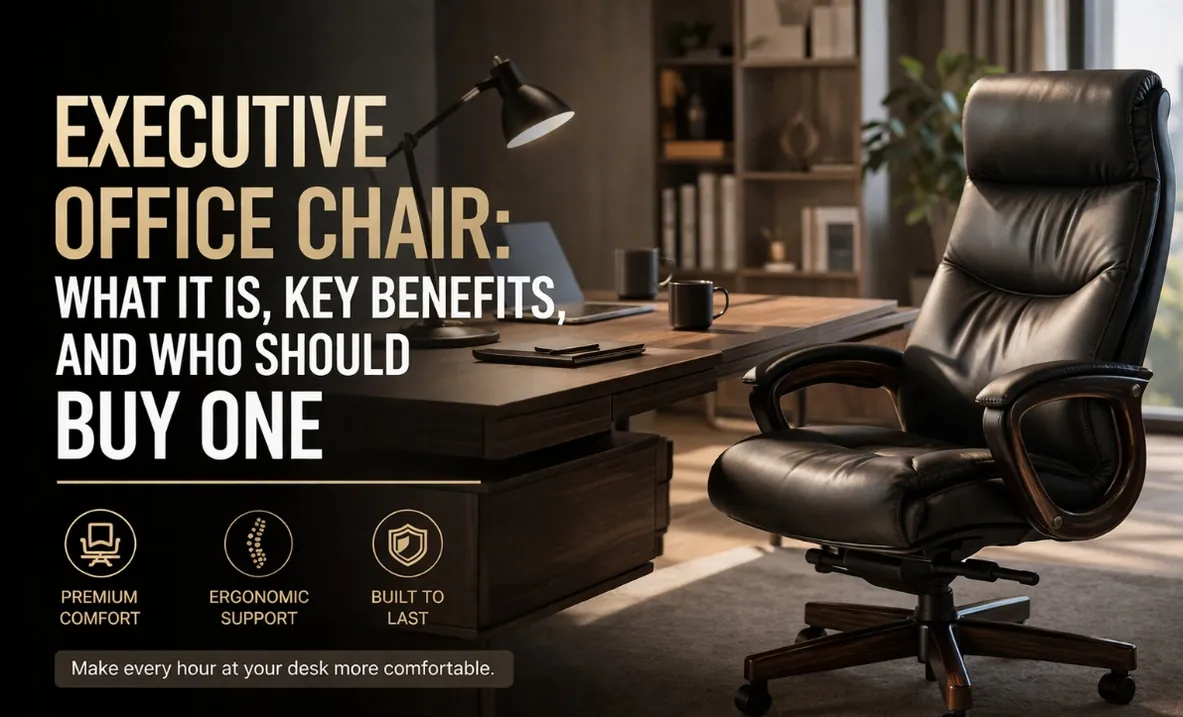
- The Steelcase Gesture is designed to accommodate a wide variety of postures, fitting most desks without extra parts or tools.
- Herman Miller Aeron comes in three sizes; pick size B if you’re between 5’2″ and 6’0″.
- Budget buyers can use the SIHOO Doro C300, but its armrests don’t slide as far inward.
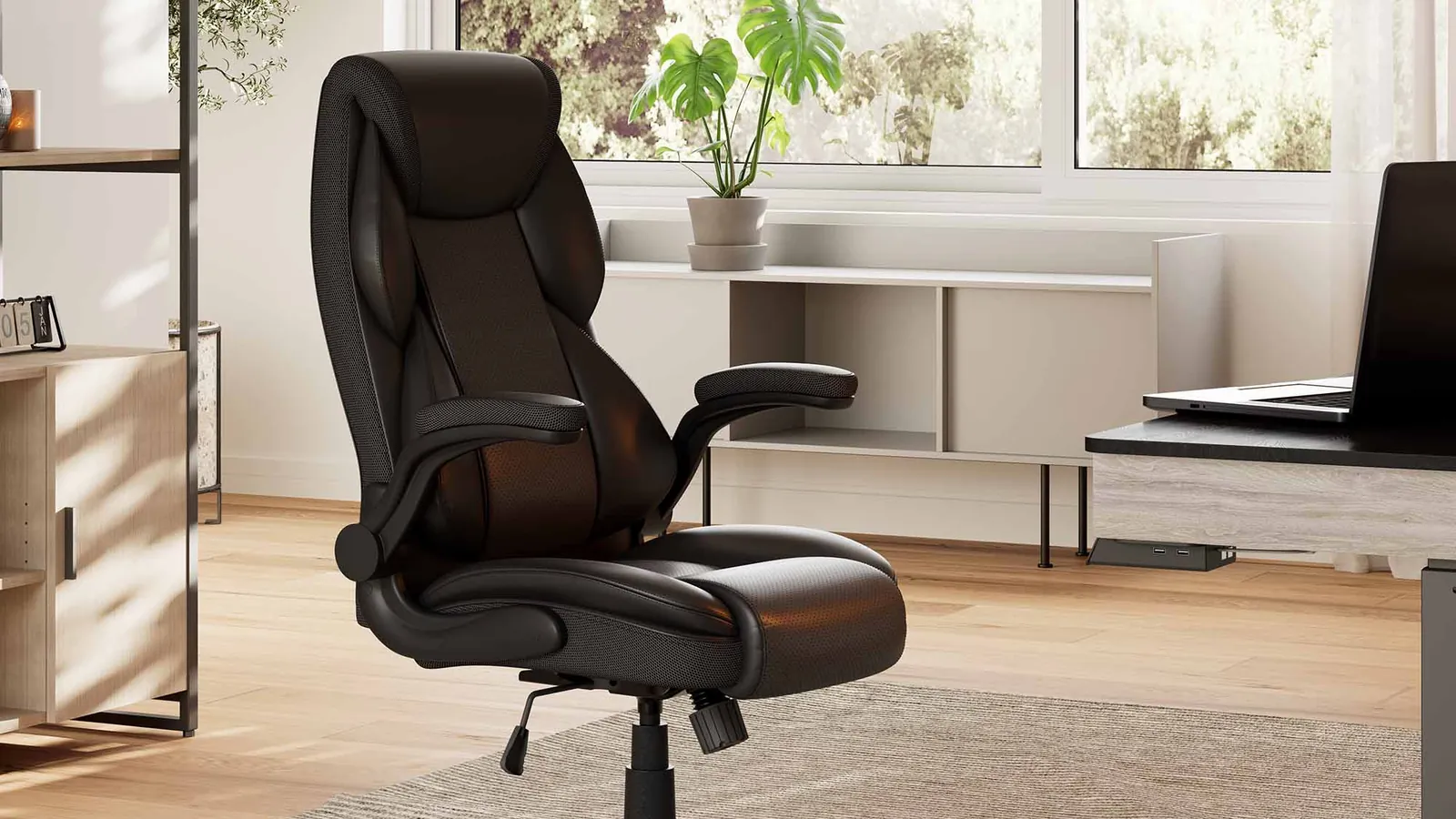
- Mesh backs breathe well in warm rooms, while foam seats stay warmer during winter months.
- A seat depth that leaves two inches between the edge and your knees prevents leg pressure.
- Check the manufacturer’s weight rating on the label under the seat before buying any model.
Why posture decides the right chair
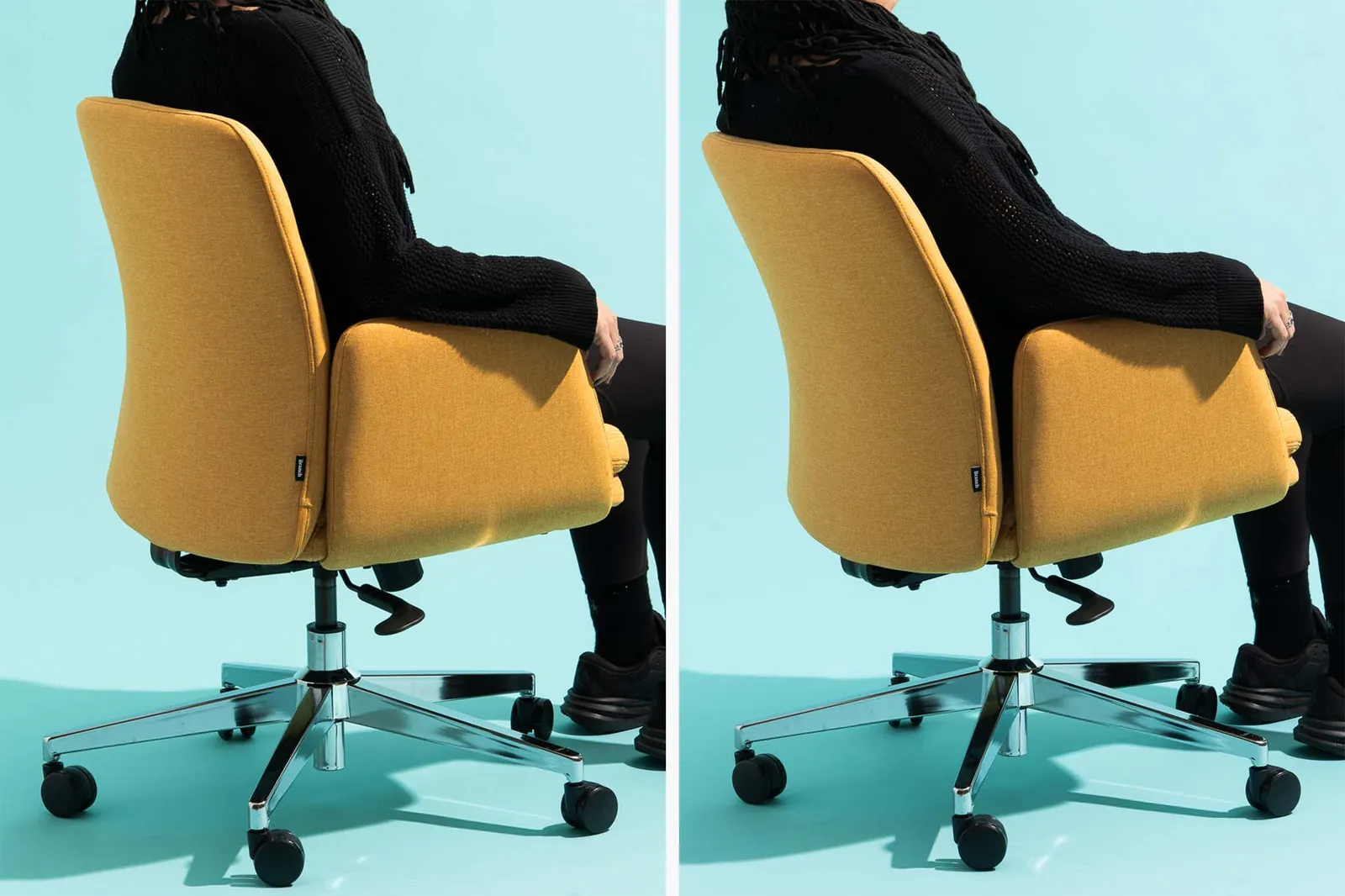
A flat backrest forces your spine into one shape all day, and that causes fatigue. Executive chairs with adaptive lumbar systems move with you when you lean back or shift sideways. The Steelcase Gesture uses a core mechanism that tracks your spine through different sitting positions. This keeps the natural curve of your lower back supported even when you reach for a phone.
Mesh material spreads your body heat across a wider area than thick leather does. Leather feels premium but traps warmth after about two hours of continuous sitting. You’ll notice this faster in rooms without strong air conditioning. Foam density matters too. High-resilience foam holds its shape longer than cheap padding that flattens out within six months.
Your desk height changes how the chair performs. If your desk sits above 29 inches, you’ll need a chair with a tall cylinder or a footring. Without that match, your shoulders climb up toward your ears by mid-afternoon.
When a different executive chair works better
| Situation | What changes | What to do instead |
|---|---|---|
| Under 5 feet 4 inches tall | Standard seat too deep | Buy Aeron size A |
| Over 300 pounds body weight | Standard frame bends | Use Steelcase Leap Plus |
| Shared hot-desking office | One setting fails everyone | Pick Gesture for intuitive manual adjustments |
| Warm room, no AC | Leather traps sweat | Choose full mesh back |
| Very high desk over 30 inches | Feet dangle off floor | Add a footring underneath |
| Back pain already present | Soft padding hides support | Get firm ergonomic lumbar |
Setting up your executive chair properly
- Raise the seat until your feet sit flat on the floor, keeping knees level with hips.
- Slide the seat pan forward or back until two fingers fit between the edge and your knees.
- Adjust the lumbar pad so it fills the curve just above your belt line, not below it.
- Set armrests at elbow height so your shoulders drop naturally without lifting or reaching down.
- Tilt the backrest to 100 degrees for typing, then unlock it to recline when reading documents.
- Roll the chair close enough that you don’t lean forward more than two inches to reach your keyboard.
- Test every setting for ten minutes before locking them in, adjusting anything that creates new pressure points.
Mistakes that ruin an executive chair
- Buying based on looks alone means you’ll end up with stiff padding that hurts after two hours.
- Leaving the tilt lock on all day stops the backrest from moving, forcing your spine into one rigid position.
- Ignoring the seat depth slider pushes the edge into your calves, cutting off circulation by late afternoon.
- Placing armrests too high makes you shrug your shoulders constantly, leading to neck stiffness within weeks.
- Skipping the assembly manual often results in a backward-mounted lumbar pad that presses into your spine incorrectly.
Frequently asked questions
How long does an executive office chair last?
A quality chair lasts 7 to 10 years with daily use, assuming you follow the maker’s care guide. Cheap models flatten out in about 2 years. Check the warranty card for the exact coverage period on your specific brand.
Can I use a mesh chair in a cold office?
Yes, but you’ll feel drafts through the back. Mesh breathes well in summer yet offers zero insulation in winter. If your office stays below 68°F, a fabric or leather back keeps you warmer throughout the day.
Why does my lower back still hurt?
The lumbar support is likely set too low or too high. It needs to sit exactly in the curve above your belt line. Move the pad up half an inch at a time until the pressure disappears completely.
Is it safe to lean back fully while working?
Reclining past 110 degrees while typing strains your neck because you look up at the screen. Lean back only when reading or taking calls. Keep the backrest near 100 degrees for active computer work.
What happens if the gas cylinder sinks?
A sinking seat means the cylinder seal has failed and won’t hold your weight anymore. Don’t tape it or prop it up. Replace the cylinder using the part number printed on the metal tube.
Does wheel type matter for hard floors?
Hard plastic wheels scratch wood and tile quickly. Swap them for soft polyurethane casters if your office has hard flooring. They roll quietly and won’t leave marks. Measure the stem diameter first, usually 7/16 inch.
How much should I spend on a good chair?
Reliable daily support is inexpensive relative to the alternative, while chairs lacking adjustable lumbar or seat depth are rarely inexpensive. Read the adjustment list on the product page before comparing prices.
Do I need a headrest for desk work?
No, a headrest isn’t needed for typing because your head stays forward over the keyboard. It only helps when you recline past 120 degrees to read or rest. Skip it if you mostly sit upright.
Conclusion
Picking the right seat comes down to matching the chair’s adjustments to your body, not just buying the most expensive name. Sit in it for a full morning if you can, because comfort that fades by noon doesn’t help you finish your work.