
Modular furniture pieces known as sectional couches that can be arranged allow you to customize your living room layout to fit your specific space and needs. These items consist of individual seats, corners, and ottomans that connect using metal brackets or friction clips to create various shapes, such as L-shapes or U-shapes.
Modular seating styles and uses
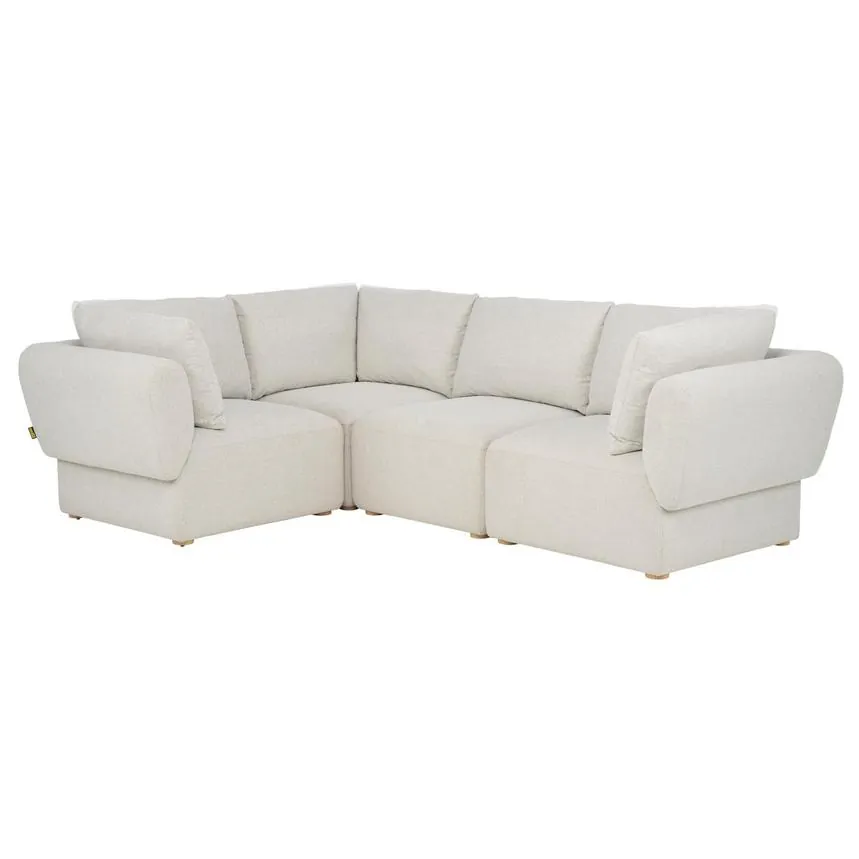
The following table helps you identify which type of modular unit fits your home based on its primary function and typical configuration.
| Name | Best For | Typical Example |
|---|---|---|
| Corner Unit | Creating 90-degree turns | Square corner seat |
| Armless Chair | Extending middle sections | Single seat cushion |
| Chaise | Lounging and leg room | Seat with extended depth |
| Ottoman | Extra seating or footrest | Movable square block |
| Wedge | Creating curves or angles | Angled corner piece |
Corner units for shape changes
Corner units serve as the anchor point for your furniture arrangement. They’re essential if you want to turn a straight row of seats into an L-shape or a U-shape. These pieces usually have two backrests that meet at a 90-degree angle.
- Provides structural stability for the entire sofa assembly.
- Allows for tight, clean corners in small living rooms.
- Connects to armless chairs to increase total seating capacity.
If you place a corner unit in the center of a room, ensure the back is finished with upholstery, as some budget models use cheaper fabric on the rear.
Armless chairs for length
Armless chairs are the most flexible components because they lack side panels, allowing you to place them between any other pieces. You use these to add length to your sofa or to create a long bench style if you remove the corner pieces.
- Increases the number of people who can sit comfortably.
- Fits easily into narrow spaces where armrests would be too bulky.
- Acts as a bridge between a chaise and a corner unit.
Try adding two armless chairs between your corner unit and an end piece to expand your seating area by approximately 50 to 60 inches.
Chaise lounge sections
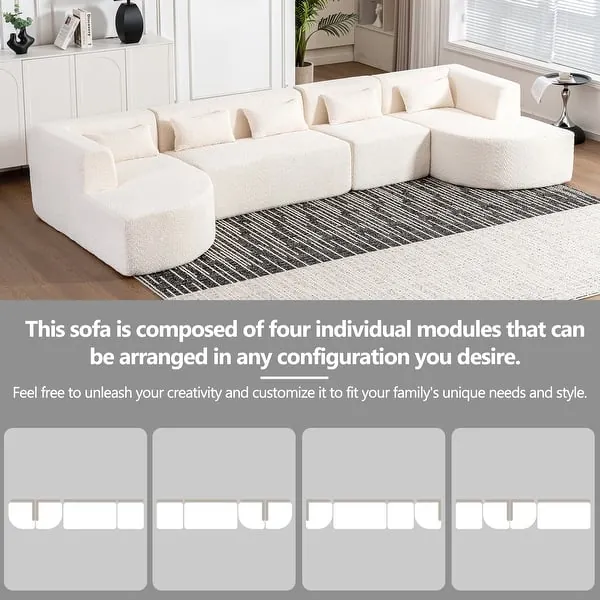
A chaise is a seat with an extended depth, designed specifically for stretching out your legs. These pieces attach to the end of a sofa configuration, and they’re best for those who use their living room primarily for relaxing or watching movies.
- Adds a dedicated spot for reclining without needing a separate recliner.
- Helps define the end of an L-shaped sectional arrangement.
- Offers extra depth compared to standard armless chairs.
Because these units are deeper than standard seats, they often require more floor space.
Ottoman units for versatility
Ottomans are the only pieces that don’t need to be physically attached to the rest of the sofa. You can use them as a coffee table, a footrest, or even as an extra seat when guests arrive.
- Moves easily to accommodate different seating needs.
- Provides a flat surface for trays or decorative items.
- Creates a makeshift bed when pushed against the sofa frame.
If you have a small apartment, choose an ottoman with internal storage to hide blankets or remote controls. This keeps your living area tidy while adding a functional, movable piece to your layout.
Other modular components
- Wedge units offer a rounded or angled corner that’s more comfortable for leaning than a sharp 90-degree corner.
- Console units fit between seats to provide cup holders and storage, which is useful for dedicated home theater setups.
- Armrests are separate end pieces that define the boundary of the sofa and provide a place to rest your elbows.
Arranging your ideal sectional couch
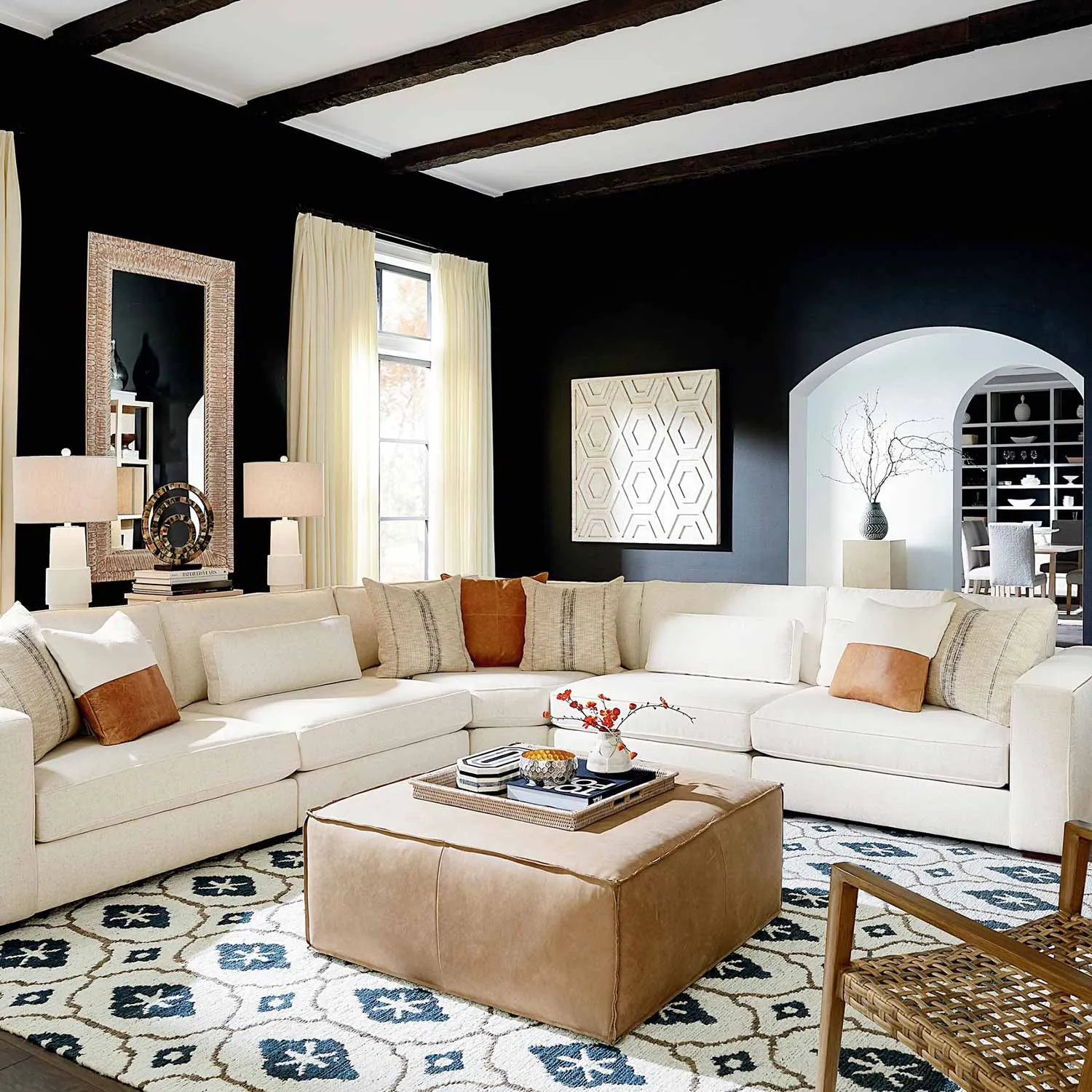
Deciding which pieces to choose starts with your floor plan. If you have a square room, a U-shaped configuration using two corner units works best to fill the space. For long, narrow rooms, a simple L-shape with one corner unit and several armless chairs is more appropriate.
Always measure your floor space before buying, and remember that adding more pieces increases the total length of the sofa; a standard seat is usually 25 to 30 inches wide. You can combine these pieces indefinitely, but adding too many will make the furniture difficult to move or reconfigure.
Frequently asked questions
How do I keep the sections from sliding apart?
Use metal alligator clips or heavy-duty plastic connectors that lock the frames together underneath the sofa. Most sectional couches that can be arranged come with these pre-installed, but you can purchase replacements if your clips break.
Is it safe to mix and match different brands?
No, you should stick to one brand and one specific collection because the connection hardware and seat heights rarely align between different manufacturers. Mixing brands often results in uneven seating surfaces and broken clips.
How much space do I need for a U-shaped sectional?
You need a floor area of at least 10 feet by 10 feet to accommodate a standard U-shaped configuration. This allows enough room for the center seating area and walking space around the edges.
Can I change the arrangement every day?
Yes, but it’s physically demanding because you must lift each heavy section to disengage the locking hardware. Most people only change their layout when they move to a new home or deep clean the room.
What happens if I lose the connection brackets?
You can order matching brackets directly from the manufacturer’s support website by using your model number. Never use makeshift fasteners like rope or tape, as these won’t hold the weight of the furniture.
Does it matter if my floor is carpeted or hardwood?
Yes, use a non-slip rug pad underneath the entire sectional to prevent the individual pieces from shifting on smooth surfaces. On thick carpet, the weight of the pieces usually keeps them in place without extra pads.
Conclusion
Start by placing your corner unit in the desired spot first, then add the armless chairs and end pieces one by one. You’ll know it’s set up correctly when all cushions align perfectly and the frame feels steady. Stop and call for help if you can’t lift the units safely to avoid back strain.