
A chair’s type is decided by its back height, arm shape, base and what it was built for. Match your seat’s frame against the standard categories below to find its exact name.
Skipping the legs or base when you try to identify a seat will send you to the wrong furniture store aisle.
How to match your chair to its category
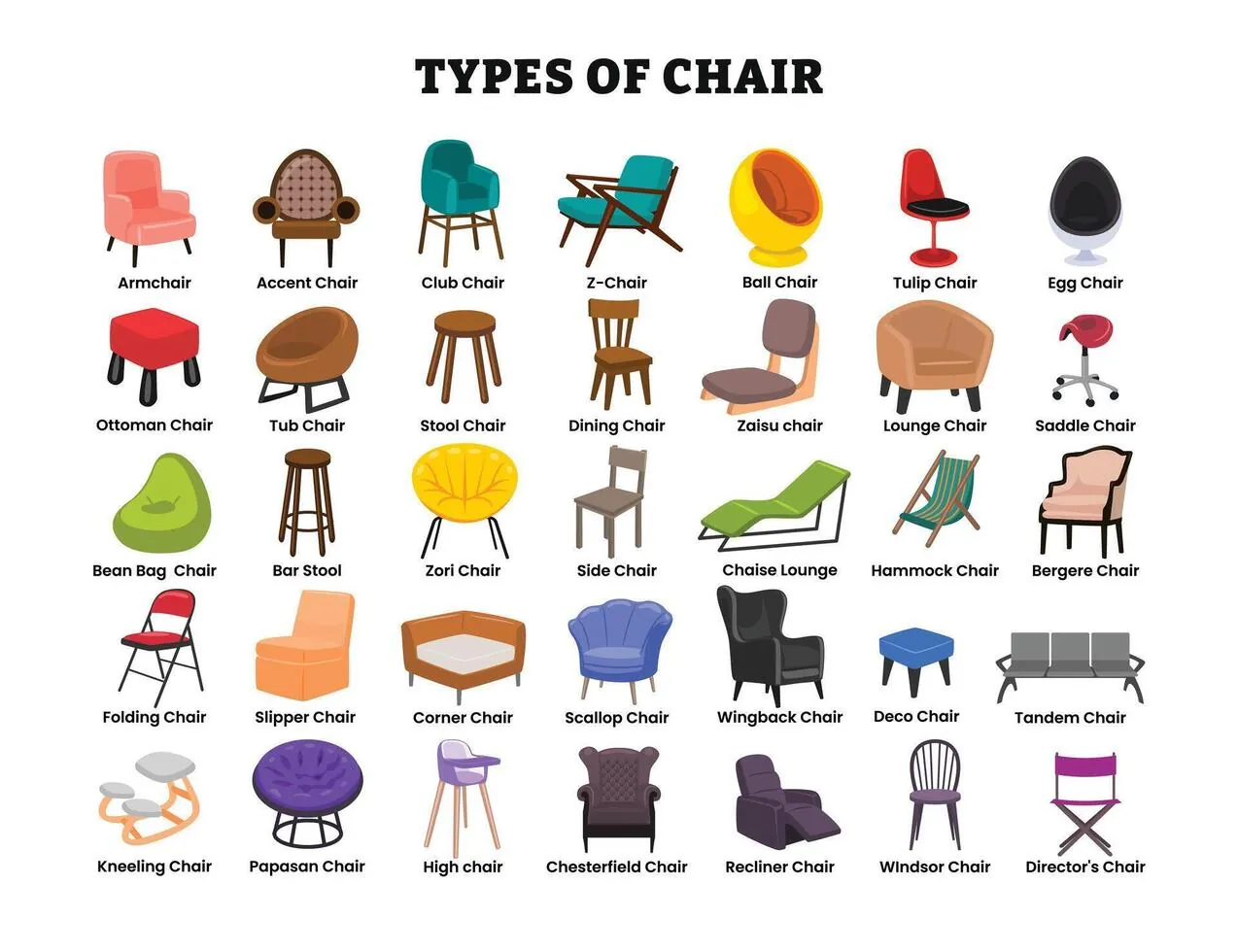
Finding the right name takes five quick checks.
- Measure the back height from the seat pan to the top edge. A back under 14 inches means it’s a stool or low side chair; over 20 inches points to a dining or office model.
- Check the arms for height and padding. Arms ending flush with the seat make it a side chair, while tall padded ones define a club or lounge style.
- Look at the base and count the contact points. Four straight legs mean a traditional frame; five wheels on a star base signal a task chair governed by ANSI/BIFMA performance standards.
- Test the recline by leaning back gently. If the whole back tilts, it’s a rocker or recliner; if only the top half moves, it’s likely a tilt-swivel desk chair.
- Identify the primary material of the frame under any upholstery. Molded plastic shells are Eames-style reproductions, while bent wood frames usually mark a Thonet bistro chair.
Tip: Don’t confuse a high-back dining chair with an office chair just because they share a similar height. The base always decides the category.
If the frame has electrical wires running into the base, stop checking it yourself. Call a licensed furniture repair technician to handle motorized recliners safely.
Time needed to identify different chairs
Matching a chair takes longer when parts are hidden under heavy upholstery. Here’s how long each check actually runs.
| Situation | How long | What changes it | What to watch for |
|---|---|---|---|
| Bare wooden frame | 2-3 minutes | Visible joints | Loose dowels or cracked rails |
| Upholstered armchair | 5-8 minutes | Cushion thickness | Hidden swivel plates underneath |
| Office task chair | 3-5 minutes | Number of levers | Gas cylinder stamps near the base |
| Antique or vintage piece | 15-20 minutes | Maker’s marks | Hand-cut dovetails versus machine routing |
| Recliner with remote | 5-10 minutes | Motor access panels | Frayed wires near the footrest hinge |
If you’re still guessing after twenty minutes, take a clear photo of the underside and ask a certified appraiser or local antique dealer.
Signs your chair identification is correct
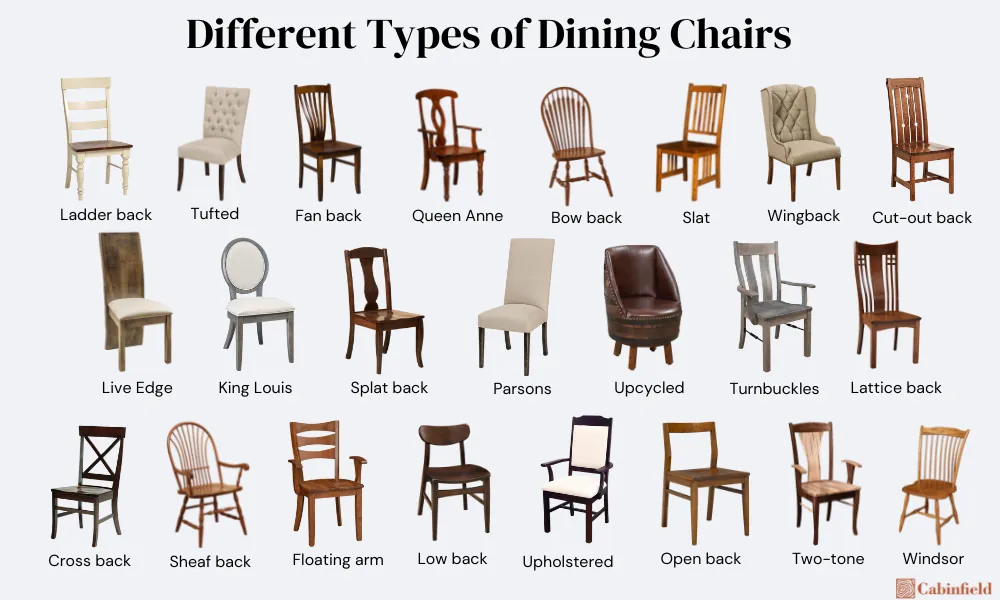
You’ll know you’ve found the right category when the name matches the frame shape. A true Windsor chair, for instance, always has a solid wood seat with legs and spindles drilled directly into it.
Don’t rely on cushions alone. Read the manufacturer’s stamp on the bottom plate or inside the seat frame. The model number settles debates when visual signs disagree.
Mistakes that lead to the wrong chair type
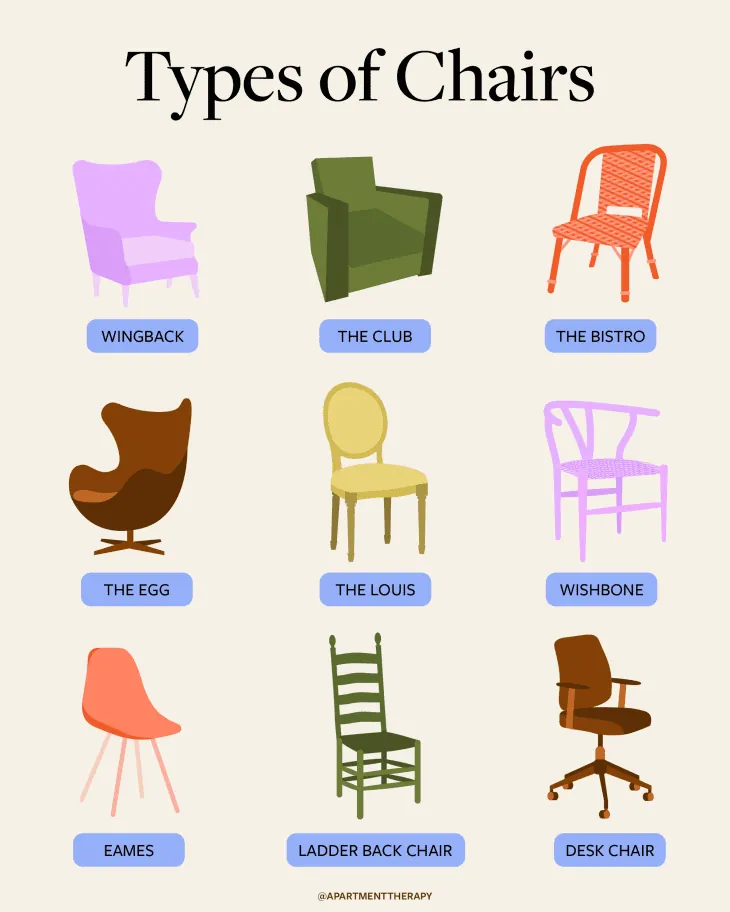
- Confusing a side chair with an armchair. Side chairs lack arms entirely so they slide under tables. Calling an armless seat an armchair means you’ll buy table sets that don’t fit together. Measure the width between the table legs before shopping.
- Calling any wheeled seat an office chair. Rolling stools and drafting chairs have wheels but completely different gas cylinders. Using a rolling stool for eight hours at a desk causes back strain. Check the cylinder height range instead of just counting the wheels.
- Mixing up recliners and rocking chairs. Rockers move on curved rails while recliners pivot on a fixed metal mechanism. Buying replacement parts for the wrong motion system costs money and leaves the seat broken. Trace the moving joint to see which hardware it actually uses.
- Ignoring the era of the frame. Mid-century modern and contemporary chairs look similar but use different joinery. Ordering reproduction legs for a vintage frame strips the original screw holes. Date the wood tooling marks before buying restoration parts.
Frequently asked questions
Can a chair belong to two types at once?
Yes, hybrid designs exist. A swivel recliner combines a rotating office base with a living room backrest. When a chair mixes features, the base mechanism dictates its primary safety category and weight rating.
Why does my chair squeak when I lean back?
Squeaking comes from loose joints rubbing together or dried-out pivot points. Tighten the bolts under the seat pan first. If the noise continues, apply a silicone-based lubricant to the metal hinges rather than oil.
How long do gas cylinders last in office chairs?
A standard pneumatic cylinder holds pressure for 5 to 10 years under daily use. Heavier loads wear out the seals faster. If the seat sinks on its own, replace the cylinder instead of the entire chair.
Is it safe to add wheels to a wooden dining chair?
No, adding casters to straight wooden legs changes the center of gravity. The chair can tip backward when you push off a table. Buy a purpose-built rolling chair instead of modifying a static frame.
What happens if I use an indoor chair outside?
Indoor fabrics fade quickly, and unsealed wood warps from rain. Glue joints fail when humidity swings daily. Move the chair back inside, or replace it with aluminum and UV-treated resin meant for patios.
How tall should a dining chair back be?
Dining chair backs typically stand 16 to 20 inches above the seat pan. This height clears most standard tables while supporting your lower spine. Measure your table’s apron clearance before buying taller styles.
Why won’t my recliner stay locked in place?
Worn pawl teeth or a stretched tension spring stops the locking mechanism from catching, producing a clicking sound without resistance. Order the exact replacement part using the model number stamped inside the base frame.
Conclusion
Once you’ve matched your seat to the right category, you’ll feel more confident shopping for similar styles or finding replacement parts. Take a photo of yours and bring it to a local furniture shop—they’ll help you track down exactly what you’re looking for.