
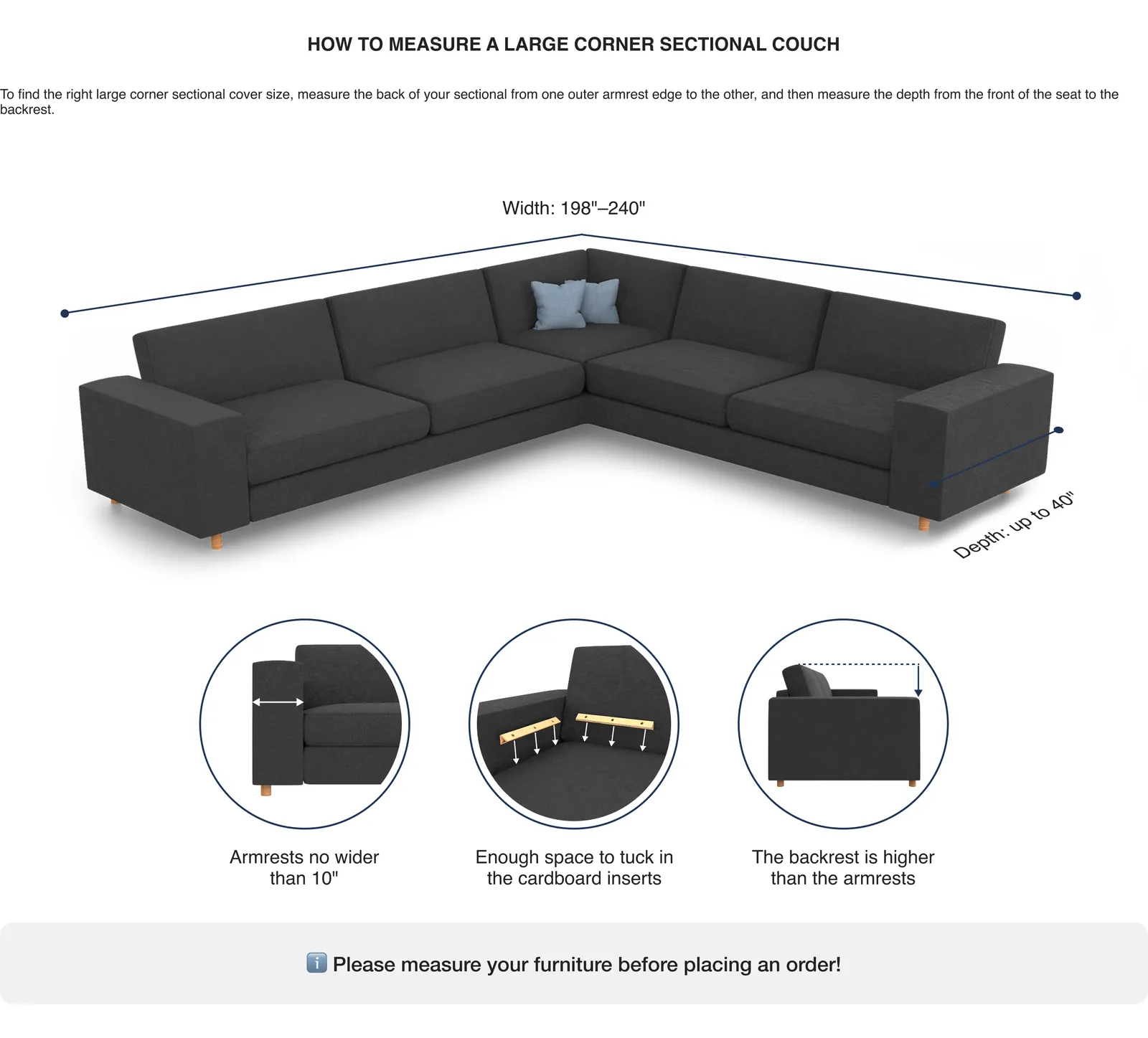
The typical width of a sectional couch ranges from 80 to 120 inches along each side, though custom configurations can extend much further. You must measure your specific floor space to ensure the pieces fit comfortably without blocking walkways or nearby doors.
Determining the width of your sectional couch
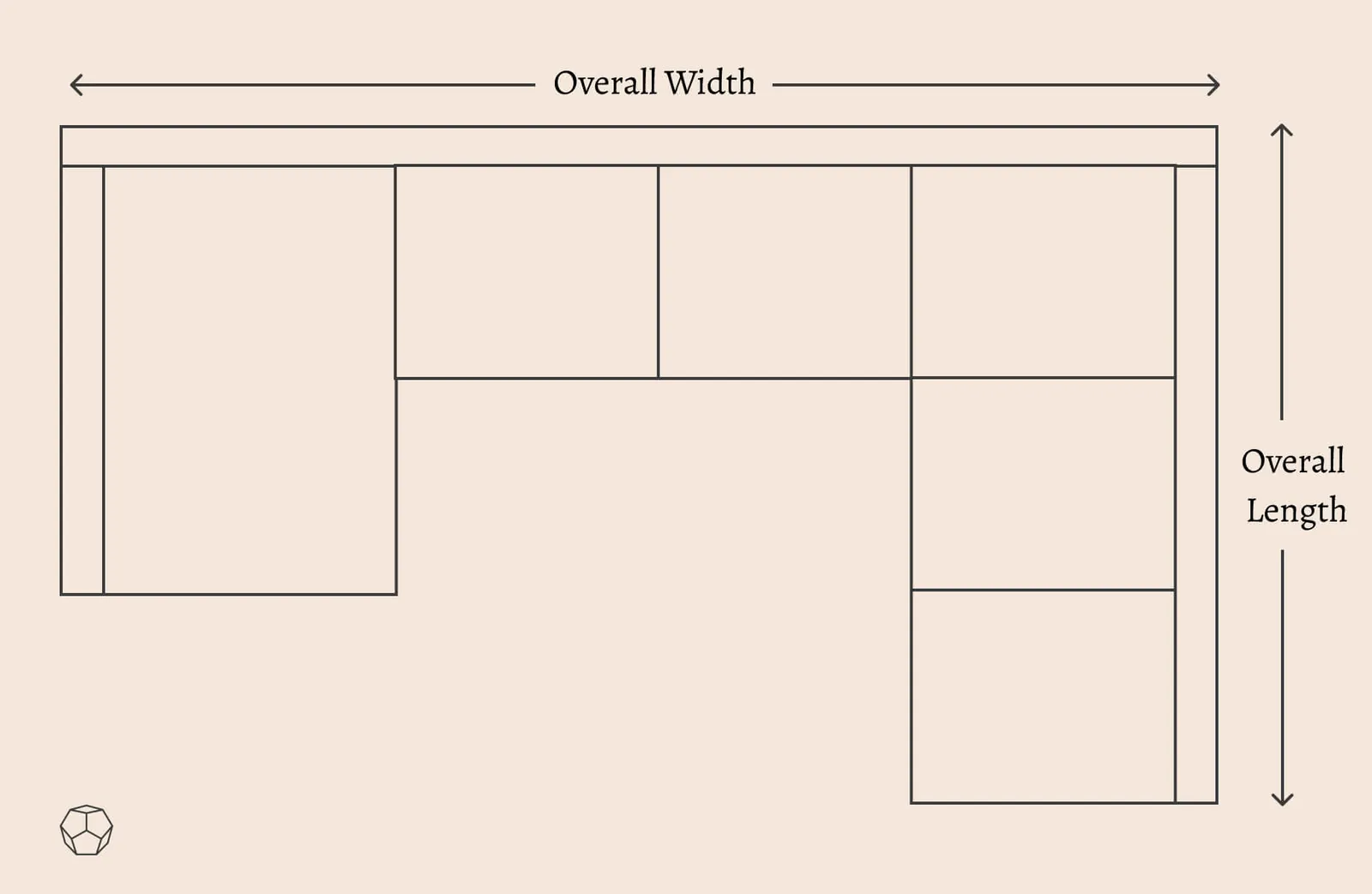
- Total width: Measure the full length of each back wall where the sectional will sit.
- Depth: Standard depths range from 32 to 40 inches, which dictates how much floor space the piece consumes.
- Chaise length: A standard chaise extension adds 60 to 70 inches of depth from the back of the sofa.
- Clearance: Leave at least 30 inches of open floor space in front of the couch for easy movement.
- Doorways: Confirm your entry points are at least 30 inches wide to allow the frame to pass through.
- Configuration: Decide if you want a left-hand or right-hand facing chaise before finalizing your order.
Why Dimensions Vary by Model
The overall footprint of these sofas depends heavily on the arm style, the number of modular components, and the depth of the cushions. Most manufacturers design modular pieces in increments of 20 to 30 inches, allowing for flexible layouts that can shrink or grow based on your room. If you choose a model with wide, rolled arms, you’ll lose several inches of actual seating space compared to a track-arm design.
The Consumer Product Safety Commission emphasizes that heavy furniture must be positioned on stable, level surfaces to prevent accidents. Always check the manufacturer’s specification sheet for the exact frame dimensions, as retail photos often distort the perceived scale of the furniture. If you’re working with a small apartment, look for “apartment-sized” sectionals that feature reduced depths to save precious square footage in tight corners.
Adjusting for Different Room Sizes
| Situation | What changes | What to do instead |
|---|---|---|
| Small living room | Depth requirements | Choose a 32-inch depth |
| Large open floor | Visual presence | Use a larger U-shape |
| Narrow hallways | Delivery access | Select modular, smaller pieces |
| Low ceilings | Back height | Pick a low-profile frame |
| High traffic area | Walking path | Leave 36 inches clear |
How to Measure Your Space Correctly
- Clear the entire area where the new furniture will sit to get an accurate view of the available floor space.
- Use painter’s tape to outline the footprint of the sectional on the floor, using the dimensions found on the product page.
- Measure the distance from the tape lines to any nearby tables or media consoles to ensure you keep 30 inches of clearance.
- Check the height of your windows; if the couch back is too high, it will block natural light and ruin the room’s flow.
- Verify the width of your front door and any hallway turns, as large frames don’t bend around tight corners easily.
- Sit in your current chair to gauge your preferred seat depth, then compare that measurement to the new couch specifications.
Common Mistakes That Ruin the Fit
- Ignoring the foot traffic: Placing a sectional so it blocks the primary path to the kitchen creates a daily frustration.
- Forgetting the door swing: If your couch sits too close to a door, the door will hit the frame every time it opens.
- Assuming one size fits all: Buying a sectional without checking the specific modular dimensions often results in a piece that looks too bulky.
- Overlooking the chaise length: People often misjudge how far a chaise sticks out, which can make the room feel cramped and crowded.
Frequently asked questions
How much space should I leave around a sectional?
You should leave at least 30 inches of walking space around the edges of the sectional to ensure the room doesn’t feel overcrowded. This clearance allows people to move past the furniture comfortably without bumping into the arms or cushions.
Does the arm style change the width?
Yes, the arm style can add 5 to 10 inches to the total width of the sofa compared to a armless model. Rolled arms are typically wider than track arms, so you must account for these extra inches when measuring your wall.
How long is the chaise on a standard sectional?
A standard chaise extension is 60 to 70 inches long, depending on the specific model and manufacturer. Always check the product description for the “total depth” measurement, which includes the chaise, to see if it fits your available floor space.
Is it safe to put a sectional in a corner?
It’s safe to place a sectional in a corner, provided you leave a small gap for airflow and cleaning. Placing it directly against the wall can sometimes cause scuffing or trap dust, so a 2-inch buffer is often recommended for better maintenance.
What happens if the sectional is too big for my room?
If the sectional is too big, it will block walking paths and make the room feel visually heavy. You can fix this by removing one of the modular middle sections if the piece is designed for such changes, or by rearranging the layout.
Does seat depth matter for comfort?
Seat depth determines how you sit, with 22 to 24 inches being the standard for comfortable upright support. If you prefer to lounge or curl up, look for a deeper seat of 26 inches or more to accommodate your preferred style of sitting.
Conclusion
The right sectional should balance your need for seating with the physical limitations of your room. By measuring your floor space and comparing it to the manufacturer’s specific dimensions, you can avoid the common mistake of buying a piece that dominates your home.