
The best office chair for full-time desk work is the Steelcase Leap V2, because it adjusts to your spine instead of forcing you into one fixed shape. If your budget won’t stretch that far, the SIHOO M18 gives you a usable mesh back and lumbar dial for a fraction of the cost.
The key factor is the gap between the cushion’s edge and the back of your knees. You need about two to three fingers of space there when your feet are flat on the floor. If the pan is too deep, you’ll slide forward all day.
Don’t buy a chair just because it’s called ergonomic. A model built for a six-foot frame leaves a shorter person with raised shoulders, and no tweaking fixes a seat that’s the wrong size.
Setting up your chair correctly
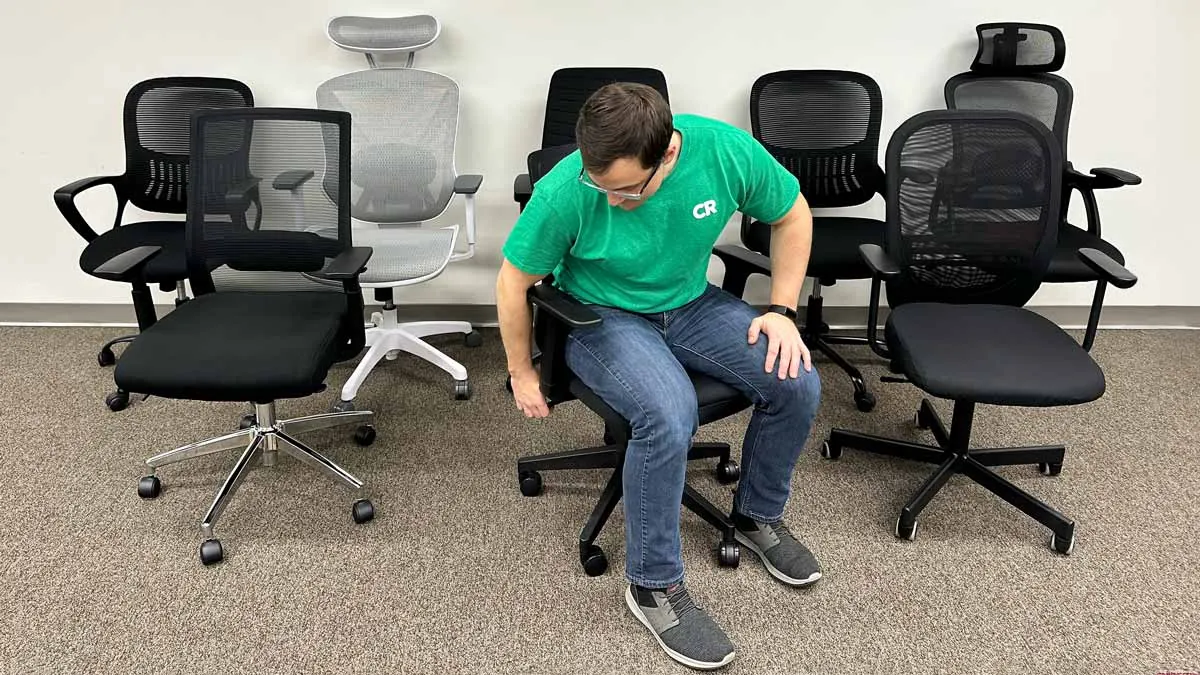
A good seat only helps if adjusted correctly. Follow these steps at a new desk.
- Pull the height lever until your feet rest flat on the floor and your knees bend at about 90 degrees. This assumes you’re wearing normal shoes; barefoot, drop the seat half an inch lower.
- Slide the seat pan forward or back so you can fit two or three fingers between the cushion’s front edge and your knees. If your chair doesn’t have a sliding pan, use a small footrest to make up the difference.
- Push the lumbar support into the curve just above your belt line. Too high and it presses your ribs; too low and it does nothing.
- Set the armrests so your elbows hang naturally at your sides and your forearms stay level with the desk surface. If they push your shoulders up even slightly, drop them another notch.
- Lock the backrest tilt around 100 to 110 degrees for typing tasks. Lean it further back only when you’re reading or thinking, not while your hands are on the keyboard.
- Check the tension knob under the seat. You should be able to lean back without fighting the spring, but the chair shouldn’t throw you backward either.
Tip: Don’t lock the recline completely rigid. A locked back forces your spine to hold weight the mechanism should share.
Tip: If you switch between typing and writing on paper, set the arms low enough to slide your notebook underneath them.
How long adjusting an office chair takes
Setup takes a few minutes initially.
| Situation | How long | What changes it | What to watch for |
|---|---|---|---|
| First setup on a new chair | 5–10 minutes | Number of adjustment dials | Missing a hidden seat-depth slider under the cushion |
| Daily check after someone else used it | 1–2 minutes | How much they changed | Armrests left at very different heights |
| Switching from sneakers to bare feet | 30 seconds | Shoe thickness | Knees dropping below hip level |
| Moving the chair to a taller desk | 3–5 minutes | Desk surface height | Shoulders creeping up toward your ears |
| Adjusting for a shared hot-desk space | 5 minutes | Previous user’s body size | Lumbar pad stuck at the wrong height |
If you’re still fiddling with levers after fifteen minutes, the chair probably doesn’t fit your body proportions. Stop adjusting and look for a model with a smaller or larger frame size.
Signs your office chair fits right
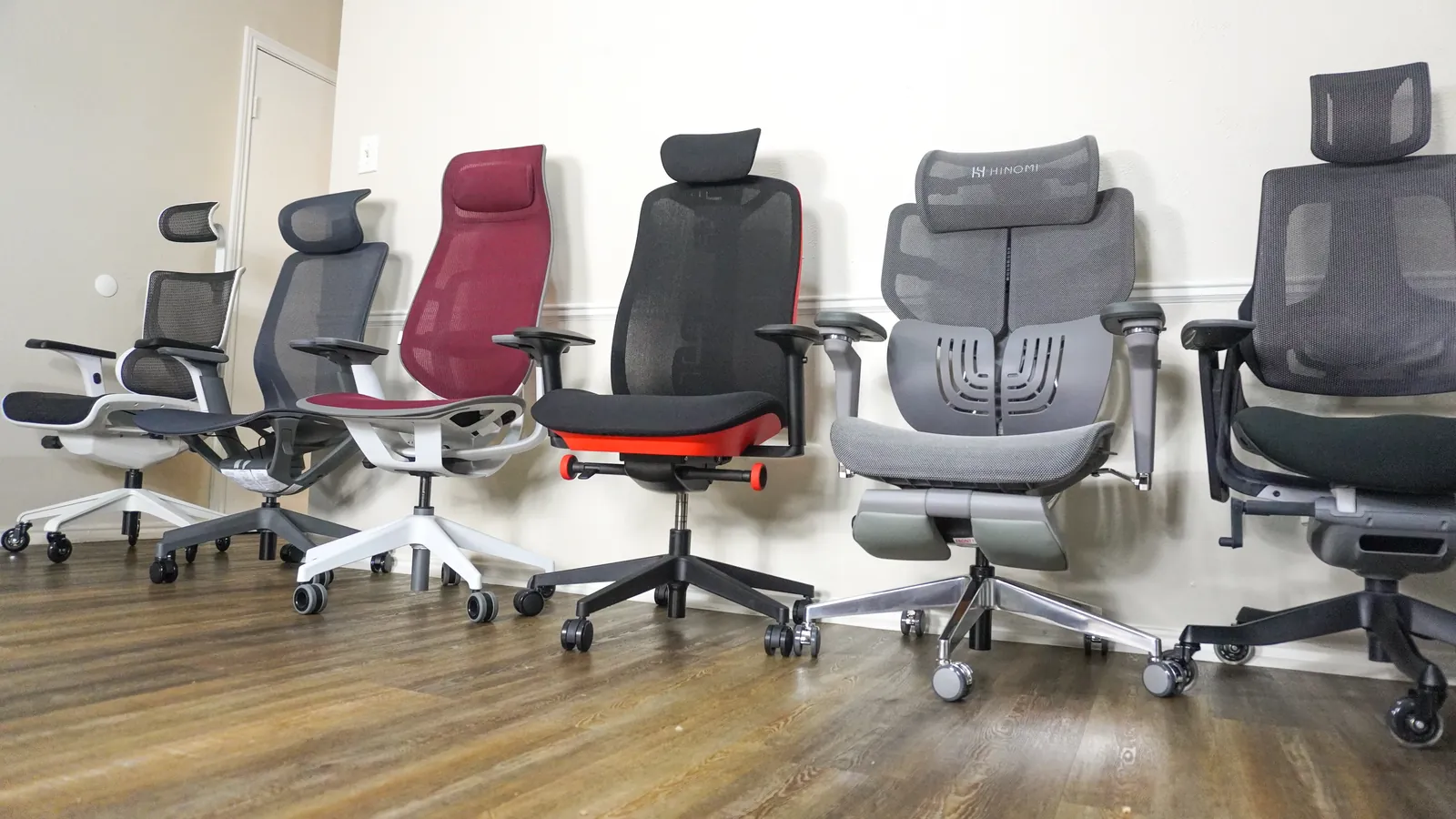
You’ll know the setup works when you stop noticing the seat entirely.
The single test that matters is the fist check. Stand up, then sit back down normally. If you can slide a closed fist easily between your stomach and the desk edge without leaning back, your depth and height are working together.
Office chair mistakes that hurt
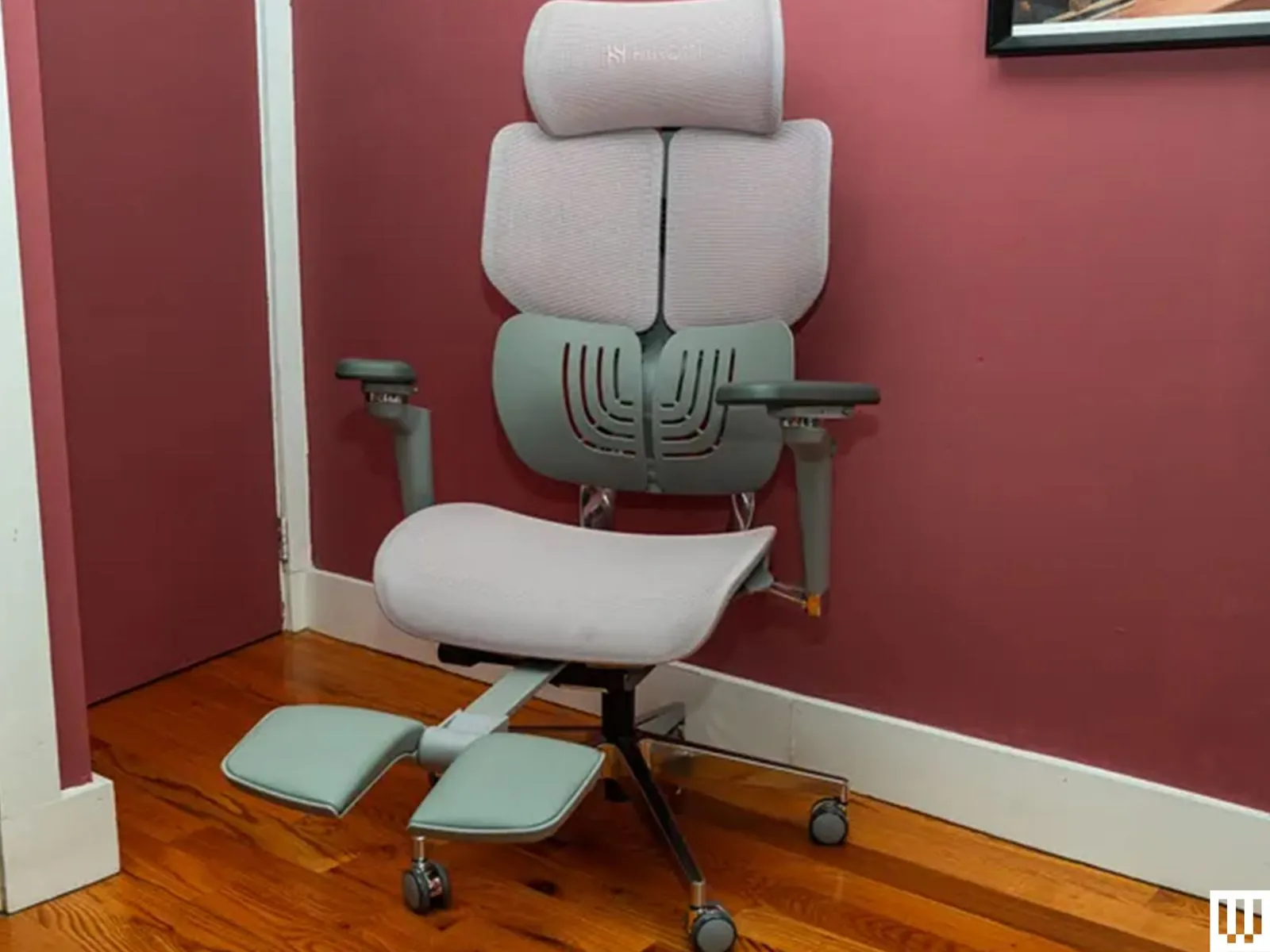
- Using a chair sized for someone else. A tall-person’s seat leaves your feet dangling and cuts circulation behind your knees. Match the manufacturer’s height range to yours before buying.
- Leaving the wheels on thick carpet. The casters sink in, forcing you to push harder to roll, which twists your lower back. Swap standard wheels for casters rated for your floor type or put down a smooth mat.
- Relying on a cushion instead of the built-in lumbar pad. Foam pads slide around and compress unevenly through the day. Use the mechanical dial on the backrest for steady support.
- Sitting perfectly upright at 90 degrees all day. A rigid posture tires out your back muscles faster than a slight recline. Tilt the backrest to about 100 degrees so the frame carries some of your weight.
Frequently asked questions
How long does an office chair last?
7 to 10 years for a well-built task chair used eight hours a day, assuming you keep it on a hard floor or mat. Budget models with foam seats often flatten out in three to four years. Check the manufacturer’s warranty period as a rough guide to expected lifespan.
Is it safe to sit cross-legged in an office chair?
No, doing it daily isn’t safe for your hips or the chair’s gas cylinder. Crossing your legs tilts your pelvis and puts uneven pressure on the seat pan. It also shifts your center of gravity, which wears out the lift mechanism faster.
Why does my lower back hurt after sitting?
Your lumbar support is likely sitting too low, or the seat pan is too deep and pulling you into a slouch. Raise the back pad until it fills the curve above your belt. If the pain continues past a week, see a physical therapist.
Can I use a gaming chair for office work?
Yes, but you’ll trade adjustability for padding. Gaming chairs usually have bucket seats that squeeze your shoulders forward and lack a proper seat-depth slider. A dedicated task chair keeps your spine in a more neutral position during long typing sessions.
How often should I replace the casters?
Replace them periodically if you roll across a hard floor daily, or sooner if they start scratching the surface. Worn wheels don’t spin freely, making you twist your torso to move the chair. Pop out the old stems and press in replacements rated for your floor type.
What happens if the gas cylinder sinks slowly?
The internal seals inside the pneumatic lift have worn out. You’ll find yourself dropping an inch or two every hour. Don’t try to open the cylinder yourself, since it holds compressed gas. Order a replacement gas cylinder compatible with your chair model.
Conclusion
Picking the right seat comes down to matching its adjustment range to your actual body measurements, not its brand name. Take ten minutes to set every dial the first time you sit down. Your back will tell you within a week whether you got it right.