
A sleeping chair is most commonly called a sleeper chair, a chair bed, or a recliner depending on how it folds out, so use those terms when shopping for chairs that convert into single beds.
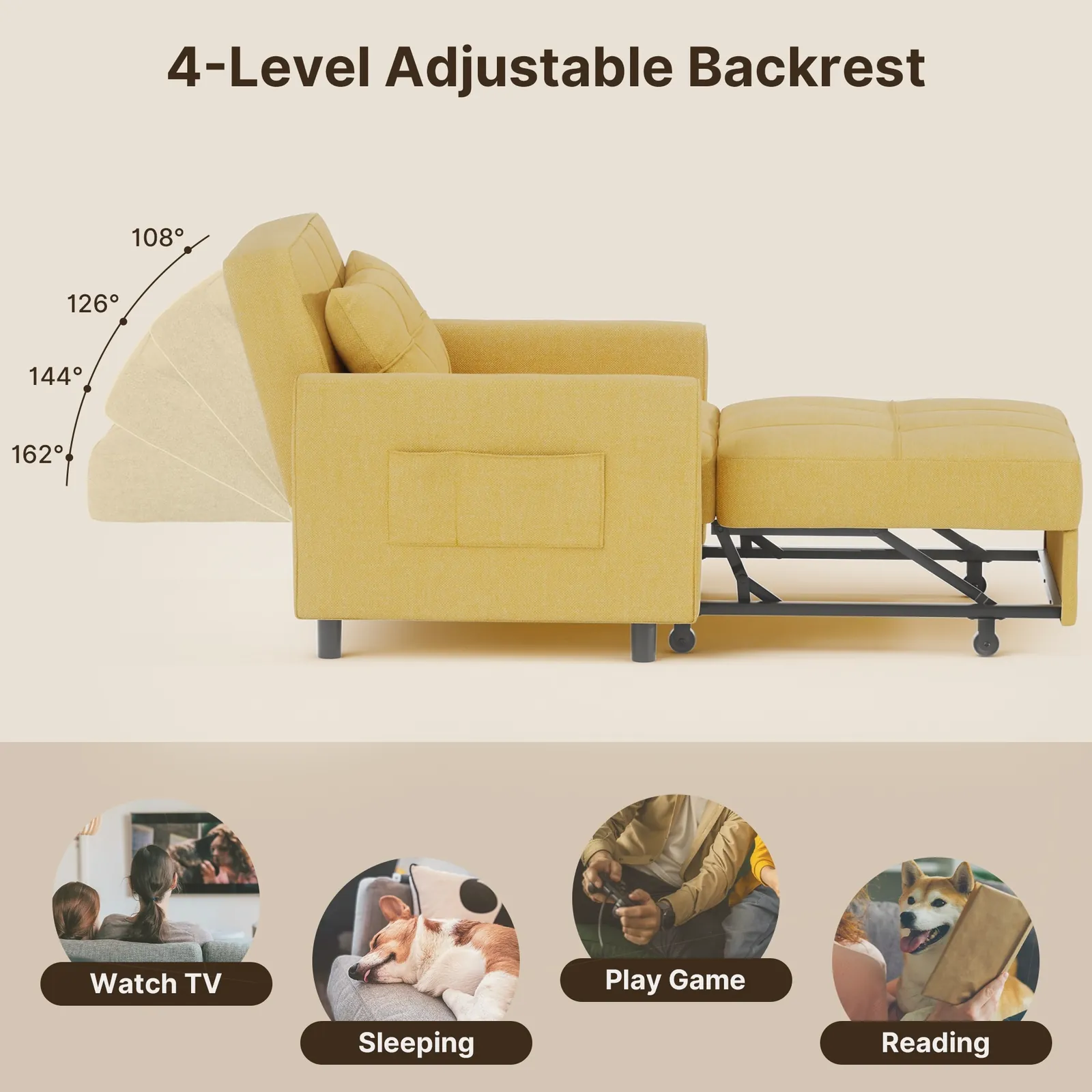
The mechanism decides everything here. A pull-out frame gives you a real mattress but takes up more floor space when it’s open. A fold-down back saves room yet leaves you resting on the seat cushions themselves.
Buying a recliner when you actually need a flat surface is where things go wrong. Recliners tilt back, but they don’t let your legs stretch out fully, and that curve keeps pressure on your lower spine all night.
What a sleeping chair is called when choosing one

Picking the right model comes down to the room you have.
For nightly use, get a chair bed with a pull-out frame. For occasional guests, a simple fold-down back saves space. This isn’t the right choice for someone with severe mobility issues who can’t bend down to pull a heavy frame forward.
- Measure the clear floor space from the wall to where the chair will sit. Add 30 inches to that number for a standard pull-out model; if your room is under 60 inches deep total, switch to a fold-down style instead.
- Check the mattress thickness when the chair is open. Aim for at least 4 inches of foam for regular use, because anything thinner will let you feel the metal bars underneath after an hour.
- Test the folding mechanism in the store or read the manual online before buying. It should lock into place without you holding it down, and you shouldn’t need more than 15 pounds of force to pull it out. Tip: Don’t trust the closed dimensions alone. A chair that looks compact might swing its legs out another two feet when you unfold it.
- Look at the weight rating printed on the manufacturer’s spec sheet. Budget models often top out at 250 pounds, while reinforced frames handle 350 pounds or more.
- Read the care label on the upholstery fabric. Microfiber wipes clean easily, but linen stains fast if someone spills water in the middle of the night.
- Confirm the return policy covers the opened mechanism. Some retailers won’t take a chair bed back once you’ve pulled the frame out of the base.
For motorized lift chairs, check the FDA guidelines on medical devices.
How long does a sleeper chair last?
The lifespan depends entirely on how often someone sleeps on it and the quality of the hinges. Daily use wears it out faster than occasional guest use.
| Situation | Expected lifespan | What changes it | What to watch for |
|---|---|---|---|
| Daily sleeping | 3 to 5 years | Mattress density and frame weight | Sagging foam or squeaky hinges |
| Weekly guest use | 7 to 10 years | How carefully it’s folded away | Fabric wear on the crease lines |
| Occasional naps only | 10+ years | Sun exposure and dust buildup | Stiff joints that resist unfolding |
| Heavy user (over 250 lbs) | 2 to 4 years | Frame material and bar thickness | Bending metal near the locking pins |
These ranges assume a mid-range foam model bought new. If the frame sticks or resists closing after a few months, contact the maker.
Signs your chair bed needs replacing

You don’t need tools to figure out when a sleeper chair has reached its end. Your body usually tells you first, but there are visual checks you can run during the day too.
Sit on the edge when it’s folded out as a bed. If you sink far enough to feel the crossbars pressing into your thighs, the foam has lost its support completely.
Look at the fabric along the fold line. Deep cracks in faux leather or permanent creases in woven cloth mean the material is splitting. Listen for loud popping noises when you change positions. One soft click is normal, but repeated cracking means a hinge pin is wearing through its housing.
When these signs disagree, the settling test wins. Lie flat for ten minutes. If your spine curves toward the floor instead of staying level, the frame itself is bent, and no amount of cushion replacement will make it safe to sleep on again.
Sleeper chair mistakes that ruin the frame
- Skipping the weight limit. Putting 300 pounds on a frame rated for 220 bends the steel bars permanently. Match the buyer’s weight to the manufacturer’s printed rating before bringing it home.
- Leaving it open all the time. Keeping the bed unfolded stretches the fabric at the hinge points until it tears. Fold it back into chair mode every morning to let the material rest.
- Using thick aftermarket mattresses. Adding a 6-inch mattress to a frame built for 4 inches stops the locking pins from catching. Stick to the thickness listed in the original manual.
- Dragging it across hardwood floors. Pulling a heavy sleeper chair scrapes the feet off and warps the bottom rail. Lift it or put felt pads under the legs before moving it even a few inches.
- Ignoring a stuck hinge. Forcing a jammed mechanism snaps the pivot bolt inside the armrest. Spray a dry lubricant on the joint and work it gently instead of yanking the frame.
Related guides
Frequently asked questions
Can you sleep on a recliner every night?
No, not comfortably for most people. A recliner keeps your knees bent and doesn’t offer a flat surface, which puts uneven pressure on your lower back.
Why is a Z-bed called that?
It gets the name from its shape. When you fold the frame out, the three sections form the letter Z from the side.
How wide is a standard chair bed?
Most single chair beds measure between 30 and 36 inches wide when fully opened. Wider models exist, but they usually require two seats placed side by side.
Is it safe for a child to sleep on one?
Yes, if the locking mechanism is secure and there are no gaps where fingers could get caught. Check that the mattress fits tightly against the frame edges so a child can’t slide between the bars.
What happens if the folding mechanism breaks?
The chair usually gets stuck halfway between sitting and sleeping. Contact the manufacturer for replacement parts rather than welding it yourself.
How long does the foam mattress last?
A standard polyurethane foam pad sags relatively quickly with nightly use, while high-density memory foam lasts noticeably longer before breaking down.
Are sleeper chairs hard to move upstairs?
They weigh between 60 and 120 pounds depending on the frame material. A 36-inch wide chair won’t fit through a narrow hallway turn.
Conclusion
Measuring your room and checking the weight rating prevents buying something that doesn’t fit or breaks too soon. Take five minutes with a tape measure before you order, and you’ll end up with a chair that actually works as a bed when you need it to.