
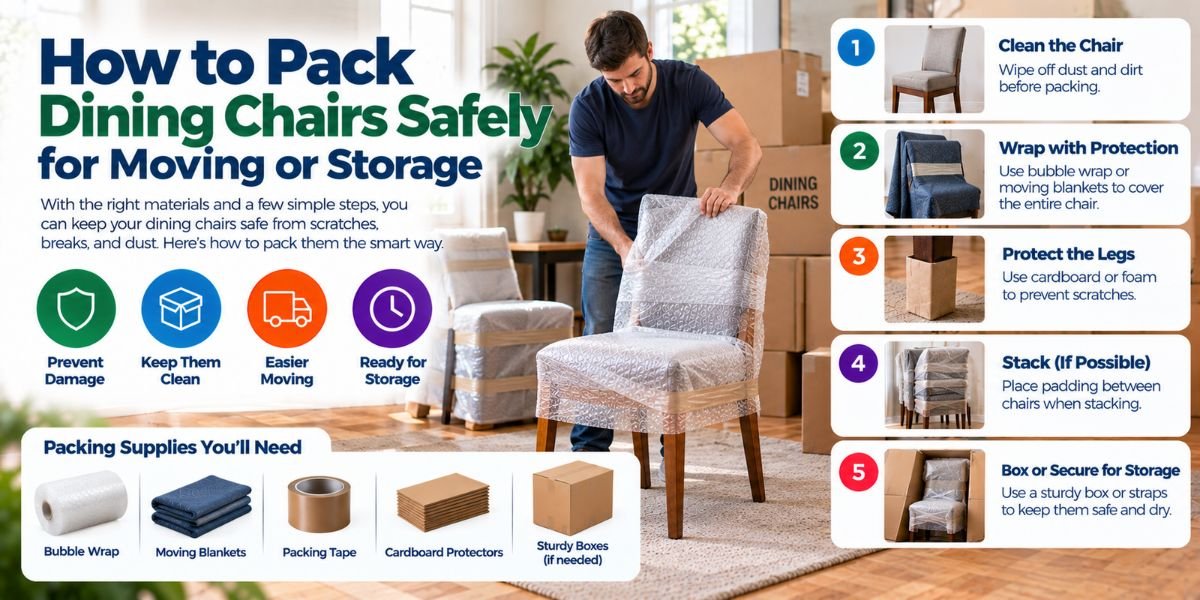
Packing dining chairs can look easy until you try to fit them into a moving truck, storage unit, or small car. Chairs have odd shapes, open spaces, and parts that can scratch or break.
I have found that the best way to pack dining chairs is to clean them, remove loose parts, protect the legs and seat, and use the right box or wrap. A few simple steps can prevent dents, stains, and broken legs.
In this guide, I will show you how to pack dining chairs in a simple way. I will also cover packing for a move, storage, shipping, and common mistakes to avoid.
How to Pack Dining Chairs the Right Way
The best way to pack dining chairs is to wrap each chair well and keep hard parts from touching each other. Start by removing cushions and loose parts. Then protect the legs, seat, back, and corners with moving blankets, bubble wrap, or thick paper.
Do not stack chairs without protection. Wood, metal, and painted surfaces can rub against each other during a move. This can leave scratches that are hard to fix.
For most home moves, you do not need a special chair box. Good padding and careful placement are often enough.
What You Need to Pack Dining Chairs
Before you start, gather all your packing supplies. Having everything close by makes the job much easier.
You may need:
- Moving blankets
- Bubble wrap
- Packing paper
- Stretch wrap
- Cardboard sheets
- Packing tape
- Zip bags
- Soft cloth
- Scissors
- Labels
For wooden chairs, moving blankets are very useful. They add a soft layer around the chair and help prevent scratches.
For chairs with glass, leather, fabric, or painted parts, use extra care. Rough cardboard or tight plastic can damage some finishes.
Step 1: Clean the Dining Chairs
Start with a clean chair.
Wipe away dust, food bits, and dirt. Pay close attention to the joints and areas under the seat. Small bits of dirt can act like sand when the chair moves against packing material.
Let the chair dry fully before wrapping it.
This step is easy to skip. I would not skip it. Packing dirt against a chair can make cleaning harder later.
Step 2: Remove Cushions and Loose Parts
Take off any removable seat cushions.
If the chair has loose screws, covers, glides, or other small parts, remove them only if the design allows it. Place small parts in a labeled bag.
Keep the hardware with the chair.
If several chairs look the same, label each bag with the chair number. This can save time when you put everything back together.
Do not remove parts that are fixed or difficult to reinstall unless the manufacturer allows it.
Step 3: Protect the Chair Legs
Chair legs often need the most attention.
They can hit other furniture, walls, or the floor while being moved. They can also scratch another chair when chairs are stacked.
Wrap each leg with packing paper, foam, or a soft moving blanket. Use tape on the packing material, not directly on a finished wood surface.
Pay special attention to the feet. They can have sharp edges or small metal pieces that may damage nearby items.
Step 4: Protect the Seat
The seat needs protection from dirt, scratches, and pressure.
For a hard wood or metal seat, use a layer of packing paper or soft material first. Add bubble wrap if more padding is needed.
For a fabric seat, use clean packing material. Avoid placing dirty blankets directly on light-colored fabric.
For leather seats, use soft breathable protection. Do not trap moisture under tight plastic for long-term storage.
The goal is to protect the surface without putting too much pressure on it.
Step 5: Wrap the Chair Back
The chair back can be one of the most fragile parts.
Wrap it with a moving blanket or another soft material. Make sure the corners are covered.
If the back has thin wooden slats, decorative pieces, or open details, add extra padding around those areas.
Do not pull stretch wrap too tightly around delicate parts. Too much pressure can stress weak joints.
Step 6: Wrap the Whole Dining Chair
Once the legs, seat, and back have basic protection, wrap the whole chair.
A moving blanket works well for a home move. Place the blanket around the chair and secure it with stretch wrap or suitable tape around the packing material.
Avoid putting strong tape directly on wood, paint, fabric, or leather.
The wrap should stay secure but should not crush the chair.
Can You Stack Dining Chairs?
Yes, many dining chairs can be stacked.
But stacking depends on the chair design. Some chairs are made for stacking. Others can be damaged if placed on top of each other.
If you stack chairs, place a soft layer between them. A moving blanket, towel, or thick packing paper can help stop rubbing.
Keep the stack stable. Do not make it so tall that it can tip over.
For chairs with arms, unusual shapes, or fragile backs, it may be safer to pack them separately.
How to Pack Dining Chairs for a Move
Moving a dining chair is different from storing one for a long time.
For a short move, a moving blanket may be enough. Wrap the chair well and place it where other items cannot fall onto it.
Keep chairs away from heavy boxes. A falling box can break a chair back or damage the seat.
When loading the truck, place chairs in a stable area. Avoid putting very heavy furniture on top of them.
If possible, keep the chair backs away from sharp edges.
How to Pack Dining Chairs for Storage
Long-term storage needs more care.
First, make sure the chairs are clean and fully dry. Then protect them from dust and contact with other furniture.
Do not press chairs tightly together for months if they have delicate finishes. Give each chair enough protection to prevent rubbing.
A breathable cover can be useful for some materials. Avoid trapping damp air around wood or fabric.
Keep the chairs off a damp floor when possible. Moisture can cause problems with wood, metal, and upholstery.
How to Pack Dining Chairs for Shipping
Shipping needs more protection than a normal home move.
A shipping box or custom furniture carton can help protect the chair from impacts. Add padding around the chair so it cannot move freely inside the box.
Protect the corners first. These areas can take a lot of impact.
Then fill empty spaces around the chair. The chair should stay in place during handling.
For valuable or delicate chairs, professional furniture packing may be worth the extra cost.
Best Packing Method for Different Dining Chairs
Not every dining chair needs the same packing method.
| Chair Type | Best Basic Protection | Extra Care |
|---|---|---|
| Wooden chair | Moving blanket | Protect corners and legs |
| Metal chair | Bubble wrap or blanket | Prevent scratches |
| Upholstered chair | Clean soft cover | Protect fabric from dirt |
| Leather chair | Soft protective cover | Avoid trapped moisture |
| Chair with arms | Blanket and padding | Pack separately if needed |
| Stackable chair | Soft layer between chairs | Keep stack stable |
The material matters because each surface reacts differently to pressure, moisture, and rubbing.
Common Mistakes When Packing Dining Chairs
One common mistake is using too little padding.
A chair may look strong, but a thin chair back or decorative edge can break during handling.
Another mistake is using tape directly on the chair. Tape can leave sticky marks or pull away paint and finish.
Over-wrapping can also cause problems. Tight plastic around a damp chair can trap moisture.
Another issue is stacking chairs without a protective layer. Even a small amount of movement can cause scratches.
Finally, do not place heavy boxes on top of unprotected chairs.Read moreHow to Make an Ergonomic Chair More Comfortable
How I Would Pack Dining Chairs for a Normal Move
For a normal home move, I would keep the process simple.
I would first clean and dry each chair. Then I would remove the cushions and secure any loose parts. After that, I would protect the legs and corners.
Next, I would cover the full chair with a moving blanket. I would secure the blanket around the outside without pressing hard against fragile areas.
If the chair is designed for stacking, I would stack it with soft padding between each chair. Otherwise, I would keep it separate.
This method gives good protection without using more packing material than needed.
Tips for Saving Space When Packing Dining Chairs
Dining chairs can take up a lot of room because of their open shape.
If the chairs are stackable, use that feature. Stack them carefully and add padding between each chair.
You can also place light soft items inside the open space under a chair. Towels, blankets, or clothing can fill empty areas during a move.
Do not use heavy objects to fill these spaces. The extra weight can stress the chair.
If the dining table is also being moved, place the chairs near it when loading the truck. Keeping related furniture together can make unloading easier.
When Should You Use a Chair Box?
A chair box is useful when you need extra protection.
It can be a good choice for:
- Long-distance moves
- Shipping
- Valuable chairs
- Fragile antique chairs
- Chairs with delicate finishes
- Storage with frequent handling
For a basic local move, a box may not always be necessary.
The right choice depends on the chair’s shape, value, material, and how much handling it will receive.
FAQs About How to Pack Dining Chairs
How do you pack dining chairs without damaging them?
Clean the chairs first, then protect the legs, seat, back, and corners. Use soft padding and avoid placing tape directly on finished surfaces.
Can you wrap dining chairs in plastic wrap?
Yes, stretch wrap can help hold protective material in place. For long-term storage, make sure the chair is dry and avoid trapping moisture around sensitive materials.
Should dining chairs be wrapped individually?
Usually, yes. Individual wrapping gives better protection from scratches and dirt. Stackable chairs can share a stack when soft padding is placed between them.
Can you stack dining chairs when moving?
You can stack chairs if their design allows it. Keep the stack stable and use padding between chairs to prevent rubbing and scratches.
What is the best material for wrapping dining chairs?
Moving blankets are a strong choice for most home moves. Bubble wrap, packing paper, and soft covers can provide extra protection for specific surfaces and fragile parts.
Conclusion
Learning how to pack dining chairs does not have to be hard. The key is to clean each chair, protect the weak points, use soft padding, and load the chairs with care.
For a normal move, moving blankets and careful stacking may be all you need. For shipping or long-term storage, add more protection and control how much the chairs can move.
A little time spent packing each chair can help you avoid scratches, stains, loose parts, and broken pieces later.