
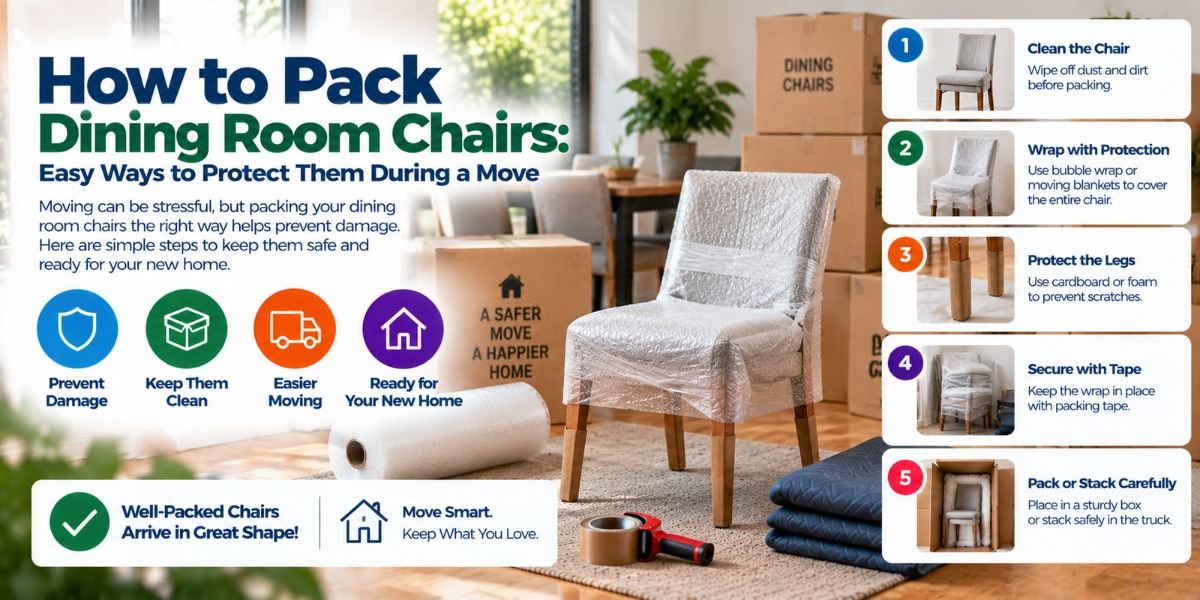
Moving dining room chairs can look easy at first. They are smaller than tables, after all. But chairs have legs, corners, backs, and joints that can get scratched or broken.
I have found that the key is not to rush this part of a move. A few simple steps can protect the finish and keep the chairs safe in the moving truck.
This guide explains how to pack dining room chairs with simple supplies and less stress. It also covers padded chairs, wooden chairs, stacking, wrapping, and common packing mistakes.
How to Pack Dining Room Chairs
The best way to pack dining room chairs is to clean them, remove loose parts when possible, wrap the legs and frame, protect the corners, and secure each chair so it cannot rub against other furniture.
For most chairs, you will need:
- Moving blankets
- Bubble wrap
- Stretch wrap
- Packing paper
- Strong tape
- Small plastic bags
- Labels
- A sturdy box, when needed
Do not put strong tape right on wood, paint, leather, or fabric. It can leave marks or cause damage.
What I Check Before Packing a Dining Chair
Before wrapping a chair, I look at its condition. This helps me spot loose joints, scratches, or weak parts before the move.
I also check the screws and legs. If a chair already feels loose, moving it without fixing the problem can make things worse.
Take a few photos before packing. They can help when putting the chairs back in place later.
If a chair has removable cushions, check how they are attached. Loose parts are much easier to pack when they are separated.
How to Prepare Dining Chairs for Moving
Start by removing dust, crumbs, and dirt. A clean surface is less likely to trap grit under the wrapping.
Let the chair dry fully before packing it. Moisture trapped under plastic can cause problems, especially on wood or fabric.
Next, remove anything that can come off safely. This may include cushions, loose covers, or detachable legs.
Place screws and other small parts in a sealed bag. Label the bag with the chair name or number. This small step can save a lot of time later.
How to Wrap Wooden Dining Chairs
Wooden chairs need protection from scratches and bumps. Moving blankets work well for the main frame.
First, wrap the chair back. Then cover the seat and frame. Pay extra attention to the legs because they can hit other items during loading.
Use stretch wrap around the blanket to keep it in place. Do not wrap the plastic so tightly that it puts pressure on delicate parts.
For polished or painted wood, add a soft layer before using plastic. This helps keep the finish from rubbing against rough materials.
Protect the Chair Legs
Chair legs are often the first parts to hit the floor or another item.
Wrap each leg with packing paper or bubble wrap. Then add a larger layer around the lower frame.
For chairs with thin or decorative legs, use more padding rather than forcing them into a tight bundle.
How to Pack Upholstered Dining Chairs
Upholstered chairs need a little more care. Fabric can pick up dirt, moisture, and marks during a move.
Start with a clean, dry chair. Cover the fabric with clean packing material or a furniture cover.
Add padding around the back, arms, and legs. A moving blanket can protect the full chair from bumps.
Avoid putting dirty blankets directly against light-colored fabric. The cover may protect the chair from impact but still leave marks.
For leather chairs, avoid rough packing material that can scratch the surface. Keep sharp tools and loose hardware away from the upholstery.
Should You Remove the Chair Legs?
Sometimes, yes. But I would not remove them just to save a little space.
If the legs are designed to come off easily, removing them can make packing and carrying easier. It can also reduce the chance of a leg catching on another item.
However, do not force a leg that is fixed or tightly joined. Older chairs may have delicate joints that can break when handled roughly.
If you remove the legs, keep every screw and washer together. Label each set so reassembly is simple.
How to Stack Dining Room Chairs
Stacking can save a lot of space. But not every chair should be stacked.
Solid wood chairs made for stacking are usually easier to handle this way. Place soft padding between chairs if their surfaces can rub.
Do not stack chairs with delicate backs or decorative parts if the lower chair could carry too much weight.
For upholstered chairs, use extra care. Fabric can compress, and chair frames can press into one another.
A good rule is simple: stack only when the chair design allows it without forcing the frames together.
How to Protect Dining Chairs in a Moving Truck
Packing the chairs is only half the job. Placement in the truck matters too.
Keep wrapped chairs away from sharp edges. Do not place heavy boxes on top of them unless the chair design can safely support the load.
Use straps when needed to stop chairs from shifting during the drive.
Try to keep chair legs from pointing into open walking areas. A loose leg can catch on another item when the truck is being unloaded.
Leave enough padding between fragile furniture pieces. A small gap can prevent rubbing and impact damage.
A Simple Chair Packing Table
| Chair part | Good protection |
|---|---|
| Back | Moving blanket or bubble wrap |
| Seat | Clean cover and soft padding |
| Legs | Packing paper and bubble wrap |
| Arms | Bubble wrap and blanket |
| Joints | Soft padding without heavy pressure |
| Upholstery | Clean furniture cover |
| Small hardware | Sealed, labeled bag |
The goal is not to cover every inch with layers of plastic. The goal is to protect areas that can scratch, bend, break, or rub.
Common Mistakes When Packing Dining Chairs
Using Tape Directly on the Finish
This is one mistake worth avoiding. Tape can leave residue or damage some finishes.
Keep tape on the outer wrapping instead.
Wrapping a Wet Chair
Never pack a damp chair. Give it time to dry before adding covers or plastic.
Over-Wrapping the Chair
More wrapping does not always mean more protection. Too much material can make the chair hard to carry and may put pressure on weak areas.
Use padding where it matters most.
Putting Heavy Items on Top
A chair may look strong, but its back and legs are not designed to hold random moving boxes.
Keep heavy items off fragile chair parts.Read moreHow to Pack Dining Chairs Safely for Moving or Storage
Forgetting the Hardware
Small screws are easy to lose during a move. Put them in a labeled bag as soon as they are removed.
How Many Chairs Should I Pack Together?
There is no single number that works for every dining chair.
The chair design matters most. Strong stackable chairs can often be grouped together. Large upholstered chairs may need to stay separate.
I prefer to make each group stable enough to carry without shifting. If a stack feels loose, reduce the number of chairs in it.
This is safer than trying to save a little space.
What Is the Best Material for Packing Dining Chairs?
Moving blankets are one of the most useful materials for large chair frames. They provide a soft barrier against bumps and scratches.
Bubble wrap can help protect small areas, corners, and legs. Packing paper works well for delicate surfaces and loose parts.
Stretch wrap is useful for holding blankets in place. It should support the wrapping, not replace the padding.
For valuable antique chairs, extra care may be needed. Their finish, joints, and decorative parts may need custom protection.
How I Make Unpacking Easier
Good packing should also make unpacking simple.
I like to label groups of chairs with a simple number. If hardware is removed, the matching bag gets the same number.
Keep chair cushions with their matching chairs when possible. This avoids confusion when several chairs look alike.
I also avoid making one large bundle that is hard to separate. Smaller, stable groups are easier to carry and store.
Tips for Moving Dining Chairs Safely
A few simple habits can make the whole process easier:
- Clean every chair before wrapping it.
- Check for loose joints and screws.
- Remove only parts that are safe to remove.
- Keep all hardware in labeled bags.
- Pad legs and corners well.
- Use clean covers on fabric and leather.
- Keep tape away from finished surfaces.
- Do not place heavy boxes on fragile chairs.
- Stop chairs from moving inside the truck.
- Keep wrapped chairs dry during the move.
These steps take little time but can prevent many common problems.
FAQs About How to Pack Dining Room Chairs
What is the best way to wrap dining room chairs?
Use soft padding around the frame, legs, and back. A moving blanket is a good main layer, while bubble wrap can protect smaller fragile areas.
Can I stack dining chairs when moving?
Yes, if the chair design allows safe stacking. Add padding between chairs when surfaces may rub or scratch.
Should I wrap dining chairs in plastic?
Stretch wrap can hold protective blankets in place. Do not use plastic as the only protection, and make sure the chair is dry first.
Should I remove dining chair legs before moving?
Remove them only if they are designed to come off safely. Never force a leg because a damaged joint can be harder to repair than the space you save.
How do I protect upholstered dining chairs?
Keep the upholstery clean and dry. Use a clean furniture cover, then add soft padding around the chair to protect it from bumps and dirt.
Conclusion
Learning how to pack dining room chairs does not have to be hard. The main goal is to protect the finish, legs, joints, and upholstery from rubbing and impact.
Clean each chair first. Remove loose parts only when safe. Add soft padding, secure the wrapping, and load the chairs with care.
A little planning before the move can help your dining chairs arrive ready for their next meal.