
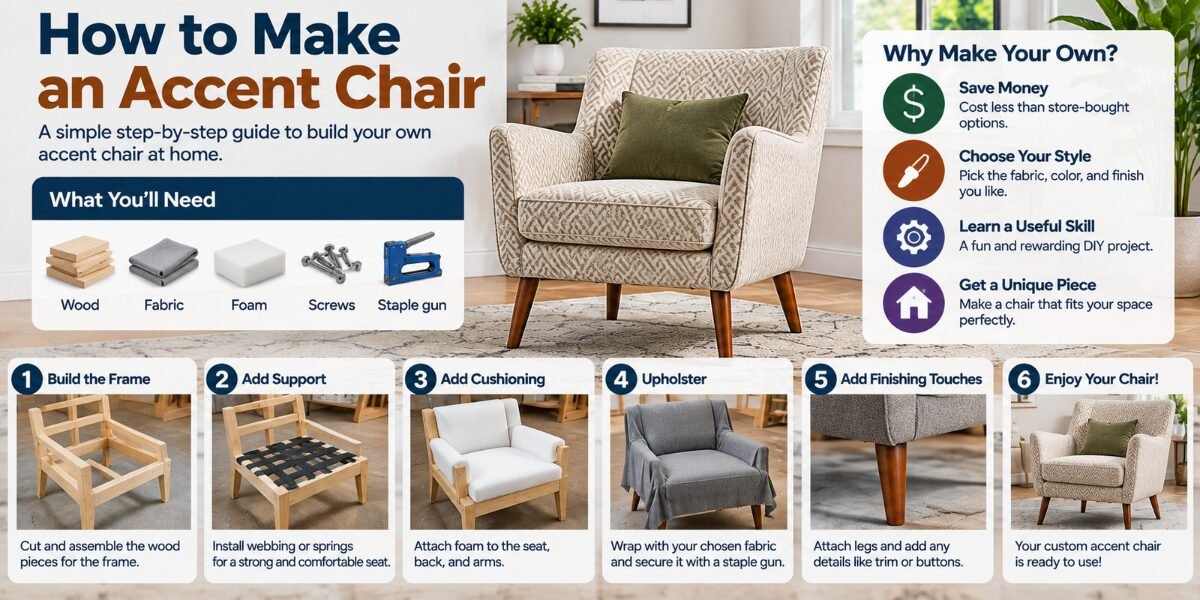
An accent chair can change the feel of a room without taking up much space. It can add color, shape, comfort, or a cozy place to sit. The good news is that you do not need to buy one ready-made.
You can make an accent chair at home with basic tools and simple materials. The key is to build a strong frame, add good support, and finish it with fabric that fits your room.
In this guide, I’ll walk through how to make an accent chair step by step. I’ll also cover the best materials, seat height, padding, fabric, common mistakes, and simple ways to make the chair look polished.
What Is an Accent Chair?
An accent chair is a small chair made to add style and extra seating to a room. It often has a different color, fabric, or shape from the main sofa or other furniture.
You can place one in a living room, bedroom, reading corner, home office, or entry area. A good accent chair should look nice, but it should also feel stable and comfortable.
Making one yourself gives you more control. You can choose the size, wood, foam, fabric, legs, and finish. This is helpful when store-bought chairs do not fit your space.
How to Make an Accent Chair
The basic process is simple: plan the size, build the frame, add the seat and back support, install foam, cover the chair with fabric, and finish the details.
Before cutting anything, measure your space. Then decide how wide, deep, and tall you want the chair to be. A simple plan can save a lot of wasted wood and fabric.
Step 1: Choose the Chair Size
Start with the overall size.
For a typical accent chair, a seat width of about 18 to 24 inches can work well. A seat depth of around 18 to 22 inches is also common.
The exact size depends on your room and the body size of the people who will use it. Leave enough space around the chair so it does not make the room feel crowded.
Also check the doorway and hallways. A chair that fits the room may still be hard to move into the house.
Step 2: Pick Strong Materials
A solid frame is the base of the chair. Use straight, strong wood for the main structure.
Common choices include:
- Pine
- Poplar
- Oak
- Birch plywood
- Other furniture-grade plywood
For many DIY projects, plywood works well for flat frame parts. Solid wood can be useful for rails, legs, and support pieces.
Avoid cracked or badly warped wood. Small frame problems can become bigger once the chair is used.
Basic Materials for a DIY Accent Chair
Here is a simple material list to help plan the project.
| Material | Main use |
|---|---|
| Wood or plywood | Chair frame |
| Wood screws | Frame assembly |
| Wood glue | Extra frame strength |
| Foam | Seat and back comfort |
| Batting | Soft outer layer |
| Upholstery fabric | Final chair covering |
| Webbing or support material | Seat support |
| Chair legs | Floor support |
| Staples | Attach fabric |
| Sandpaper | Smooth wood surfaces |
| Finish or paint | Protect and style the frame |
The amount you need will depend on the chair design. Measure each part before buying materials.
Step 3: Build the Frame
Cut the frame pieces based on your plan. A basic chair needs a sturdy base, four sides or rails, and support for the back.
Dry-fit the pieces before using glue or screws. This lets you check the shape and size.
Once the pieces line up, use wood glue and suitable screws to join the frame. Keep each corner square while you work.
Do not rush this part. A chair frame that is slightly crooked can make the seat and fabric harder to install later.
Add extra support under the seat. The seat should not rely on one thin board or a few small fasteners.
Step 4: Add the Legs
Attach the legs after checking that the base is level.
The legs must carry the full weight of the chair and the person sitting in it. Use strong attachment points rather than fixing them to thin decorative pieces.
Place the chair on a flat floor and check for movement. If it rocks, find the cause before moving on.
A stable chair is much more important than a perfect-looking leg design.
Step 5: Create the Seat Support
The seat needs firm support before you add foam.
One option is a solid seat panel. Another is a suitable webbing system designed for furniture.
If you use webbing, keep the strips evenly spaced and secure them well. Loose support can make the seat feel weak.
For a simple DIY chair, a properly supported plywood seat can be easier for a beginner. Add enough padding later to improve comfort.Read moreHow to Make Accent Chair: Easy DIY Guide for a Stylish Home
Step 6: Add the Foam
Foam changes how the chair feels. Too little foam can make a chair hard. Too much can make it look bulky.
Use firm upholstery foam for the seat. Softer material can be useful for the back, depending on the design.
Cut the foam slightly larger only when the design calls for it. A clean foam cut makes the fabric stage much easier.
Cover the foam with batting. This helps soften the edges and gives the fabric a smoother shape.
Step 7: Cover the Chair With Fabric
Fabric is where the chair gets its final look.
Measure each section before cutting. Leave extra fabric around the edges so you have enough material to pull and staple it underneath.
Start with large, easy-to-control sections. Keep the fabric straight as you work.
Pull it firmly, but do not stretch it so hard that the pattern changes shape. Place a few staples first. Then check the front and sides before adding more.
Work slowly around corners. Neat corners can make a basic DIY chair look much more professional.
Step 8: Finish the Back and Sides
The back of the chair should look clean too. If the chair will sit in an open area, people may see the rear often.
Use a separate fabric panel if your design needs one. Match the pattern where possible.
Hide raw fabric edges. You can use upholstery trim, a clean folded edge, or another finish that suits the chair style.
For a simple modern chair, clean lines often look better than too many decorative details.
Choosing the Right Fabric
Fabric should match both the chair and the way you plan to use it.
For a chair that gets daily use, look for a durable upholstery fabric. For a decorative chair that gets light use, you have more freedom with texture and pattern.
Think about these points before buying:
- Durability
- Cleaning needs
- Color
- Pattern
- Texture
- Light exposure
- Pet or family use
- Room style
A pale fabric can look great in a quiet reading corner. A darker or patterned fabric may be easier for a busy living room.
How High Should an Accent Chair Seat Be?
A comfortable seat height often falls around 17 to 19 inches from the floor, but the best height depends on the chair design and the person using it.
Your feet should rest comfortably on the floor when you sit. Your knees should not feel pushed too high or left hanging.
If the chair is mainly for a desk or table, match its height to that furniture. For a reading chair, comfort may matter more than exact measurements.
Common Mistakes When Making an Accent Chair
The most common mistake is building the chair before making a proper plan.
A second problem is weak support. A chair must handle repeated use, not just look good when finished.
Another mistake is cutting fabric too early. Measure the padded frame first. Then allow enough extra fabric for wrapping and stapling.
Do not ignore the corners. Poor corners can make the whole chair look unfinished.
Finally, do not choose foam based only on softness. A seat needs the right level of support as well as comfort.
How to Make a Small Accent Chair
A small accent chair can be a better choice for a tight room.
Reduce the width and depth while keeping enough room for comfortable sitting. Avoid making the seat too narrow just to save space.
Armless designs can save even more room. They can also look lighter in a small bedroom or apartment.
Another useful trick is to keep the chair visually simple. Slim legs, a clean frame, and a light fabric can make a small chair feel less bulky.
How to Make an Accent Chair More Comfortable
Comfort comes from more than thick foam.
The seat angle, back angle, seat depth, foam firmness, and fabric all affect the final feel.
A slightly angled back can feel more relaxed than a straight vertical back. A well-supported seat can also feel better than a very soft one.
If you plan to sit in the chair for long periods, focus on support first. Then adjust the padding to get the softness you want.
How to Make the Chair Look More Expensive
You do not need expensive materials to make a DIY accent chair look refined.
Focus on clean cuts, even seams, smooth wood, and straight fabric. These details are easy to notice.
Choose one strong design feature. It could be a rich fabric, shaped arms, tapered legs, or a simple wood finish.
Avoid adding too many details at once. A simple chair with good workmanship can look better than a busy chair with poor finishing.
Safety Tips for a DIY Accent Chair
Use the right safety gear while cutting and sanding wood. Eye protection is especially useful when using power tools.
Check every screw, joint, and leg before using the chair. The frame should not move or twist under normal pressure.
Make sure staples are fully seated and cannot catch clothing or skin.
If you are not comfortable using a power saw, drill, or other tool, get help from someone who has the right skill and equipment.
My Best Tips for a Better DIY Accent Chair
I would spend the most time on the frame and measurements. These two parts control almost everything that comes later.
I would also test the chair height before finishing the upholstery. Sitting on a bare frame for a moment can reveal problems with the size or position.
For fabric, buy a little extra rather than trying to cut the project too close. A small mistake can waste a large piece of material.
Most of all, keep the design simple if this is your first chair. A basic shape gives you fewer difficult corners and makes the upholstery work much easier.
FAQs About How to Make an Accent Chair
Is it hard to make an accent chair?
It can be a medium-level DIY project. The frame and upholstery take the most care, but a simple design is much easier for a beginner.
What wood is best for a DIY accent chair?
Strong furniture-grade plywood and straight solid wood can both work well. The best choice depends on the frame design, budget, tools, and finish you want.
How much foam should I use for an accent chair?
The right foam thickness depends on the seat design and desired comfort. Seat foam should provide support, while the back can use a different thickness or firmness.
Can I make an accent chair without sewing?
Yes. Many simple upholstery designs can use staples instead of sewing. The fabric is cut, pulled over the padded frame, and secured underneath.
What fabric is best for an accent chair?
A durable upholstery fabric is a good choice for a chair that gets regular use. Consider cleaning needs, texture, color, and how much wear the chair will receive.
Conclusion
Learning how to make an accent chair gives you control over the size, shape, fabric, and finish. You can build a chair that fits your room instead of trying to fit your room around a store-bought chair.
The best place to start is a simple frame with strong joints and good seat support. From there, careful foam placement and neat upholstery will shape the final result.
Take your time with measurements and corners. A clean, sturdy build will always matter more than adding lots of extra design details.