
An accent chair can change the feel of a room without changing the whole room. It can add color, shape, texture, or a new place to sit. But what is an accent chair, and how is it different from a normal chair?
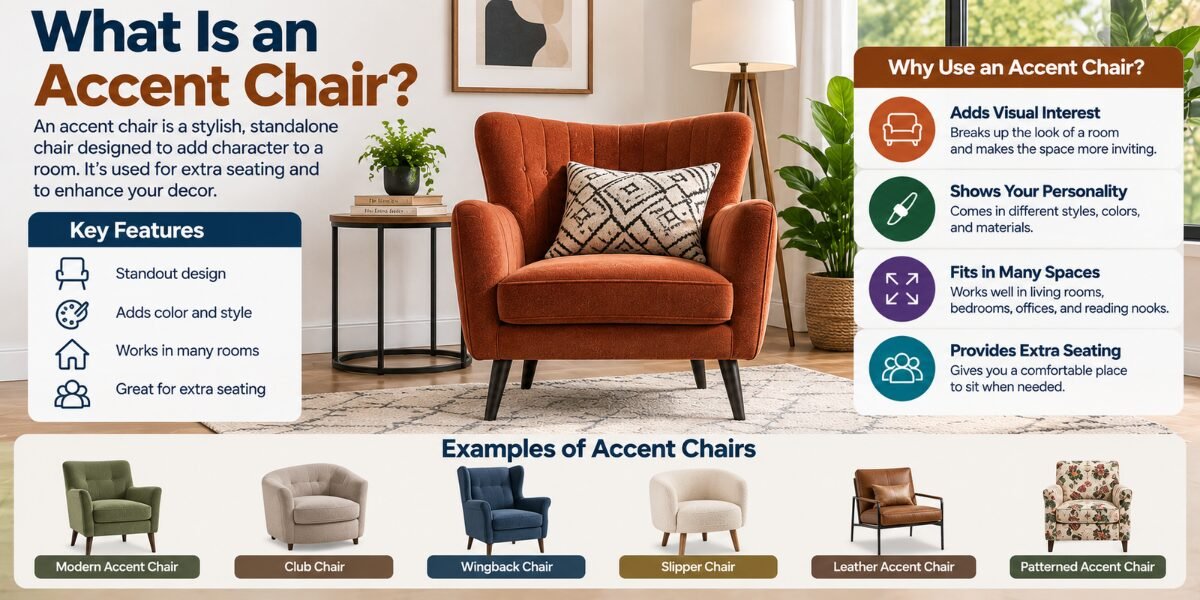
An accent chair is a chair made to add both seating and style to a room. It often has a unique color, fabric, shape, or design that stands out from the other furniture.
I like to think of an accent chair as a small design piece with a useful job. It should look good, but it should also be comfortable enough for real use.
What Is an Accent Chair?
An accent chair is a standalone chair that adds extra seating and visual interest to a room. It is often placed beside a sofa, near a window, in a bedroom, or in an empty corner.
The chair does not need to match the sofa or other furniture. In fact, it often looks better when it has its own look.
An accent chair may have a bold color, soft fabric, wood arms, a curved back, or a different shape. The goal is to add something that helps the room feel more complete.
An accent chair can also serve a simple need. It gives you a place to sit, read, relax, put on shoes, or talk with someone.
Why Do People Use Accent Chairs?
The main reason to use an accent chair is to add another seat without making the room feel like a matching furniture set.
A sofa may be the main seating piece. An accent chair can sit beside it and create a more useful seating area.
It can also fill an empty space. A bare corner can look unfinished. A well-sized chair can make that space feel planned.
Accent chairs can also bring in a new color or texture. For example, a neutral living room may benefit from one deep green, blue, or warm brown chair.
The chair can become a small focal point without taking over the room.
Where Can You Put an Accent Chair?
Accent chairs work in many parts of a home. The best spot depends on the room, chair size, and how you plan to use it.
Living Room
The living room is one of the most common places for an accent chair.
You can place one beside a sofa to create extra seating. Two chairs can also face a sofa and make a small conversation area.
Leave enough space around the chair for people to walk by. A chair that blocks a path can make even a large room feel tight.
Bedroom
An accent chair can also work well in a bedroom.
It can sit near a window, beside a dresser, or in an unused corner. A soft chair can give you a quiet place to read or sit.
If the bedroom is small, check the chair’s width and depth before buying it. A large chair can quickly use up useful floor space.
Home Office
A chair can add a second seating option in a home office.
It can be useful when you want to step away from your desk. It may also give visitors a place to sit.
For long work sessions, though, a decorative accent chair may not replace a proper office chair. Desk work needs different support.
Entryway
A small accent chair can be useful near an entryway.
It gives you a place to sit while putting on or taking off shoes. A compact design works best when floor space is limited.
What Makes a Chair an Accent Chair?
There is no single shape or material that makes a chair an accent chair.
Instead, the term usually describes the chair’s role in the room.
An accent chair may stand out because of its:
- Color
- Fabric
- Shape
- Size
- Texture
- Pattern
- Wood or metal details
- Curved or unusual design
A simple upholstered chair can be an accent chair. So can a leather chair, barrel chair, slipper chair, or lounge chair.
The key point is that the chair adds something different to the room while still working with the overall design.
Accent Chair vs. Regular Chair
The difference is often about purpose rather than construction.
A regular chair may be chosen mainly for a specific task. For example, a dining chair is made to work around a dining table.
An accent chair is usually chosen as an extra seating piece that also adds style.
| Feature | Accent Chair | Regular Chair |
|---|---|---|
| Main role | Seating plus style | Seating for a specific need |
| Placement | Many areas | Often tied to one use |
| Design | Can stand out | Often matches its setting |
| Color | May be bold | Often coordinated |
| Use | Reading, relaxing, guests, decor | Depends on chair type |
This does not mean an accent chair cannot be practical. A good one should still be comfortable and useful.
How Do I Choose the Right Accent Chair?
Start with the space.
Measure the area where you want to put the chair. Check the chair’s width, depth, and height. Also think about the space needed for walking around it.
Next, think about comfort. A chair may look great in a photo but feel too firm or too deep for your needs.
Then look at the room’s existing colors. The accent chair does not need to match everything. It should still feel connected to the room.
Finally, consider how you will use it. A chair for reading may need better back support than a chair used mainly for short visits.Read moreHow to Make an Accent Chair: A Simple DIY Guide
Should an Accent Chair Match the Sofa?
No. An accent chair does not have to match the sofa.
A slight contrast can make the room more interesting. You can use a different color, fabric, or shape while keeping one or two design details connected.
For example, a neutral sofa can work with a chair in a darker shade. A patterned chair can also work with a plain sofa.
The trick is balance. If every piece looks different, the room may feel messy. If everything matches too closely, it may feel flat.
What Size Should an Accent Chair Be?
The right size depends on the room.
A small room usually needs a compact chair. A large room can handle a wider chair with more visual weight.
Do not measure only the empty floor area. Check doorways, hallways, and tight corners too. The chair must be able to reach its final spot.
Also check the chair’s seat height. A chair that is much higher or lower than nearby seating can feel awkward when used with a sofa.
What Are the Most Common Accent Chair Styles?
There are many styles to choose from. Each one gives the room a different feel.
Barrel Chair
A barrel chair has a rounded shape that wraps around the sitter. It can create a soft and cozy look.
Slipper Chair
A slipper chair has a low profile and usually has no arms. It can work well in smaller spaces.
Club Chair
A club chair often has a deeper seat and a sturdy feel. It can be a good choice for relaxing.
Lounge Chair
A lounge chair is designed with comfort in mind. It can work well in a reading corner or larger living room.
Armchair
An armchair has arms and can offer a more traditional seating feel. It comes in many shapes and materials.
What Problems Can an Accent Chair Cause?
An accent chair is not always the right choice for every room.
The biggest problem is often size. A chair that is too large can make a room feel crowded.
Another issue is comfort. Some chairs look stylish but have a seat depth or firmness that does not suit everyone.
Fabric can also matter. Light-colored upholstery may need more care in a busy home.
Placement is another concern. A chair should not block doors, drawers, walkways, or other important areas.
How Can I Make an Accent Chair Look Natural?
Start by giving the chair enough space.
Then connect it to the room with a small detail. This could be a pillow, rug, curtain, artwork, or nearby wood tone.
You do not need to copy the chair’s color across the whole room. One small connection can be enough.
I also find that scale matters. A tiny chair beside a large sofa may look lost. A huge chair in a small room may feel heavy.
The goal is not to make the chair disappear. It should stand out while still belonging there.
Are Accent Chairs Comfortable?
They can be, but comfort depends on the design.
Look at the seat depth, seat height, back angle, cushion type, and arm position. These details can change how a chair feels.
Think about your main use before choosing one. A chair for reading needs different comfort from one used for short conversations.
If possible, sit in the chair before buying it. If that is not possible, check the listed measurements and read user feedback carefully.
Do Accent Chairs Work in Small Rooms?
Yes. A small room can still use an accent chair.
Choose a chair with a smaller footprint and avoid designs that look too heavy for the space. A chair with exposed legs can also create a more open visual feel.
Before buying, measure the room and mark the chair’s footprint on the floor. This simple step can help you see if the size works.
Frequently Asked Questions
What is an accent chair used for?
An accent chair adds extra seating while also adding style to a room. It can be used for reading, relaxing, guests, or filling an empty space.
Does an accent chair have to match a sofa?
No. It can have a different color, fabric, or shape. The chair should still share some visual connection with the rest of the room.
Where should I place an accent chair?
Common spots include living rooms, bedrooms, home offices, and entryways. Pick a place where the chair adds useful seating without blocking movement.
Can I use two accent chairs?
Yes. Two chairs can create a balanced seating area. They can sit across from a sofa or face each other in a larger room.
Are accent chairs good for small spaces?
Yes, if you choose the right size. Measure the space first and look for a chair with a compact footprint that leaves clear walking space.
Conclusion
So, what is an accent chair? It is a chair that adds extra seating while giving a room more visual interest.
The best accent chair is not just the one that looks good. It should fit the space, feel comfortable, and suit the way you plan to use it.
Before buying, measure the area, check the chair’s size, think about comfort, and consider how its color and shape will work with your existing furniture. A well-chosen accent chair can make an empty corner useful and give the whole room a more finished feel.