
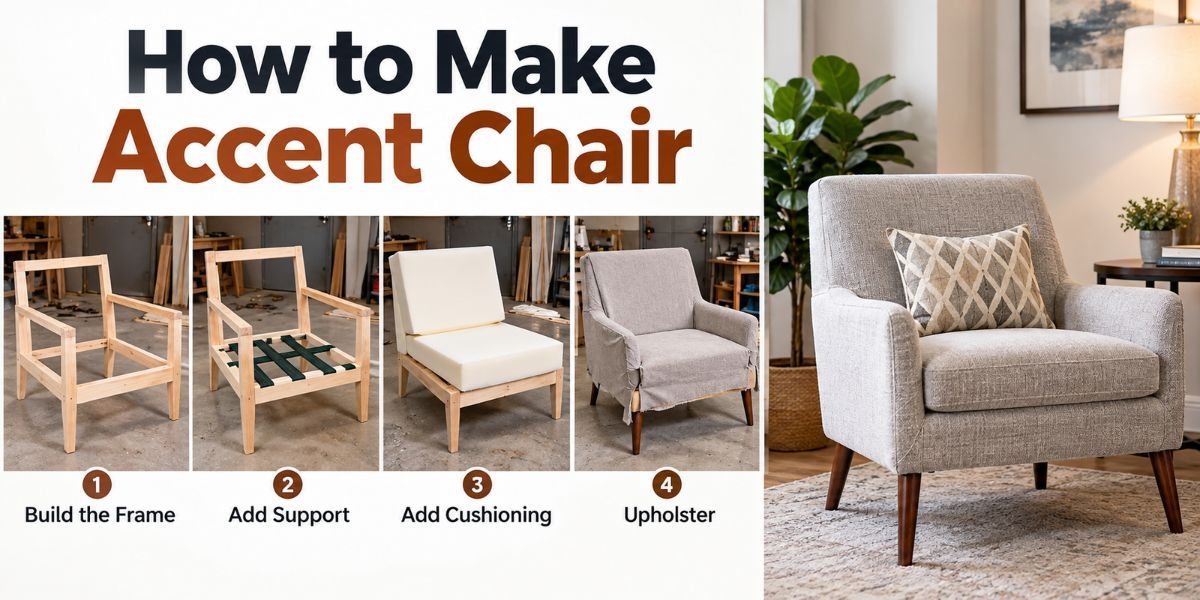
An accent chair can change the look of a room without a full makeover. The good news is that you do not need to be a skilled furniture maker to make one. With a solid frame, soft padding, good fabric, and basic tools, you can build a simple accent chair at home.
I like this project because you can choose the size, shape, fabric, and finish. You can also make the chair fit a small room instead of trying to fit a large store-bought chair into the space.
In this guide, I will show you how to make accent chair step by step. I will also cover the tools, materials, chair size, padding, fabric, common mistakes, and simple ways to make the finished chair look clean.
What Is an Accent Chair?
An accent chair is a single chair that adds style, color, or extra seating to a room. It can sit in a living room, bedroom, reading corner, entryway, or home office.
Unlike a basic dining chair, an accent chair often has a wider seat, thicker padding, or a more eye-catching design. It does not have to match the sofa exactly.
That gives you more freedom when making one yourself. You can use a bold fabric, a wood finish, or a simple shape that works with the rest of your room.
How to Make an Accent Chair
The basic process is simple. First, plan the chair size. Then build a strong frame, add the seat and back support, attach foam, cover the chair with fabric, and finish the legs or wood parts.
A basic DIY accent chair needs these main parts:
- Wood frame
- Seat support
- Back support
- Foam padding
- Batting
- Upholstery fabric
- Screws or suitable fasteners
- Chair legs
- Wood glue
- Staple gun
- Basic measuring and cutting tools
The exact design will change the materials you need. A simple wooden chair will need fewer parts than a fully upholstered chair.
Plan the Chair Before You Cut the Wood
Good planning can save a lot of time. I would start by deciding where the chair will go and how much space you have.
Measure the floor area first. Then decide the chair width, depth, and height. Leave enough room around the chair so people can walk past it with ease.
A common mistake is making the chair too deep. A deep seat may look cozy, but it can take up more space than expected.
Think about how you will use the chair, too. A reading chair may need a deeper seat and a supportive back. A small living room chair may work better with a compact frame.
Choose the Right Wood for the Frame
The frame needs to carry the user’s weight without flexing too much. Use straight, solid wood that is free from major cracks or weak spots.
The frame can be made from boards cut to the size of your design. You will normally need pieces for the front, back, sides, seat support, and back support.
Before joining the pieces, check each cut. Small measurement errors can make the finished frame sit unevenly.
I recommend dry-fitting the frame before using glue or screws. Put the pieces together and check the corners, width, depth, and overall shape.
This simple step can catch mistakes before they become hard to fix.
Build a Strong Chair Frame
Start with the main frame. Join the side pieces to the front and back pieces. Use wood glue and suitable screws or fasteners to create strong joints.
Keep checking that each corner is square. A frame that is slightly twisted can cause problems later when you add the seat and fabric.
Add support beneath the seat if the design needs it. The seat should not sag under normal use.
For the back, create a firm support structure. The back does not have to be completely solid if you plan to add foam and upholstery, but it needs enough support to stay stable.
Once the frame is assembled, gently check it for movement. If it rocks or twists, fix that problem before moving forward.
Add the Seat Support
The seat is one of the most important parts of the chair. It needs to support the foam and the person sitting on it.
One simple method is to use a solid wood seat panel. Another option is to use wood slats or suitable upholstery webbing, depending on the chair design.
A solid panel is often easier for a beginner because it gives the foam a flat base.
Sand the edges before adding padding. Sharp wood edges can damage fabric or make upholstery harder to fit.
Add Foam for Comfort
The foam gives the chair its soft feel. Choose upholstery foam made for seating rather than thin craft foam.
Measure the seat before cutting the foam. The foam should cover the sitting area without creating large gaps around the edges.
You can use thicker foam for a softer, fuller seat. However, more foam does not always mean a better chair. The final comfort depends on the foam type, thickness, frame, and overall design.
For the backrest, use suitable foam that gives support without making the back too stiff.
Take your time when cutting the foam. A clean edge will make the fabric easier to fit later.
Add Batting Around the Foam
Batting creates a smoother transition between the foam and the fabric. It can also give the chair a fuller look.
Place the batting over the foam and pull it gently around the edges. Secure it on the underside of the seat with a staple gun.
Do not pull it so hard that the foam becomes badly compressed. You want a smooth surface, not a tight, uneven one.
Trim extra batting where needed. Keep the underside neat enough that the fabric can sit flat.
Pick the Right Upholstery Fabric
Fabric has a big effect on the final look. It also affects how easy the chair will be to maintain.
For a chair that gets daily use, choose a durable upholstery fabric. For a decorative chair, you may have more freedom with texture and color.
Think about the room before choosing the fabric. A strong pattern can become the main feature of the space. A plain fabric can make the chair easier to blend with other furniture.
If you have pets or children, fabric care is also worth considering. A material that is difficult to clean may become frustrating over time.
How to Upholster the Accent Chair
Cut the fabric with enough extra material to wrap around the frame. It is much easier to trim excess fabric later than to fix a piece that was cut too small.
Place the fabric over the seat and center it. Start by securing one small section underneath.
Then pull the fabric to the opposite side and add a few staples. Move between opposite sides so the tension stays even.
Do not staple the entire edge at once.
Check the top surface after each small group of staples. Look for wrinkles, loose areas, or fabric that is pulling in the wrong direction.
Once the fabric looks smooth, finish securing the edges and trim the excess material.
Upholster the Backrest
The backrest can be upholstered in several ways. The best method depends on the frame design.
For a simple padded back, place the foam against the support, cover it with batting, and then add the fabric.
Pull the fabric evenly from side to side. Corners need extra care because too much fabric can create bulky folds.
If the chair has a visible wooden back, you may choose to leave part of the wood exposed. This can create a clean mix of soft fabric and natural wood.
Attach the Chair Legs
The legs should be strong and properly attached to the frame. Check that the mounting points are suitable for the chair design.
After attaching the legs, place the chair on a flat floor. Check for rocking.
If the chair rocks, do not ignore it. Find the cause and correct it before regular use.
A small level or careful measurement can help you check the chair during assembly.
Sand and Finish Any Exposed Wood
If your design includes visible wood, sand it before applying the final finish.
Start with a suitable rougher sandpaper and move to a finer grit for a smoother surface. Remove dust before applying paint, stain, or another finish.
You can leave the wood natural if you like a simple look. A stain can bring out the grain, while paint can give the chair a stronger color.
Let the finish dry fully before using the chair.
Common Mistakes When Making an Accent Chair
Making the Frame Too Weak
A chair frame needs more strength than a small decorative table. Weak joints can loosen with use.
Use proper support and make sure the main joints are secure before adding upholstery. Read More How to Build an Accent Chair: A Simple DIY Guide
Using the Wrong Foam
Thin or unsuitable foam can make a chair feel uncomfortable. It may also lose its shape faster.
Choose foam made for seating and match it to the way the chair will be used.
Cutting Fabric Too Small
This is one mistake that is hard to fix. Always allow enough fabric to wrap around the edges and attach underneath.
Pulling Fabric Too Tight
Very tight fabric can create strange lines and distort the foam. Pull it firmly but evenly.
Skipping the Dry Fit
If the frame is not square, upholstery will not hide the problem. Check the frame before moving to the soft materials.
How to Make a Small Accent Chair
A small accent chair can work well in an apartment, bedroom, reading nook, or compact living room.
Reduce the overall width and depth while keeping enough room for comfortable seating. Avoid making the seat so small that it becomes difficult to sit in.
Slim legs can also make a small chair feel lighter. A simple frame with a single fabric color can help reduce visual clutter.
For a tight room, measure the full chair footprint before building. Remember to include the space needed for people to sit down and stand up.
How to Make an Accent Chair Look More Expensive
You do not need expensive materials to get a clean look. Good proportions and careful finishing often matter more.
Keep the seams straight. Make the corners neat. Avoid loose fabric and uneven staples.
Choose a fabric that suits the room. Natural-looking wood with simple upholstery can create a classic look without adding many decorative details.
The final result will look better when every small part feels intentional.
Simple Maintenance Tips
Vacuum the fabric regularly to remove dust and loose dirt. Clean spills as soon as possible using a method that is safe for the fabric.
Check the legs and visible joints from time to time. If you notice movement, deal with it early.
Keep the chair away from conditions that may damage the wood or fabric. Direct sunlight can also affect some fabrics over time.
Good care can help the chair stay useful and attractive for longer.
What I Would Check Before Using the Chair
Before anyone sits in the finished chair, I would check the frame, legs, seat, and back.
Make sure there is no sharp wood edge. Check that all major fasteners are secure. Look for loose fabric and exposed staples.
Then place the chair on a flat surface and test it carefully. It should feel stable and should not rock or shift during normal use.
These checks are simple, but they can catch small problems before they become bigger ones.
Quick Accent Chair Checklist
| Part | What to Check |
|---|---|
| Frame | Strong joints and no major movement |
| Seat | Firm and properly supported |
| Foam | Suitable for seating |
| Batting | Smooth and even |
| Fabric | Large enough and suitable for use |
| Legs | Secure and level |
| Corners | Neat with no bulky folds |
| Finish | Fully dry before use |
FAQs About How to Make Accent Chair
Can a beginner make an accent chair?
Yes. A simple design can be manageable for a beginner with basic woodworking and upholstery skills. Start with a small frame and a simple shape.
What wood is best for making an accent chair?
Use strong, straight wood that can handle the chair’s load. The best choice depends on the design, budget, tools, and finish you want.
What foam should I use for an accent chair?
Use upholstery foam made for seating. The right thickness and firmness depend on the chair design and how you want it to feel.
How much fabric do I need for an accent chair?
The amount depends on the chair’s size, shape, seat depth, back design, and fabric pattern. Measure every upholstered part and allow extra fabric for wrapping and trimming.
Is it cheaper to make an accent chair yourself?
It can be, especially if you already have some tools. But fabric, foam, wood, hardware, and finishing supplies can add up, so compare the full project cost with ready-made chairs.
Conclusion
Learning how to make accent chair furniture is mostly about good planning and careful work. Build a strong frame first, then focus on the seat, padding, fabric, and finish.
The easiest path is to keep the design simple. Measure twice, check the frame often, and take your time with the upholstery.
A well-made DIY accent chair can give you useful seating and a personal touch that is hard to get from a standard store-bought piece.