
Choosing between a sofa and a sectional depends entirely on your room dimensions, your social habits, and the level of flexibility you require for your interior layout. While a standard sofa provides a classic, formal aesthetic, a sectional offers expansive seating that anchors a room and maximizes lounging comfort. Budgeting for these pieces varies significantly, with standard sofas typically ranging from $600 to $3,500, while larger, more complex sectionals generally cost between $1,200 and $7,000 depending on materials and configuration.
Key Takeaways
- Measure your floor space twice, accounting for pathways and door swings.
- Sectionals offer more seating but are harder to rearrange than sofas.
- Standard sofas provide a versatile base for mixing and matching accent chairs.
- Consider your room’s traffic patterns to avoid blocking natural walkways.
- L-shaped sectionals work well in corners; U-shaped models define large open spaces.
How to Choose Between Sofa and Sectional
Selecting the right furniture starts with understanding your lifestyle. If you frequently host large groups or prioritize movie nights with the family, a sectional provides the necessary sprawl factor. Conversely, if you enjoy rearranging your living room seasonally or live in a smaller apartment, a standard sofa paired with two armchairs offers far more spatial agility.
Assessing Your Room Dimensions
The most common mistake is buying furniture that overwhelms the floor plan. Use painter’s tape to map out the footprint of the piece on your rug. Ensure you maintain at least 30 inches of clearance around the furniture for comfortable movement.
| Feature | Standard Sofa | Sectional |
|---|---|---|
| Flexibility | High | Low |
| Seating Capacity | 2-3 Adults | 4-8 Adults |
| Spatial Impact | Moderate | High |
| Best Room Type | Formal or Small | Open-concept or Large |
Pros and Cons of Sectionals
Sectionals are the kings of comfort, often featuring chaise lounges or recliners built directly into the frame. They eliminate the need for extra ottomans or chairs, keeping the room looking tidy. However, they’re often bulky and difficult to move through tight hallways or stairwells.
- L-Shaped: Perfect for tucking into corners to save central space.
- U-Shaped: Ideal for large, square rooms that require a central focal point.
- Modular: Individual pieces that can be disconnected for custom layouts.
Warning: Always verify that your chosen sectional can be broken down into smaller components, as single-piece, oversized sectionals are notoriously difficult to navigate through standard doorways.
Why Choose a Standard Sofa?
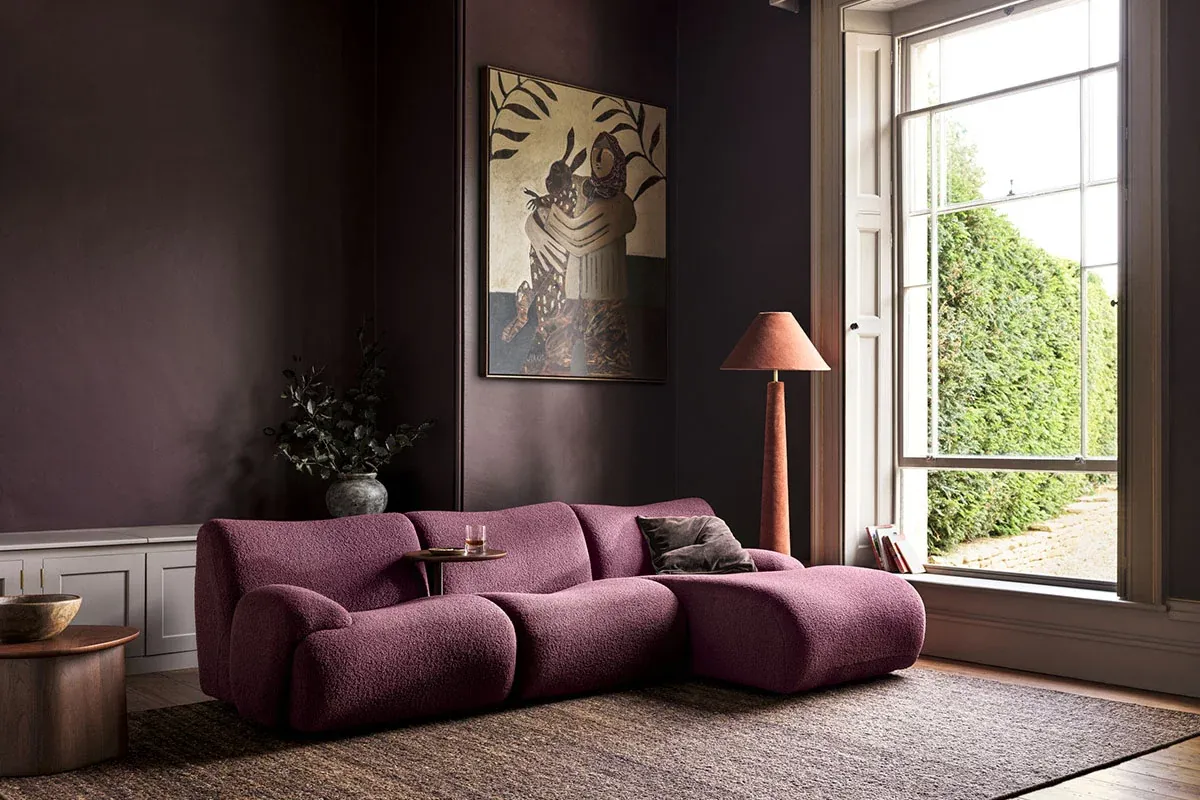
A standard sofa is a design staple for a reason. It’s inherently more formal and allows you to build a cohesive look by adding different textures through throw pillows, blankets, and complementary occasional chairs. It’s the safer choice for renters who move frequently, as a three-cushion sofa fits into almost any living room configuration, whereas a sectional might be too long or incorrectly oriented for a new space.
Considering Your Social Habits
Are you a “host” or a “napper”? If your living room is primarily for entertaining guests, a sofa paired with two accent chairs creates a conversation-friendly circle that feels more inclusive. If your living room is a sanctuary for relaxing after work, a deep-seated sectional provides the ultimate cuddle-ready environment that a standard sofa simply can’t match.
Balancing Your Budget Needs
When deciding, look at the long-term value. A high-quality sofa will last for a decade, but a cheap sectional with poor-quality frame construction will sag within two years. Focus on the internal components:
- Kiln-dried hardwood: The gold standard for frame durability.
- High-density foam: Prevents the “sinking” feeling over time.
- Performance fabrics: Essential for households with pets or children.
Pro Tip: If you’re torn between the two, look for a “sofa with a matching ottoman.” This provides the legroom of a sectional when you want to lounge but keeps the flexibility of a traditional sofa for formal hosting.
Navigating Traffic Patterns
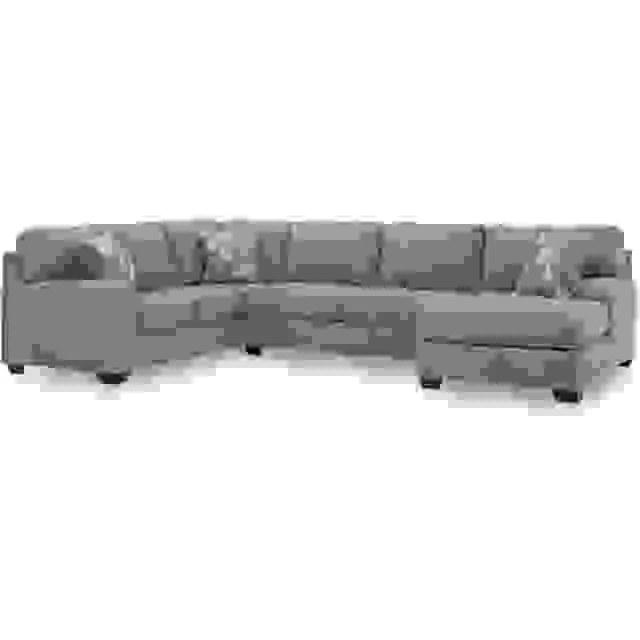
Never let your furniture dictate how you walk through your home. If a large chaise lounge blocks the path from the kitchen to the patio, you’ll eventually grow frustrated with the piece. Use a floor plan grid to ensure that you’re not “trapping” the room. If your room is narrow, a slim-profile sofa is almost always superior to a bulky sectional.
Frequently Asked Questions
Is a sectional better for small rooms?
Generally, no. Sectionals often dominate small floor plans and make the room feel cramped. A standard sofa with exposed legs creates a sense of openness, allowing light to pass underneath and making the floor space appear larger. Only choose a sectional for a small room if it’s a compact, modular model that fits perfectly into a specific corner.
Can I change the orientation of a sectional?
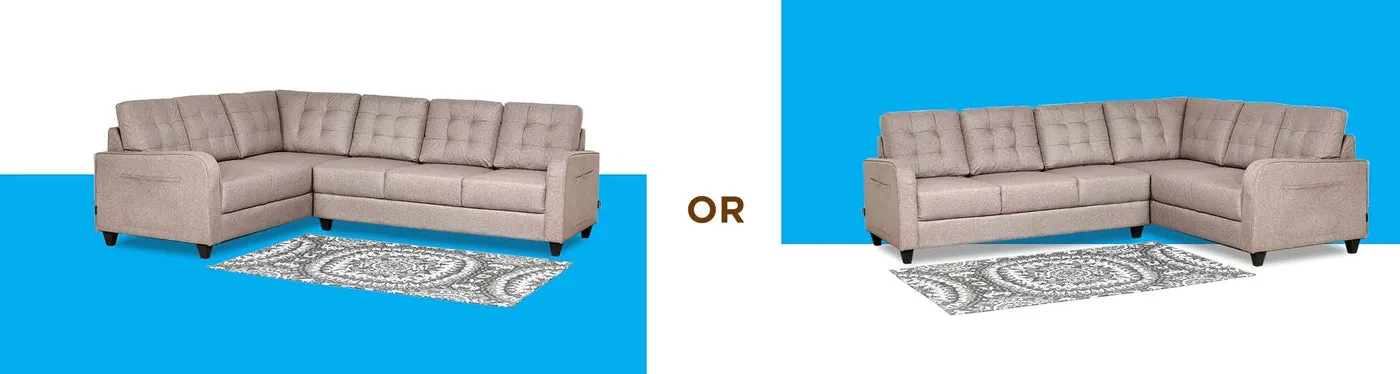
Most sectionals are either “left-facing” or “right-facing,” meaning they’re fixed in one configuration. Unless you purchase a truly modular system where individual pieces can be detached and rearranged, you’re stuck with the orientation you buy. Always check the product specifications carefully to ensure the chaise or arm aligns with your room’s layout before finalizing your purchase.
Which is easier to move?
A standard sofa is significantly easier to move than a sectional. Because it’s a single, lighter unit, it can easily navigate tight corners, staircases, and narrow doorways. A sectional consists of multiple heavy pieces that must be connected, making the moving process complex and often requiring professional assistance to ensure the clips are properly aligned and secured.
Does a sectional save money?
Not necessarily. While a large sectional provides more seating per square inch, the cost of materials and shipping for a high-quality sectional is usually higher than a quality sofa. However, if you would otherwise have to buy a sofa plus two additional chairs, a large sectional can sometimes be more cost-effective. Compare the total seating capacity before deciding which option offers the best value.
How do I maintain my furniture?
Regular maintenance is vital for both types. Vacuum under the cushions weekly to prevent debris from wearing down the fabric fibers. For fabric sofas, use an upholstery cleaner that matches the manufacturer’s cleaning code. Rotate cushions every few months to ensure even wear, and avoid placing your furniture in direct, harsh sunlight to prevent the upholstery from fading over time.
Conclusion
Choosing between these two options is a balancing act between the desire for maximum comfort and the need for spatial flexibility. If you have an open floor plan and want to create a cozy, dedicated lounge area, a sectional is the superior choice.
If you prefer a dynamic space that can be adapted for parties or moved easily, stick with a sofa. Take your measurements today, visit a showroom to test the seat depth, and invest in a piece that suits your daily rhythm.