
Building a custom swivel chair requires mounting a durable seat bucket or wooden shell to a dedicated mechanical swivel base or heavy-duty turntable bearing. Expect to spend $80 to $250 on materials.
Key Takeaways
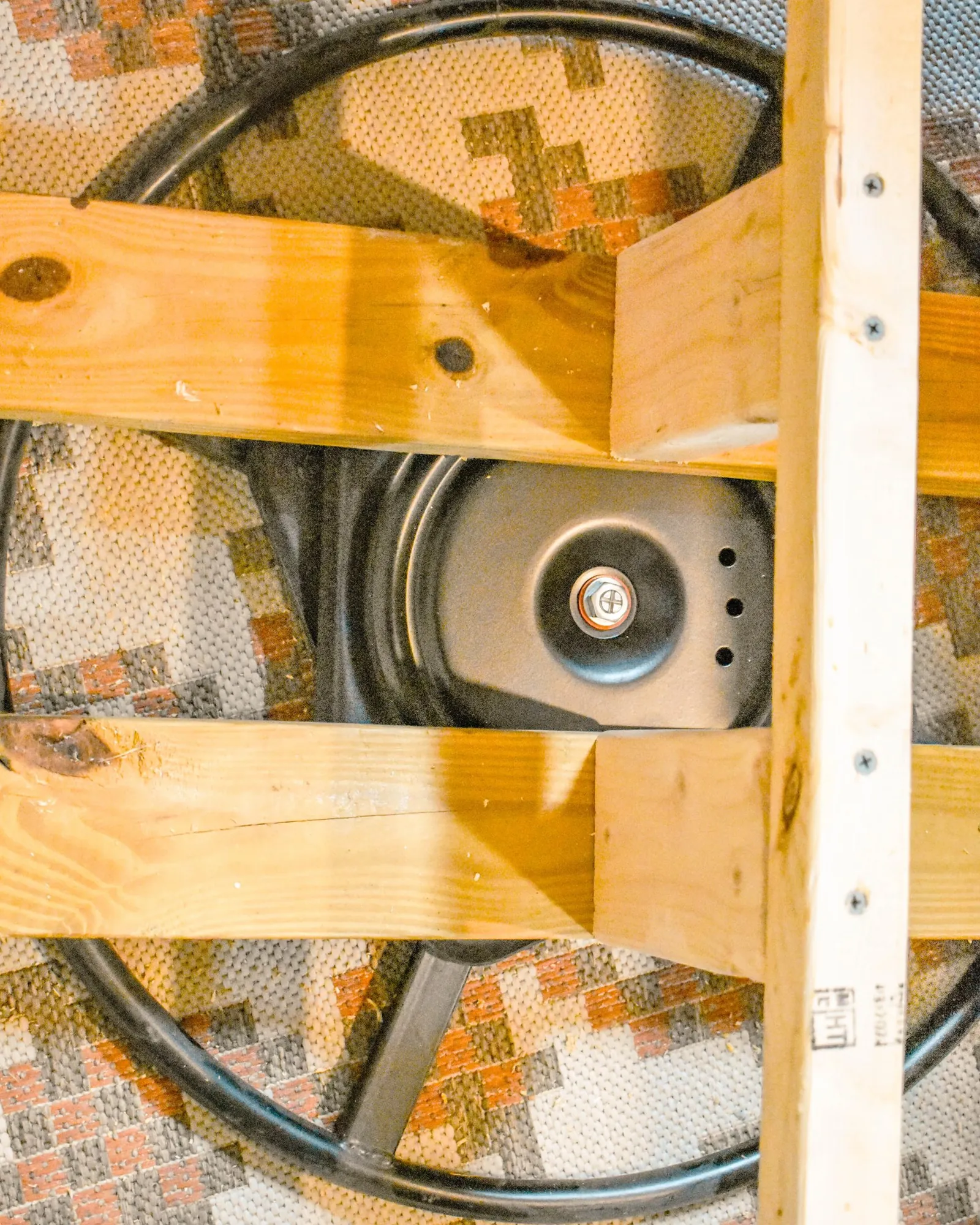
- Acquire a heavy-duty ball-bearing swivel plate rated for at least 300 to 500 pounds.
- Use 3/4-inch Baltic birch plywood for the seat platform to prevent flex under load.
- Install steel threaded inserts instead of standard wood screws to secure rotating hardware.
- Maintain a finished seat height between 16 and 20 inches from the floor for proper ergonomics.
- Choose high-density polyurethane foam (minimum 2.5 lb/cu ft) to ensure seat longevity.
Essential Tools and Materials
You’ll need standard carpentry tools and rotating hardware. Purchase components at home improvement centers or woodworking suppliers.
Hardware and Lumber Checklist
- Plywood core: 4×4-foot sheet of 3/4-inch Baltic birch plywood.
- Solid hardwood: 8 board feet of white oak or hard maple for legs.
- Swivel mechanism: Barstool swivel plate or heavy-duty swivel base.
- Fasteners: 1/4-20 threaded inserts and matching machine bolts.
- Adhesives: Titebond II wood glue and spray contact adhesive.
- Upholstery supplies: 3-inch high-density foam, polyester batting, and upholstery vinyl or fabric.
Required Tools
- Miter saw and jigsaw
- Cordless drill with Brad point and Forstner bits
- Heavy-duty staple gun (manual or pneumatic)
- Random orbital sander with 80- to 220-grit sandpaper
- Clamps (at least four 12-inch bar clamps)
Choosing Your Swivel Hardware
The hardware dictates chair movement and weight support.
| Hardware Type | Rotation Range | Best For | Weight Capacity |
|---|---|---|---|
| Flat Ball-Bearing Plate | 360-degree continuous | Dining or accent chairs | 300–500 lbs |
| Torsion Spring Return | 90–180 degrees auto-centering | Barstools, kitchen counters | 250–400 lbs |
| Gas Lift Spider Base | 360-degree with height adjust | Desk chairs, office task seats | 250–350 lbs |
Pro Tip: Choose a ball-bearing plate with pre-lubricated steel bearings housed in a race flange rather than loose nylon ball tracks to eliminate grinding sounds over time.
Design Dimensions and Ergonomics

Establish the chair’s geometry before cutting. An adult seat should sit approximately 18 inches off the floor to pair with a standard 30-inch-high table or desk. Account for 1 to 1.5 inches of foam compression.
| Dimension Variable | Standard Dining | Desk Seating | Deep Accent |
|---|---|---|---|
| Seat Height (compressed) | 18 inches | 17–21 inches | 16 inches |
| Seat Width | 18–20 inches | 20–22 inches | 24 inches |
| Seat Depth | 16–18 inches | 17–19 inches | 20–22 inches |
| Backrest Recline Angle | 95–100 degrees | 100–105 degrees | 105–110 degrees |
Step-by-Step: How to Build Swivel Chair
Constructing the chair involves making the base, assembling the seat pan and backrest, mounting the swivel hardware, and applying the finish.
Step 1: Build the Four-Leg Base
Cut four 8/4 white oak legs, angled outward at 5 degrees. Join them with a central cross-lap joint. Glue and clamp the joint for 24 hours. The upper surface must be flat to support the swivel plate.
Step 2: Cut the Seat and Backrest Panels
Trace the seat shape onto 3/4-inch Baltic birch plywood. Cut the perimeter using a jigsaw fitted with a fine-toothed wood blade to prevent tear-out.
Step 3: Install the Threaded Inserts
Align the swivel plate with the bottom of the plywood seat pan and mark the four mounting holes.
Warning: Never use standard wood screws to mount the swivel mechanism; the continuous rotational tension will strip the wood fibers and cause the seat to detach.
[ Plywood Seat Pan ] || (1/4-20 Machine Bolts) [ Swivel Bearing Plate ] || (Through-Bolts / Lock Nuts) [ Hardwood Base Assembly ]
Step 4: Upholster the Seat Cushion
Cut high-density foam 1/2-inch wider than the plywood base. Affix the foam using spray adhesive. Stretch upholstery fabric across the top, pulling it snug. Secure the fabric with 3/8-inch staples, working from the center toward the corners.
Step 5: Mount the Hardware and Assemble
Bolt the lower half of the swivel plate to the wooden leg assembly using 1/4-inch carriage bolts paired with nylon locknuts. Next, invert the upholstered seat pan. Align the top plate of the swivel with the threaded inserts installed in Step 3. Secure the plate using 1/4-20 machine screws fitted with split lock washers.
How Do You Troubleshoot Wobble?
Wobble stems from an uneven base or loose bearings. Set the assembled base on a dead-flat surface, such as a cast-iron table saw top or level concrete floor, to pinpoint rocking legs before attaching the upper shell.
- Sand or plane down high contact points on hardwood leg feet.
- Check that mounting bolts haven’t backed out of their inserts.
- Replace bent swivel plates that display play between the upper and lower races.
- Add self-adhesive felt pads beneath leg tips to absorb small floor variations.
Finishing and Protecting the Wood

Protect exposed hardwood legs with a hard-wearing clear coat that resists scuffs from shoes. Apply three coats of oil-modified polyurethane or wipe-on satin poly, lightly buffing with 320-grit paper between applications. Allow 72 hours of total cure time before heavy daily use.
Frequently Asked Questions
Can I turn any regular chair into a swivel chair?
Yes, provided the chair features a flat wooden bottom or a sturdy apron structure. Remove the existing stationary legs, reinforce the base with a 3/4-inch plywood mounting block, and bolt a standard ball-bearing swivel plate between the seat bottom and a new splayed base frame.
What wood species is best for a swivel chair base?
Dense hardwoods like white oak, hard maple, ash, or walnut perform best. These woods hold mechanical fasteners securely, resist split forces caused by lateral rotation, and support the downward force concentrated onto the small footprint of the central swivel mechanism.
How much weight can a ball-bearing swivel hold?
Standard 6-inch to 10-inch commercial swivel plates hold between 300 and 500 pounds. Heavy-duty industrial models constructed with solid-steel race rings and carbon-steel ball bearings carry upwards of 800 pounds. Always verify the manufacturer’s safe working load before fabrication.
Why does my new swivel mechanism feel stiff?
Most heavy-duty swivels are tightly packed with heavy lithium grease and adjusted with tight mechanical tolerances at the factory. They require body weight and several dozen full rotations to loosen slightly and cycle smoothly through their entire range of motion.
Conclusion
Once your project is complete, take a moment to test the rotation on a flat surface to ensure it moves smoothly. You’ll probably want to add a soft cushion or fabric cover next to make it extra cozy. Enjoy relaxing in your unique creation; it’s going to be your favorite seat.