
Space-saving furniture options like chairs that can turn into beds provide a versatile solution for small apartments or guest rooms. These pieces function as standard seating during the day and transition into a sleeping surface at night. They differ primarily in their folding mechanism, footprint size, and overall comfort level.
How these chairs turn into beds
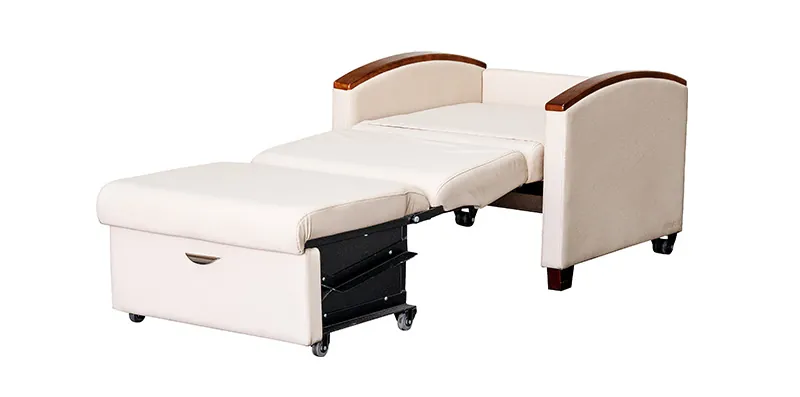
These pieces help maximize floor space in tight living quarters by serving dual roles for different times of the day.
| Item Name | Best Use Case | Common Example |
|---|---|---|
| Ottoman Bed | Small guest rooms | Folding foam ottoman |
| Armchair Bed | Daily lounge seating | Pull-out twin chair |
| Futon Chair | Flexible studio space | Click-clack frame |
| Loveseat Sleeper | Couples guest space | Full-size pull-out |
| Daybed | Daily sitting area | Twin frame with trundle |
Ottoman beds
An ottoman bed is a compact footstool that unfolds into a flat floor-level sleeping mat. It suits people who only host guests once or twice a year and lack storage space for traditional furniture.
- Provides a temporary sleeping surface that stores inside a small frame.
- Uses a simple tri-fold foam design that unfolds in under 30 seconds.
- Occupies less than 3 square feet of floor space when stored away.
- Offers a firm feel, as the mattress sits directly on the floor.
You can set one up by removing the outer cover and unfolding the three foam segments until they lie flat on the floor.
Armchair beds
An armchair bed looks like a standard piece of living room seating but hides a metal frame and mattress inside. It suits frequent hosts who want a dedicated bed for one person without using a full room.
- Contains a hidden metal frame that unfolds into a twin-sized bed.
- Features a thicker mattress than foam-only models for better support.
- Includes built-in cushions that remain attached or store within the seat.
- Requires a clearing of 7 to 8 feet of floor length to open fully.
Futon chairs
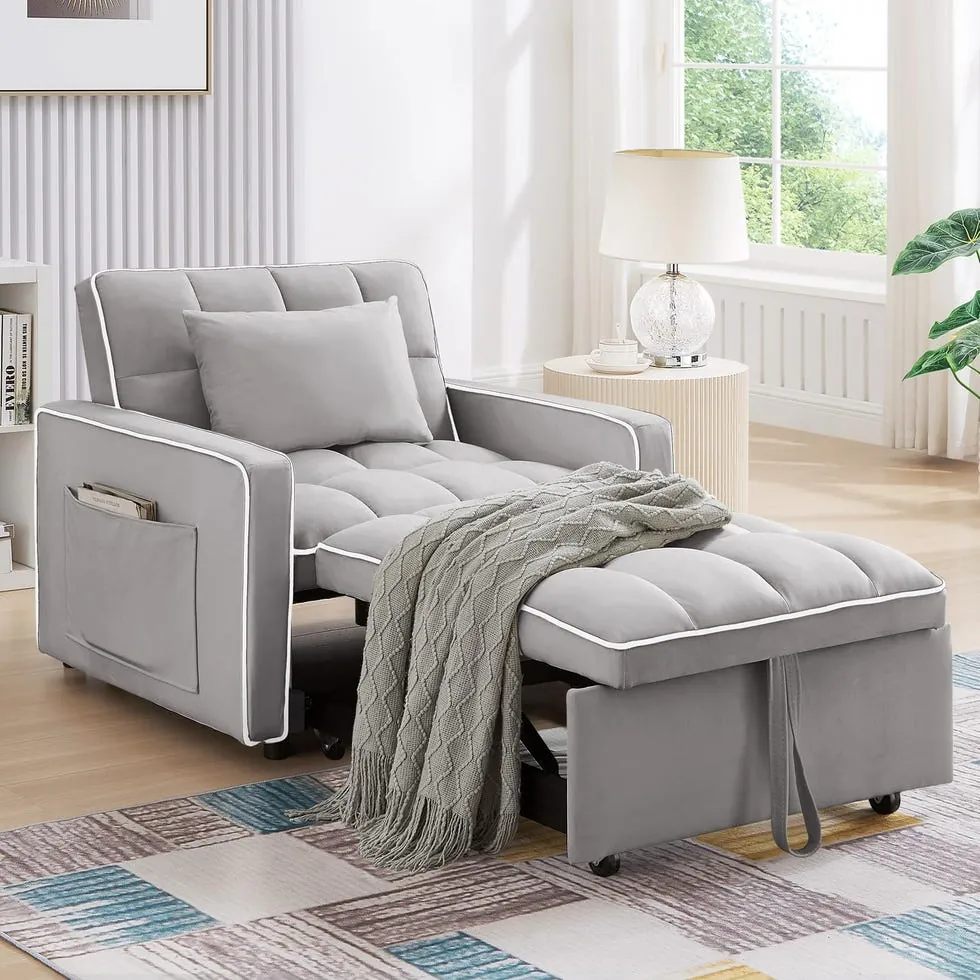
A futon chair is a simple frame that uses a click-clack hinge to drop the backrest down into a flat position. It suits people who want a minimalist look and prefer a quick, tool-free conversion process.
- Allows for multiple recline settings between upright and fully flat.
- Uses a single mattress piece that folds at the center of the seat.
- Works well in offices or hobby rooms where space is at a premium.
- Requires no heavy metal mechanics, making it easier to move between rooms.
If you’re tall, ensure the fully flat length exceeds your height, as many models are designed for shorter visitors.
Loveseat sleepers
A loveseat sleeper is a wider chair model that provides enough width for two people to sleep side by side. It suits larger studio apartments where a full-sized sofa would block traffic paths.
- Expands to a full or queen size to accommodate two guests.
- Features a standard pull-out mechanism with a locking bar for stability.
- Provides a more traditional sleeping experience similar to a standard guest bed.
- Demands significant clearance, often requiring 6 feet of width to operate.
People often make the mistake of measuring only the chair’s width without checking the room depth, which can result in the bed blocking essential walkways.
Other convertible designs
- Trundle chairs: These feature a secondary frame that slides out from under the main seat, creating a twin bed at the same height as the chair.
- Convertible benches: These use a hinged backrest that folds down into a bench-style bed, ideal for narrow hallways or entryways.
- Modular sleepers: These consist of individual square cushions that you can rearrange into a bed shape, offering the most customization for odd-shaped rooms.
Selecting the right model
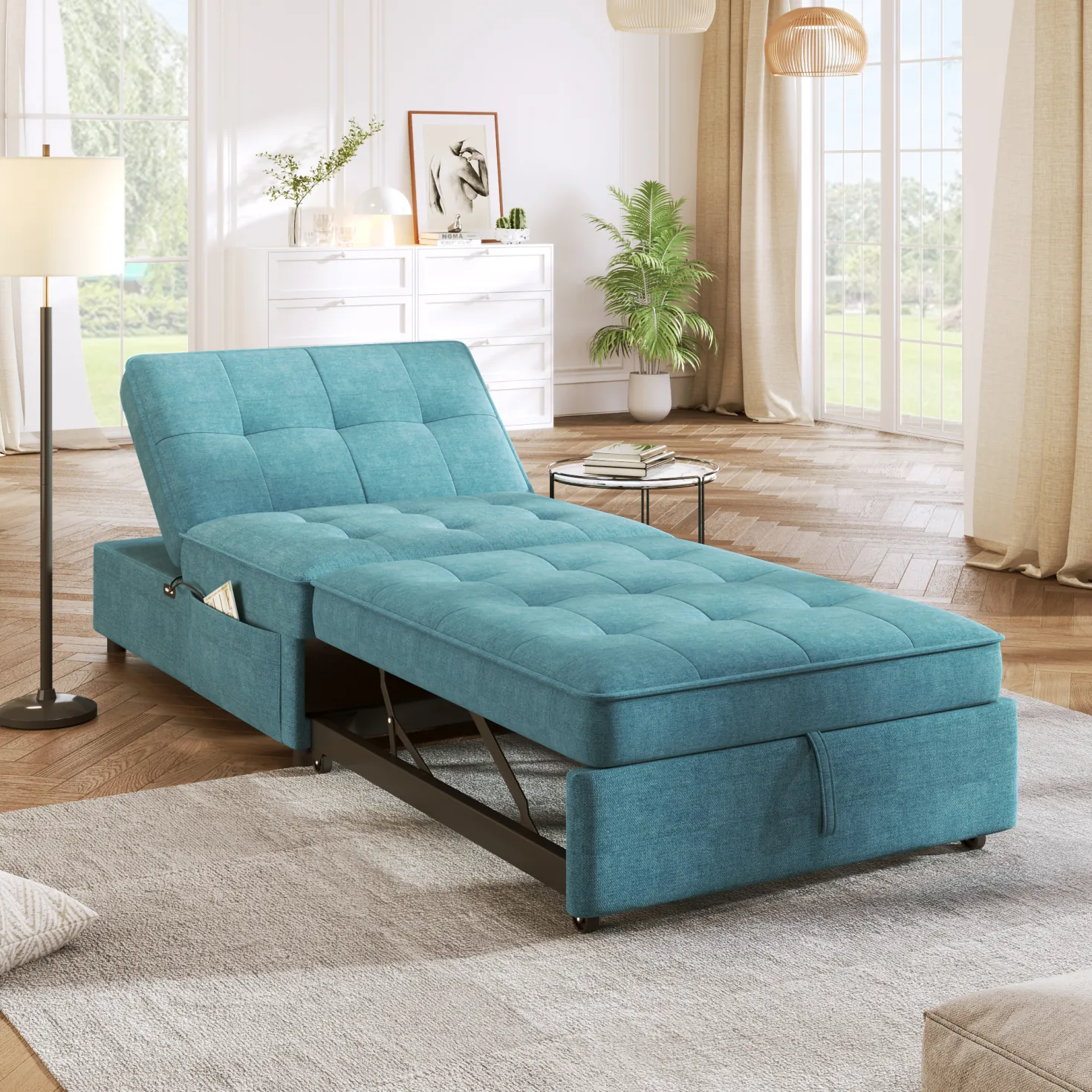
Choose based on your available floor area and how often you host visitors. If you have less than 5 feet of depth, select an ottoman bed or a futon chair. If you host guests for multiple nights, choose an armchair bed, as the internal mattress provides better back support.
Remember that metal frame models are heavier and harder to move, while foam models are lightweight but offer less durability. These items can rarely be combined with other furniture, so confirm that your room layout allows for the full extension of the frame.
Frequently asked questions
How much space do I need to clear?
You need at least 7 feet of depth from the back of the chair to the end of the bed. Measure your room while the chair is fully extended to ensure you can still walk around the edges.
Are these as comfortable as real beds?
Most models are less comfortable than a standard mattress because the folding frame can create pressure points. You can improve the feel by adding a 2-inch memory foam topper to the surface.
How long does it take to set up?
Simple click-clack chairs take about 10 seconds to flatten, while pull-out metal frames take about 60 seconds. Always clear all items off the seat before you attempt to open the frame.
Is it safe for children to operate?
Most models are safe for adults, but children shouldn’t operate heavy metal frames alone. The pinching risk at the hinges is the primary danger for small fingers during the transition.
How often should I clean the fabric?
Vacuum the fabric seams weekly to remove crumbs that fall into the folds. Use a mild upholstery cleaner for stains, but don’t soak the foam, as it can trap moisture and grow mold.
Is the weight capacity the same for the chair and bed positions?
The weight capacity is usually lower when the item is in the bed position. Check the manufacturer’s manual for the specific load limit in the flat state to avoid bending the frame.
Conclusion
Start by measuring the exact floor space available in your room while accounting for other furniture. You should expect a smooth transition if the hinges are kept clean and lubricated. If you hear loud grinding or see bent metal, stop using the mechanism and contact the manufacturer.