
The SIHOO M18 is a reliable office standard, while the Serta Bryce is preferred for lower back relief. Choose a chair matching your height and weight for optimal support.
1. SIHOO M18 Ergonomic Office Chair

Best for: Someone who wants a standard, highly adjustable office chair for daily use.
The SIHOO M18 provides four support points. It’s designed for users between 5’6″ and 6’2″ tall. You can adjust the seat height, headrest, and lumbar support to help reduce pain during long hours at your desk.
This chair features a flexible, non-pattern mesh backrest that keeps you cool while you sit. Assembly is straightforward. It isn’t ideal for users shorter than 5’6″, as the support points may not align correctly with their frame.
Good if:
- You need a chair for long work days.
- You prefer breathable mesh materials.
- You want a simple, eight-step assembly.
Skip it if:
- You’re shorter than 5’6″.
- You prefer a leather finish over mesh.
2. Serta Bryce Executive Office Chair

Best for: Someone who prioritizes dynamic lower back support above all else.
The Serta Bryce Executive Chair uses patented AIR lumbar technology that pivots and moves with your body. This system provides continuous support for your lower back, which is helpful during long work days. The chair also includes memory foam body pillows and pocket coils in the seat cushion for extra comfort.
The backrest is made of perforated bonded leather with mesh surrounds to help with airflow. It supports up to 275 lbs and features a 360-degree swivel base. This chair is designed for those who want a more professional, executive appearance in their home office. It isn’t for those who prefer a mesh seat or deep reclining.
Good if:
- You want continuous, moving lumbar support.
- You prefer the feel of memory foam cushioning.
- You want a professional, leather-look chair.
Skip it if:
- You need a chair that reclines flat.
- You prefer a mesh seat for maximum airflow.
3. GABRYLLY Ergonomic Office Chair

Best for: A tall user who needs a chair that accommodates a larger build.
The GABRYLLY Ergonomic Office Chair is suitable for a wide variety of body types. It’s built for users between 5’2″ and 6’1″. The chair features flip-up armrests that allow you to push it directly under your desk to save space when not in use.
The mesh back and seat are designed to resist abrasion and support 4 to 8 hours of sitting. You can tilt the backrest between 90 and 120 degrees to change your posture. It supports up to 300 lbs and rolls on mute wheels that are safe for wooden floors. It isn’t for those needing a footrest or deep recline.
Good if:
- You have a small workspace and need to store the chair away.
- You’re between 5’2″ and 6’1″.
- You want a larger seat cushion.
Skip it if:
- You need a footrest for breaks.
- You want to recline past 120 degrees.
4. Ergonomic Mesh Office Chair

Best for: Remote workers or programmers who sit for 10 hours or more.
The CabeVibe C3 is built for long-duration use, featuring a dual-wing adaptive lumbar system. This system provides twice the coverage of standard chairs, with both auto and manual adjustments to cradle your waist. The chair also includes 4D oversized headrests and 630-degree mechanical armrests to reduce shoulder tension.
The mesh material is micro-perforated to increase airflow, which helps prevent heat buildup. The chair uses a Synchro-Tilt mechanism that locks between 90 and 125 degrees. It isn’t for users who prefer a soft seat.
Good if:
- You spend 10+ hours a day at your desk.
- You need deep lumbar coverage.
- You’re taller than 6 feet.
Skip it if:
- You prefer a thick, soft foam seat.
- You want a simple chair without complex adjustments.
5. ELABEST X100 Ergonomic Mesh Office Chair with Footrest

Best for: Users who want the highest level of adjustability and a built-in footrest.
The ELABEST X100 features a dynamic spinal alignment system. It includes 5D flip-up armrests and an 18-inch extendable footrest for when you want to relax. The chair offers 17-point micro-adjustments, including a 3D synchro-tilt lumbar system that tracks your spine’s natural curve.
Good if:
- You want to transition between work and relaxation.
- You need significant spinal support adjustments.
- You use a footrest during breaks.
Skip it if:
- You prefer a simple, static chair.
- You don’t need a footrest.
6. CAPOT Ergonomic Mesh Office Chair
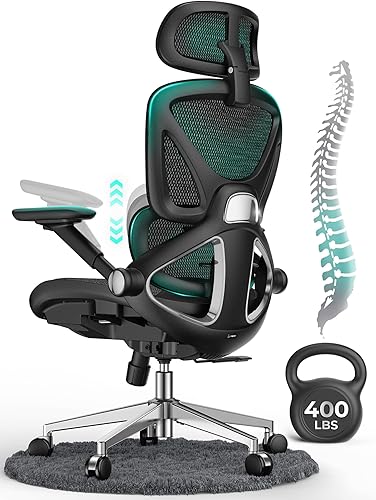
Best for: Heavier users who need a durable, high-capacity chair.
The CAPOT Ergonomic Mesh Chair supports up to 400 lbs. It features micro-adjust lumbar support that targets the L1-L5 spine, which can help reduce lower back pressure. The chair is designed for users between 5’5″ and 6’2″ and includes flip-up arms to maximize space.
The seat cushion is larger than average, and the chair can lock at 90, 110, or 125 degrees. It also comes with a 5-year warranty, which is longer than many other options on this list. It isn’t for those who prefer a lightweight chair.
Good if:
- You weigh over 300 lbs.
- You want a long warranty period.
- You need specific lumbar alignment.
Skip it if:
- You want a lightweight or easy-to-move chair.
- You’re shorter than 5’5″.
7. GABRYLLY Ergonomic Office Chair with Footrest

Best for: Someone who wants to turn their office into a napping or lounge space.
The GABRYLLY Reclining Desk Chair offers a 135-degree recline with three locking positions. It includes a retractable steel footrest that extends 18.1 inches, allowing you to stretch out comfortably. The 3D armrests and adjustable headrest help maintain posture while you work or take a break.
Good if:
- You take frequent breaks to nap or lounge.
- You need a footrest.
- You want a wide range of reclining angles.
Skip it if:
- You have a very tight workspace.
- You prefer a chair without a footrest.
8. Ergonomic Office Chair

Best for: Users who prioritize a thick, comfortable seat cushion.
The QLTPLUS chair features a 4-inch molded foam cushion to relieve pressure. It’s built for 8+ hours of use and supports up to 350 lbs. The mesh back is contoured to align with the spine, and it includes an adjustable lumbar cushion for personalized relief.
The flip-up armrests make it easy to store under a desk, and the tilt-and-rock function allows for natural movement. It comes with a 5-year warranty. It isn’t for users who prefer a firm mesh seat.
Good if:
- You suffer from hip or thigh pain.
- You prefer a thick, cushioned seat.
- You want a high weight capacity.
Skip it if:
- You prefer a breathable mesh seat base.
- You want a chair with more complex headrest adjustments.
9. Ergonomic Mesh Office Chair

Best for: Someone who wants a standard, BIFMA-certified task chair.
The MOLENTS ergonomic chair offers 3D armrests and adjustable lumbar support. It features a tilt backrest with three positions, ranging from 90 to 120 degrees. The chair is crafted from high-elastic mesh material for breathability.
It fits a variety of users, though the manufacturer recommends contacting them if you need a different gas lift height. It is a straightforward task chair. It lacks some of the advanced features like footrests or deeper recline angles found in other models.
Good if:
- You want a certified, reliable task chair.
- You need basic 3D armrest adjustments.
- You prefer a standard office aesthetic.
Skip it if:
- You need a chair with a footrest.
- You require a deep recline for relaxing.
10. Big and Tall Executive Chair

Best for: Someone who wants a premium, “throne-like” executive feel.
The BLISNEST chair features an air-adjustable lumbar system. It uses diamond-tufted, high-resilience foam that resists flattening. The chair includes a waterfall edge design to help reduce thigh pressure and leg numbness.
It is engineered for heavy-duty stability and features silent, scratch-free wheels. This chair is designed for users up to 6’8″, making it a strong choice for taller individuals. Its size may feel too bulky for a small room.
Good if:
- You’re very tall.
- You prefer high-resilience foam over mesh.
- You want adjustable air lumbar support.
Skip it if:
- You have a small workspace.
- You prefer a lightweight, breathable mesh chair.
Choosing the Best Desk Chair for Back and Neck Pain
Most of these chairs offer similar core features, such as adjustable lumbar support, mesh backrests, and tilt mechanisms. If you’re a standard-sized user, the choice between these models often comes down to the specific warranty length or the aesthetic of the base. Following ANSI/HFES 100-2007 Human Factors Engineering of Computer Workstations standards helps ensure that the chair you select provides the necessary range of motion for a healthy seated posture.
Still Not Sure?
How often will I actually use this chair?
If you’re sitting for 8 to 12 hours every day, you should prioritize models with advanced lumbar systems and high-density foam or micro-perforated mesh, such as the Ergonomic Mesh Office Chair. If you only sit for an hour or two at a time, a simpler model like the MOLENTS ergonomic chair will likely suffice.
What do I already own that this must work with?
Check the height of your desk before buying. If your desk is low, you need a chair with flip-up arms like the GABRYLLY Ergonomic Office Chair to ensure it fits underneath. If you have hardwood floors, look for models with silent, soft-tread wheels, such as the Big and Tall Executive Chair, to protect your surfaces.
What am I most likely to regret choosing?
The most common regret is choosing a chair that doesn’t fit your height. If you’re tall, avoid chairs designed for shorter users, as the lumbar support will hit your back in the wrong place. Always check the height range provided for the specific model, such as the 5’3″ to 6’5″ range of the Ergonomic Mesh Office Chair.
As an Amazon Associate, we earn from qualifying purchases. This post contains affiliate links – if you buy through them, we may earn a commission at no extra cost to you.
Choosing the right chair is a balance between your height, your weight, and your daily routine. If you need a reliable, all-around office chair, the SIHOO M18 Ergonomic Chair is a solid choice. If you need a chair that helps you relax during breaks, the GABRYLLY Reclining Desk Chair is the better fit. Start by verifying your height against the manufacturer’s suggested range.
Related guides
- 10 Best Chairs for Lower Back and Hip Pain: Our Top Picks
- Best Desk Chairs for Back Problems: Expert Ergonomic Guide
- Best Desk Chair for Lower Back Problems: Expert Selection Guide
Frequently Asked Questions
What does a chair ask of its owner week to week?
The listing doesn’t mention maintenance requirements. If you have a mesh chair, keep it away from sharp objects to avoid tears, and use a damp cloth to wipe down the frame if dust accumulates.
What has to be replaced to keep it working?
The gas lift is the most common part that may eventually need replacement if the chair begins to sink. Many manufacturers, such as GABRYLLY and SIHOO, offer warranty support for parts.
What happens when the chair is outgrown or used up?
At this point, the chair is likely nearing the end of its useful life. You can often donate the frame if it’s still structurally sound, but the seat cushion is rarely recyclable.
Would a more capable chair have suited me better?
A more capable chair usually offers more points of adjustment, such as 4D armrests or dynamic spinal alignment. If you currently experience pain after only a few hours of work, you likely need a model with a more advanced lumbar system, such as the ELABEST X100, which is designed for long-term fatigue reduction.
Conclusion
Investing in your comfort is a smart move that’ll pay off during long workdays. Before you finalize your purchase, check the return policy to ensure you can test it out at home. You shouldn’t settle for anything less than a chair that feels like it was made just for you.