
A standard sofa is the better choice for most homes, as it offers more flexibility for changing your room layout over time. You should choose a sectional only if you have a very large, open-plan space and want to create a fixed seating zone for many people.
Comparing seating options for your home

The right choice depends on the size of your room and how often you rearrange your furniture. A standard sofa fits almost anywhere, while a sectional requires a specific footprint to look balanced and avoid blocking paths.
| Method | How long | Effort | Cost | Best for |
|---|---|---|---|---|
| Standard Sofa | Low | Low | Low | Small rooms |
| Sectional | High | High | High | Large families |
| Modular Sofa | Medium | Medium | Medium | Flexible spaces |
Choosing a standard sofa
A standard sofa usually comes in two-seat or three-seat versions. It’s the safest bet for renters or people who move furniture often.
- Measure your wall length to ensure at least 18 inches of space on each side of the sofa for side tables.
- Check the doorway width; most standard sofas fit through a 30-inch opening if you tilt them correctly.
- Position the sofa against a wall to keep the center of the room open for traffic.
Standard sofas are easy to move and replace. They fit into almost any living room layout without making the space feel crowded. The main weakness is that they provide less total seating surface than a large sectional.
Installing a sectional sofa
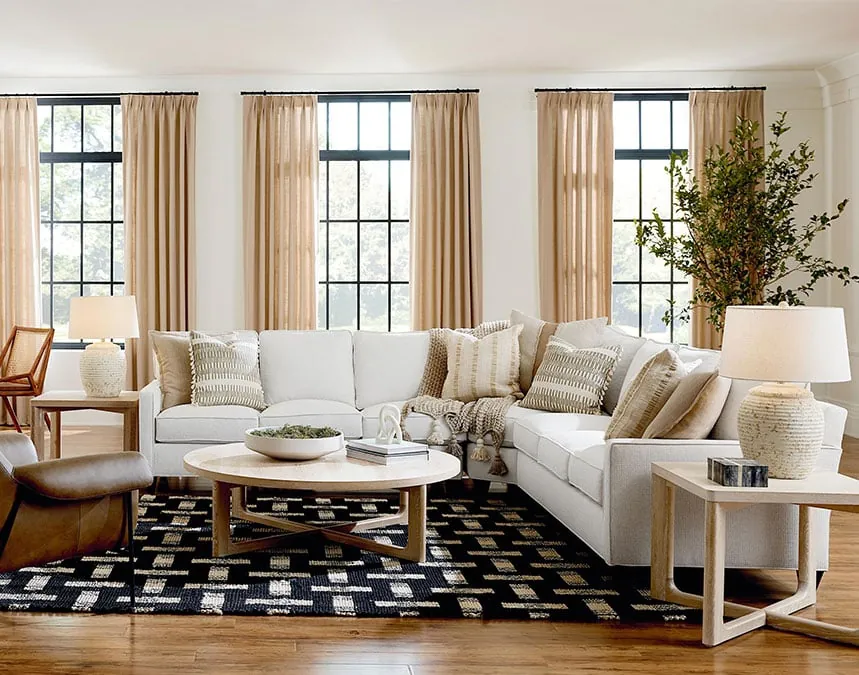
A sectional consists of two or more pieces that lock together. It works best in a corner or as a room divider in a large area.
- Verify that your floor plan has a dedicated corner or clear central zone that’s at least 10 feet by 10 feet.
- Connect the sections using the metal brackets underneath the frame, ensuring they’re flush to prevent gaps.
- Use a U.S. Consumer Product Safety Commission guide to ensure your furniture is stable and safe for your home environment.
Sectionals provide excellent comfort for lounging. They make a room feel cozy and complete. The downside is that they’re very heavy and hard to move if you decide to change your decor.
Using a modular sofa system
Modular sofas allow you to buy individual seats and ottomans to build your own shape. This is a smart middle ground for growing families.
- Start with a basic three-seat configuration to see how it fits your daily routine.
- Add extra modules or corner pieces later as your needs or your room size change.
- Rearrange the pieces into separate chairs or a long sofa whenever you host guests.
These are highly adaptable and grow with your home. They’re easier to transport than a fixed sectional because you can move them one piece at a time. The weakness is that the individual parts can slide apart if you don’t use connector clips.
Picking the right seating for your needs
When you’re in a hurry, a standard sofa is the best choice because it’s easy to find in stock and simple to deliver. If you’re doing this for the first time, a standard sofa is also better since it’s hard to make a mistake with the layout.
If you want the best possible result whatever it takes, a custom modular system is the winner because you can design it to fit your exact room dimensions. You must balance your desire for a large seating area against the reality of your floor space.
Rules for every seating choice
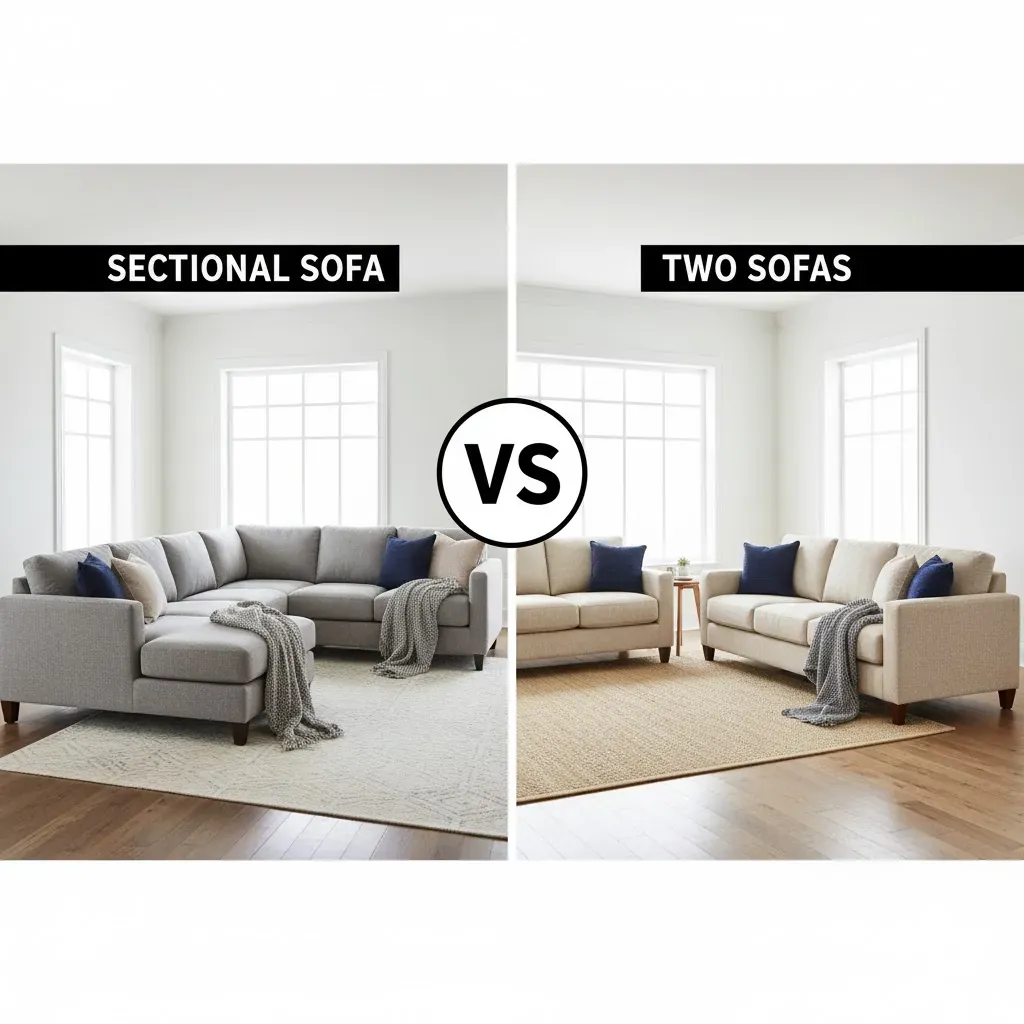
Regardless of the type you pick, you must ensure the furniture fits the scale of your room. Always check the seat depth, which typically ranges from 20 to 24 inches, to ensure it matches your height for proper back support.
You must also verify the frame material, as solid hardwood frames last longer than particleboard under daily use. If your furniture arrives with complex reclining features, consult the manufacturer’s manual for maintenance, as poor handling can void your warranty. Professional assembly is recommended if you aren’t comfortable managing heavy, mechanical parts yourself to avoid injury.
Frequently asked questions
Can a sectional fit in a small apartment?
No, a sectional is usually too large for a small apartment because it dominates the floor space. You should choose a standard sofa or a loveseat to keep your room from feeling cramped and to allow for better traffic flow.
How long does a quality sofa last?
A quality sofa typically lasts for a significant duration, depending on the quality of the frame and the frequency of use. You can check the durability by testing the frame for wobbles; a solid frame should feel rigid and heavy.
Is it safe to buy a used sofa?
Yes, it’s safe if you inspect it thoroughly for bed bugs and structural damage. You should always check the seams and fabric for signs of wear and verify that the cushions still provide firm support before you bring it home.
What happens if I move a sectional?
It may not fit in your new room if the layout is different, as sectionals are designed for specific configurations. You often find that the corner piece or the orientation of the chaise doesn’t work in a new house.
How much space do I need behind a sofa?
You should aim for at least 30 inches of clearance behind a sofa if it’s acting as a room divider. This ensures that people can walk past the furniture comfortably without bumping into the back of the piece.
How many people can fit on a sofa?
A standard three-seat sofa typically holds three adults, assuming each person needs about 24 inches of width. You can estimate the capacity by dividing the total length of the seating area by 24 inches to find your limit.
Conclusion
Choosing between these options requires looking at your room size first. If you have a small space, prioritize a standard sofa to keep the room functional. If you have a massive open area, a sectional or modular system will fill the space better. Regardless of your choice, measure your doorways twice before you buy to ensure the furniture will actually get into your home.
Related guides