
A bedroom chair is a piece of furniture designed for sitting, reading, or dressing that sits in a sleeping area rather than a living room. You’ll find that it serves as a functional spot for temporary storage of clothes or a quiet place to sit before starting your day.
Choosing the right seat depends on the size of your floor space and how you plan to use it. If you have a small room, look for a compact, armless design to keep the area from feeling crowded. A common mistake is buying a piece that’s too deep for the room, which makes it hard to walk around your bed safely.
Selecting and positioning your bedroom chair

- Measure your available floor space to ensure you have at least 24 inches of clearance around the chair for comfortable movement.
- Select a height that matches your needs; for dressing, a chair with a seat height of 17 to 19 inches is standard for most adults.
- Place the chair in a corner or near a window to create a dedicated reading nook that doesn’t block your main path.
- Test the fabric durability, especially if you plan to use the chair for daily tasks like putting on shoes, to avoid early wear.
- Add a small side table if you intend to use the area for reading, keeping the surface at the same height as the chair arm.
Tip: If you have limited space, look for a lightweight chair that you can move easily when you need to clean or rearrange.
Tip: Avoid placing chairs directly against radiators or heating vents, as the U.S. Department of Energy notes that blocking airflow reduces your home’s heating efficiency.
Time Needed for Setup
The time required depends on whether you buy a pre-assembled piece or a flat-pack item that needs construction.
| Situation | How long | What changes it | What to watch for |
|---|---|---|---|
| Pre-assembled | 5 minutes | Unboxing speed | Packaging waste |
| Flat-pack | 45 minutes | Tool access | Missing hardware |
| Second-hand | 2 hours | Cleaning needs | Fabric stains |
If you choose flat-pack furniture, expect to spend an extra 15 minutes simply sorting hardware. Most manuals list the total count for screws and dowels; verify these against the physical contents before starting. If a bag is missing even one cam lock, stop immediately. Attempting to build with partial hardware often ruins the structural integrity of the wood.
If a setup takes longer than two hours, you’re likely dealing with misaligned pilot holes. Don’t force the screws, as this usually strips the particle board. Instead, back the screw out and re-align the joint. If the piece remains wobbly after tightening, use a carpenter’s square to check for a frame that’s out of plumb.
Signs Your Chair is Ready
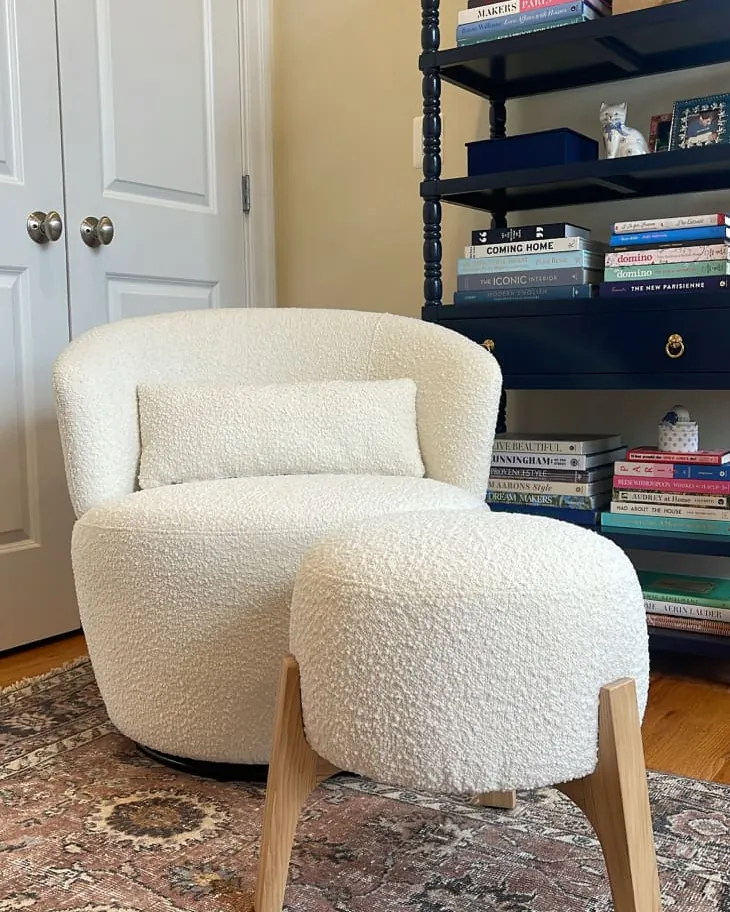
You’ll know the chair is ready for use when it sits level on the floor without wobbling when you apply weight. Test this by placing your hands on the seat and shifting your body side to side. If the frame rocks even a fraction of an inch, your joints remain loose.
The fabric must feel taut across the frame, with no sagging or ripples near the seams. Check the base for any exposed staples or loose screws that could snag your clothing or carpet. If you can push on the backrest and it stays firm, the construction is likely sound.
Always check that the feet have pads to prevent them from scratching your bedroom floor. If you hear a grinding sound when sliding the chair, the pads are missing or worn thin.
Common Mistakes to Avoid

- Ignoring scale: A chair that’s too large will overwhelm your bed and make the room look smaller. Always check the dimensions of your bed and nightstands before buying.
- Choosing style over comfort: People often pick a chair that looks great but lacks proper back support for sitting. Sit in the chair for at least five minutes to see if it remains comfortable for your posture.
- Blocking flow: Placing a chair in a high-traffic lane causes people to bump into it in the dark. Keep the chair tucked away from the path between the door and the bed.
Frequently Asked Questions
Can a bedroom chair be used in a living room?
Yes, you can move it to a living room, but consider the size and style. Most bedroom chairs are smaller and may look out of place if the living room furniture is much larger or more formal in design.
How do I clean a fabric bedroom chair?
Most fabric chairs require a simple vacuuming with an upholstery attachment to remove dust. If you spill something, check the manufacturer’s care tag for specific cleaning codes, as some fabrics require professional cleaning to avoid water stains or shrinkage.
Is it safe to use a wooden chair?
Yes, a wooden chair is safe if it’s structurally sound and doesn’t have sharp edges. Ensure the finish is smooth so it doesn’t snag your clothing or linens when you’re dressing.
How much weight can a standard chair hold?
Most residential chairs are tested to support 250 to 300 pounds. Check the product specifications provided by the manufacturer to be sure, as the weight limit varies based on the frame material and the construction method used.
Why does my chair wobble?
A wobbly chair usually results from an uneven floor or improperly adjusted legs. First, check if your floor is level using a bubble level. If the chair includes leveling feet on the bottom of its legs, adjust them until the seat remains stable and firm against the floor surface.
Conclusion
Adding this simple piece of furniture can truly transform your space into a more relaxing retreat. If you’re looking to upgrade your room, try placing a small accent chair in an empty corner today. You’ll find it’s the perfect spot to unwind, and you won’t regret making your home feel extra cozy.