
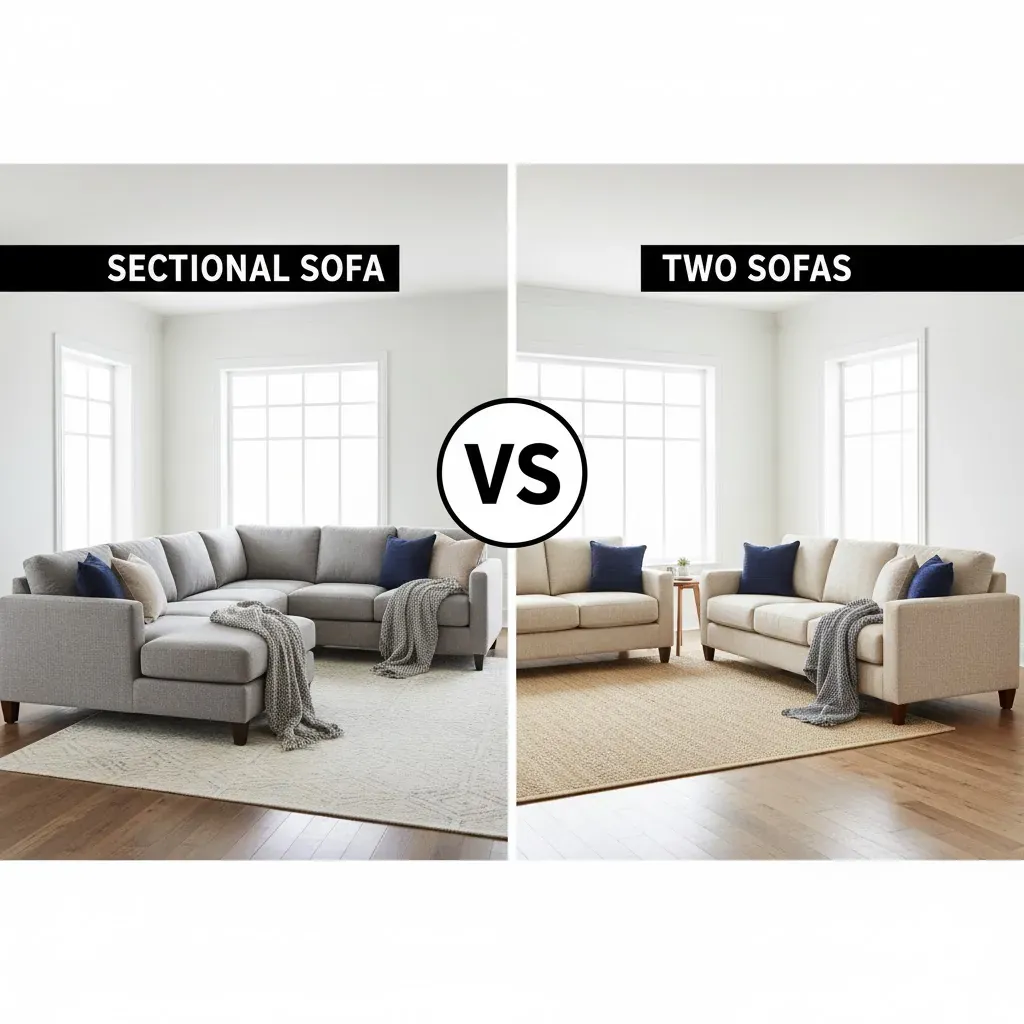
A sectional isn’t better than a sofa because the right choice depends entirely on your room size and how you use your living space. A sofa offers more flexibility for changing layouts, while a sectional provides more seating capacity for large groups in fixed corners.
Comparing sectionals and sofas for your home
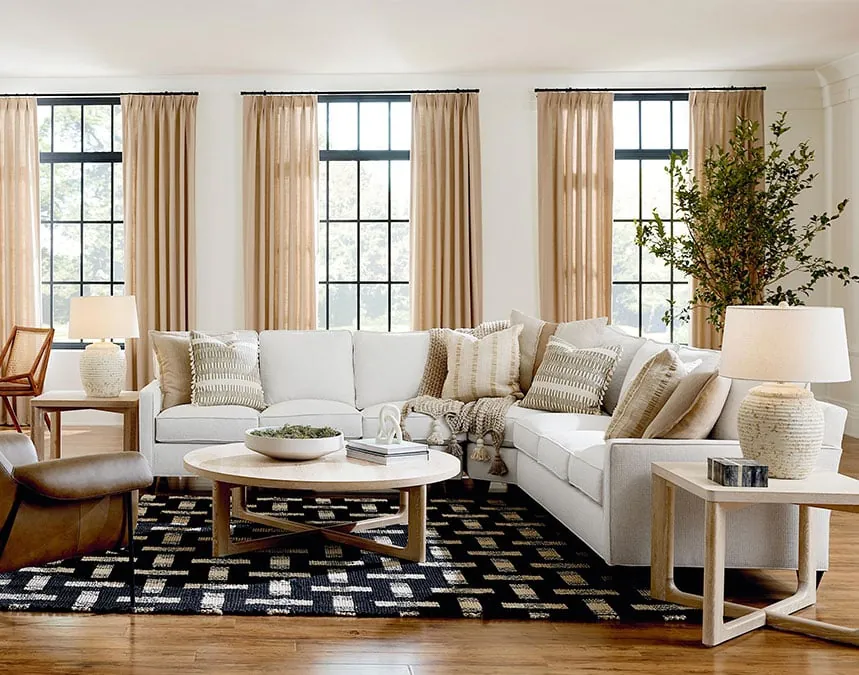
- A sofa is better if you move often or like to rearrange your furniture every few months.
- A sectional works best if you have a large, open-plan room and need to fill empty floor space.
- Choose a sofa for smaller living rooms to avoid blocking walkways or making the area feel cramped.
- Pick a sectional if you host many guests and need a continuous seating area for social gatherings.
- Measure your doorways and hallways before buying a sectional; some large pieces don’t fit through standard residential entryways.
- Consider a sofa with a matching ottoman to get the comfort of a sectional without the permanent footprint.
Why room layout dictates your seating choice
The primary difference between these two options is how they interact with the architecture of your home. A sofa is a standalone unit that sits against a wall or floats in the center of a room without defining the space permanently. It allows for a modular approach to interior design, meaning you can swap out chairs or move the sofa to a different wall whenever you want a fresh look.
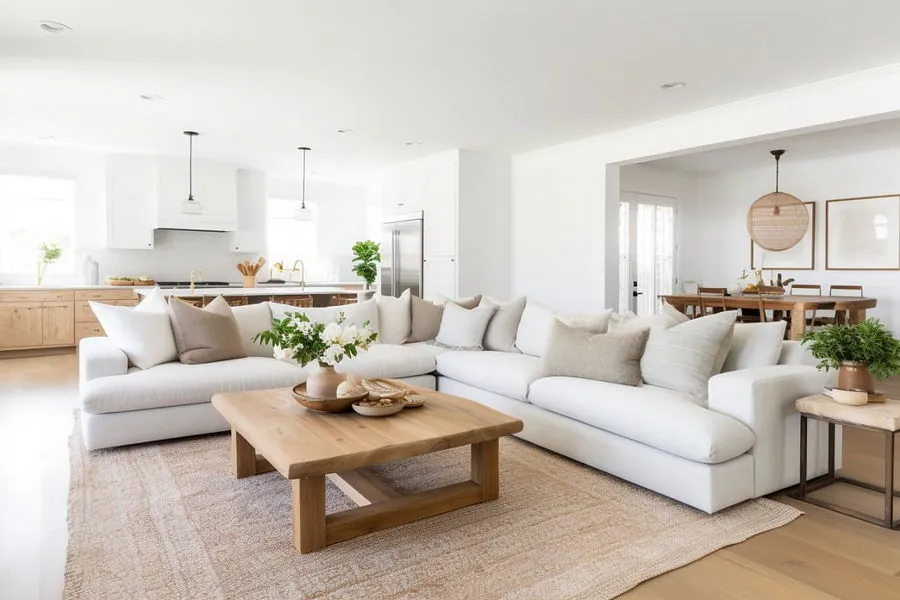
A sectional, by contrast, acts as a built-in anchor for the room. It’s designed to sit in a corner or function as a divider between kitchen and living areas. Because sectionals are often composed of two or three large, interlocking pieces, they’re difficult to move once placed.
The Consumer Product Safety Commission notes that heavy furniture must be anchored properly to prevent tipping, which is a vital safety step if your sectional sits on a hardwood floor or away from a wall.
When the answer is different
| Situation | What changes | What to do instead |
|---|---|---|
| Small apartments | Limited floor space | Buy a compact sofa |
| Frequent moves | Doorway width | Choose modular sofa pieces |
| Large families | Seating capacity | Get a large sectional |
| Open floor plans | Visual boundaries | Use a sectional divider |
| Guest rooms | Sleeping needs | Buy a sleeper sofa |
How to choose the right furniture for you
- Measure the total length and width of your available floor space using a steel tape measure to ensure you leave 30 inches for walkways.
- Test the seat depth by sitting on the floor model; if your feet can’t touch the ground comfortably, the piece is too deep for you.
- Check the frame material by lifting one corner of the sofa; if it feels light or twists easily, the wood construction is likely low quality.
- Confirm the fabric matches your lifestyle; if you have pets or small children, choose a performance fabric that resists stains and cleans with water.
- Verify the orientation of the sectional chaise; if the layout is wrong for your room, you can’t simply flip it to the other side.
- Ask for the specific dimensions of each individual piece to ensure they fit through your front door and around tight corner turns during delivery.
Mistakes that ruin your seating investment
- Buying a sectional that’s too large for the room makes the space feel crowded and blocks natural light.
- Ignoring the seat height means you might end up with a sofa that’s difficult to stand up from comfortably.
- Placing a sectional in a room with a central fireplace often blocks the natural flow of traffic to the hearth.
- Failing to account for the “chaise” side means you might trap yourself against a wall in a fixed layout.
Frequently asked questions
Can a sectional be split into two sofas?
Most sectionals can’t be split into two independent sofas because the frame ends are often unfinished or lack necessary hardware. You can only separate the pieces if the model is explicitly designed as a modular system with finished sides on every segment.
Is it safe to put a sectional in the middle of a room?
It’s safe if you ensure the back of the sectional is finished or placed against a console table for support. Ensure the piece is heavy enough to remain stable or use non-slip rug pads to prevent the segments from sliding apart during use.
How long should a quality sofa last?
A high-quality sofa with a hardwood frame usually lasts for a long time with regular care.
Does a sectional save more space than a sofa?
A sectional rarely saves space because it creates a large, fixed footprint that often limits how you can arrange other furniture. A sofa combined with two armchairs provides more flexible seating density while keeping the middle of your room open.
What happens if I move a sectional to a smaller home?
A large sectional often becomes impossible to place in a smaller home if the configuration doesn’t match the new room layout. You might find that the corner piece dominates the entire living area, leaving no room for side tables or lamps.
How do I know if my doorway fits a sectional?
Measure your narrowest doorway and compare it to the “diagonal depth” of the sectional pieces provided by the manufacturer. If your doorway is narrower than standard, you must choose a sofa that ships in smaller, manageable components.
Conclusion
Choosing between these two depends on your long-term plans for your home. If you value flexibility and frequent change, a standard sofa is the better choice. If you want a permanent, cozy anchor for a large family room, a sectional is the better investment.