
Modular sofas, sectional couches, and pit sectionals are the main types of couch that you can rearrange to fit different room layouts. They all share interchangeable sections that connect without tools, but they differ in how freely those pieces move and lock together.
Modular sofa types at a glance
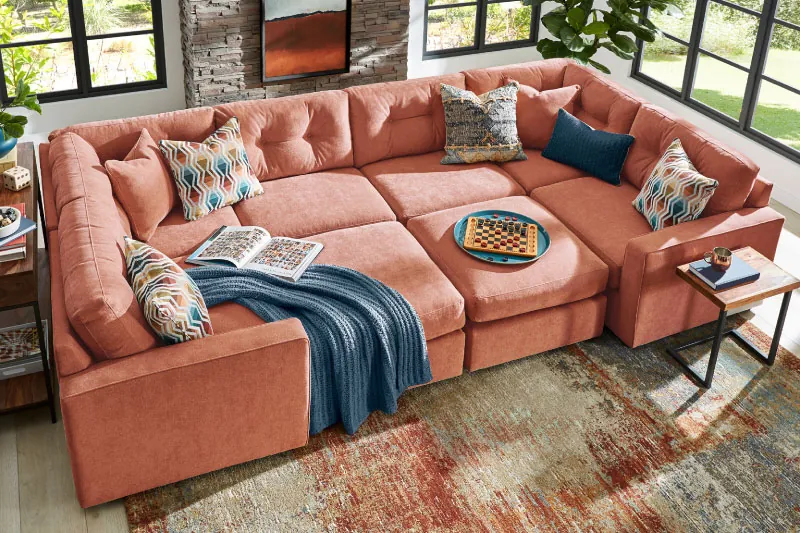
| Type | Best for | Concrete example |
|---|---|---|
| Modular sofa | Flexible daily seating | Three-seat unit with chaise |
| Sectional couch | Fixed L-shape living rooms | Left-arm facing sectional |
| Pit sectional | Large open floor plans | Six-piece square pit group |
| Loveseat modular | Small apartments or studios | Two-seat reversible chaise set |
| Sleeper modular | Guest rooms needing beds | Pull-out queen modular unit |
Modular sofa basics
A modular sofa uses individual seats that attach and detach freely, letting you change the shape whenever your space changes. It suits renters or homeowners who expect their layout to shift over time.
- Creates multiple configurations from one purchase
- Replaces single damaged sections instead of whole sets
- Fits through narrow doorways during moves
- Adapts to new room dimensions after relocation
Place three modules in a row for movie night, then separate them into individual chairs for conversation. Check the manufacturer’s specification sheet for exact module dimensions before buying, as sizes vary between brands.
Sectional couch features
Sectional couches come in predetermined shapes like L or U configurations that stay fixed once assembled. This type works best when you know your room’s permanent layout and don’t plan frequent changes.
- Provides stable, connected seating for families
- Costs less per seat than fully modular systems
- Offers consistent cushion support across joints
- Requires fewer connection points to maintain
An L-shaped sectional with a right-arm chaise anchors a corner permanently while leaving the center open. Measure your wall length carefully because these units don’t adjust if your space is even two inches shorter than listed.
Pit sectional considerations
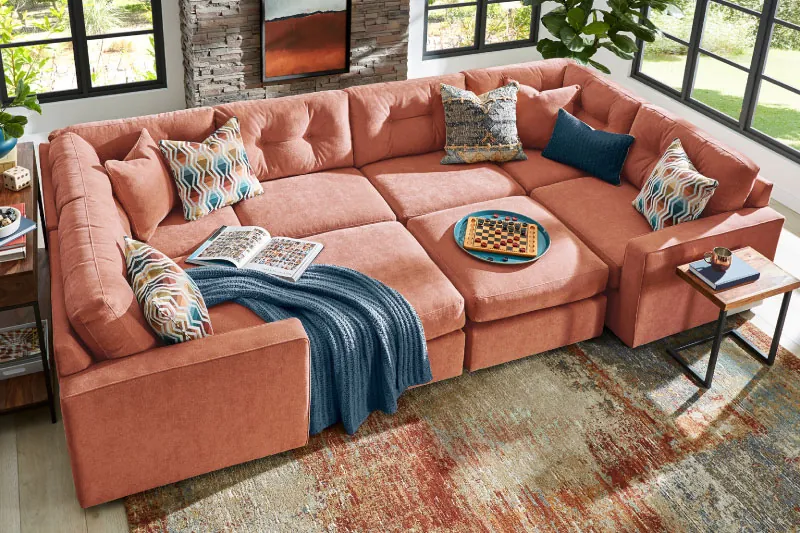
Pit sectionals form large square or rectangular seating areas where every piece connects on multiple sides. They suit spacious open-plan homes with at least 10 feet of clear floor space in each direction.
- Creates immersive social seating for groups
- Functions as temporary sleeping surface
- Anchors large rooms without additional furniture
- Allows rotation of worn cushions across positions
This configuration demands significant floor area and won’t work in standard-sized living rooms under 150 square feet. Verify ceiling height clearance too, since some pit designs exceed 36 inches and block sightlines in lower spaces.
Loveseat modular options
Loveseat modular sets include just two connecting pieces that reverse or separate for compact spaces. They’re ideal for studios or first apartments where full-size modularity exceeds both budget and available square footage.
- Fits through standard apartment doorways easily
- Converts between sofa and two chairs
- Costs significantly less than larger modular systems
- Scales up later by adding matching modules
Position the chaise left or right depending on window placement, then flip it when you move to a new unit. Confirm arm width measurements yourself since “compact” labels aren’t standardized across manufacturers.
Other rearrangeable seating options
- Sleeper modular: Adds pull-out bed function to reconfigurable frames for guest spaces; check mattress thickness specifications on product pages before assuming comfort levels match standard sleepers.
- Reclining modular: Includes mechanical footrests in individual sections; verify clearance behind each module since recliners need 4-6 inches of wall gap that static pieces don’t require.
- Outdoor modular: Uses weather-resistant frames and fabrics for patios; confirm UV resistance ratings directly from manufacturers rather than relying on general “outdoor-safe” marketing claims.
Choosing your rearrangeable couch
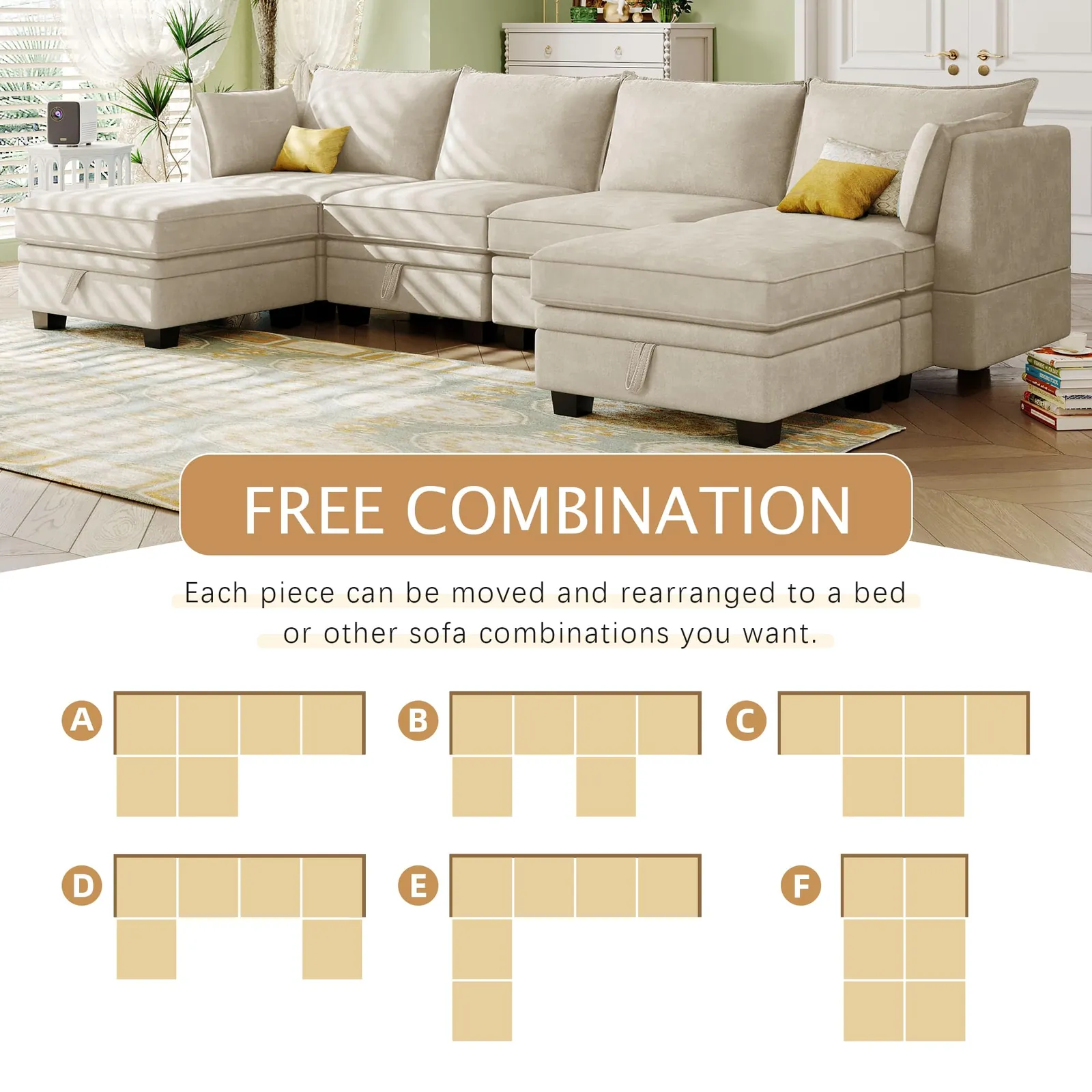
Your current floor plan and expected future moves determine which type fits. If you rent or anticipate relocating within three years, modular sofas offer the most flexibility despite higher upfront cost. Homeowners with settled layouts save money with sectionals that anchor permanently.
A modest budget points toward loveseat modular or basic sectionals, while a larger one opens full modular and pit options. These categories can combine only if the manufacturer explicitly states compatibility—mixing unrelated systems creates unstable connections that void warranties and create safety hazards during use.
Frequently asked questions
Can I add modules later?
Yes, if the manufacturer still produces that line and connection hardware remains compatible. Check the product page or contact customer service with your model number before purchasing additional pieces to confirm availability.
Why do modules separate unexpectedly?
Connection mechanisms wear out after repeated reconfiguration or weren’t engaged fully during assembly. Inspect locking pins or clips monthly and replace damaged hardware through the manufacturer rather than forcing misaligned sections together.
How long does reassembly take?
Most modular reconfigurations take 15-30 minutes for one person using included hardware. Larger pit sectionals may require two people and up to an hour due to weight and alignment precision needed.
Is it safe to stack modules?
No, unless the manufacturer explicitly designs and tests vertical stacking for that specific model. Unapproved stacking creates tip-over risks that violate CPSC furniture stability guidelines and void all warranty coverage.
What happens if one module breaks?
Replace only the damaged section if replacement parts are available for your model line. Discontinued lines may require third-party repair or full set replacement since mismatched modules compromise structural integrity.
Does fabric choice affect rearranging?
Yes, textured or patterned fabrics hide seam lines better than solid colors when modules shift position. Request fabric swatches to test color consistency across production batches before ordering multiple modules separately.
Can I use non-matching modules together?
Only if the manufacturer certifies cross-compatibility between specific product lines. Mixing unverified modules risks connection failure, uneven wear, and voided warranties that leave you responsible for replacement costs.
Starting with your rearrangeable couch
Measure your space and choose the type matching your mobility timeline first. Expect initial setup to take longer than advertised as connections settle, and watch for uneven gaps between modules as the sign something isn’t locked correctly. Stop and consult the manufacturer if sections won’t align without force.