
A recliner that offers full-body support and a flat-recline feature is the best chair you can sleep in for short naps or recovery. These chairs allow you to shift your weight to reduce pressure points while maintaining a stable, elevated sleeping position.
What makes a chair good for sleeping

To safely use a chair for sleep, you need equipment that prioritizes spinal alignment and stability. Look for these specific features to ensure your comfort and safety:
- Flat-recline capability: The backrest must go back at least 165 degrees.
- Adjustable leg rest: It should lift your feet to the level of your heart.
- Lumbar support: A firm cushion or built-in curve protects your lower back.
- Stable base: A heavy, non-rocking frame prevents accidental tipping.
- Breathable fabric: Materials like cotton or linen help regulate your body temperature.
If you have mobility issues, look for a power-lift model.
How to set up your chair
Follow these steps to prepare your seating for a safe, restful experience.
- Place the chair on a level, solid floor away from walls to ensure it has space to recline fully.
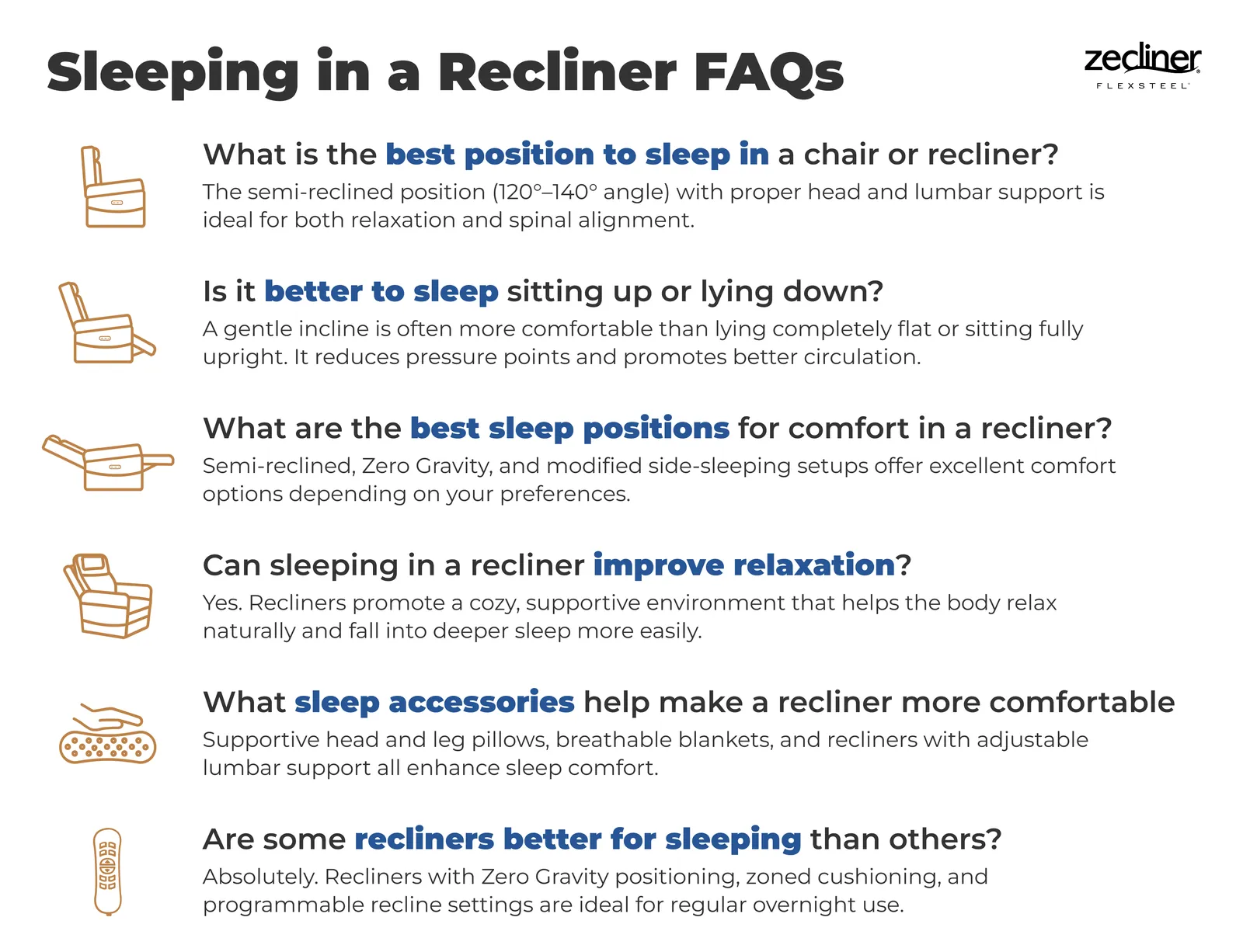
- Adjust the recline setting until your spine feels neutral and your head is supported by a pillow or the built-in headrest.
- Elevate the leg rest so your knees are slightly bent, which improves circulation during rest.
- Use a small neck pillow to fill the gap between your neck and the headrest if the chair is too upright.
- Set a timer for 60 minutes if you’re using the chair for a daytime nap to avoid disrupting your nighttime sleep cycle.
- Secure the chair in the locked position if it has a manual lever to prevent it from sliding forward while you shift.
Careful: Don’t sleep in a chair that lacks head support, as this can cause neck strain. If you experience chronic back pain, consult a physical therapist before choosing this as your primary sleeping method.
Adjusting for different needs
The way you use a chair depends on your specific physical needs and the type of rest you require.
| Situation | Time Frame | Primary Focus | Watch for |
|---|---|---|---|
| Short nap | 20–30 mins | Quick recovery | Neck alignment |
| Leg swelling | 1–2 hours | Elevation | Circulation |
| Back recovery | 30 mins max | Lumbar support | Pressure points |
| Illness | 2–4 hours | Breathability | Skin heat |
It’s safer to start with a short rest period and add more time only if you feel comfortable. Over-extending your time in a chair can lead to stiffness because the surface doesn’t distribute weight as evenly as a mattress.
Signs of a proper setup
A good setup feels like you’re floating, with no single body part carrying all your weight. If you wake up with numbness in your legs or a stiff neck, your posture is likely misaligned. This often happens because the chair doesn’t support the natural curve of your spine. You can prevent this by adding a small, rolled-up towel behind your lower back to maintain that curve while you rest.
Maintenance and safety standards
Always follow the manufacturer’s weight limit, which is typically listed in the product manual. Exceeding this limit can damage the reclining mechanism and make the chair unstable. After use, return the chair to an upright position to clear the floor space and reduce the risk of tripping. If the chair uses a motor for reclining, check the power cord monthly for any signs of fraying. Any electrical repairs should be handled by a qualified technician to avoid fire risks.
Alternative resting methods
Adjustable bed bases
These bases allow you to change the angle of your head and feet electronically. They provide more consistent support than a standard chair and are better for those who need to sleep in an elevated position nightly.
Wedge pillows
If you already have a standard bed, wedge pillows can elevate your upper body or legs. They’re a cost-effective way to achieve the same circulation benefits as a recliner without buying new furniture.
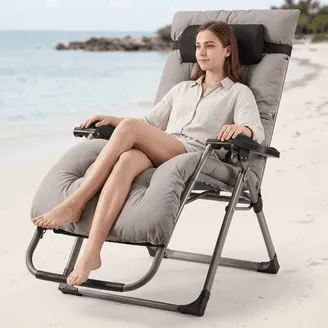
Zero-gravity chairs
These chairs are designed to mimic the position astronauts take during launch. They distribute weight evenly across the entire body, which is highly effective for reducing pressure on the hips and spine during rest.
Frequently asked questions
Can I sleep in a chair every night?
No, it isn’t recommended for nightly sleep because chairs don’t provide the same pressure relief as a mattress. If you must sleep upright for health reasons, consult your doctor about an adjustable bed base instead.
How long is it safe to sleep in a chair?
It’s safe for 30 to 60 minutes for a nap. Sleeping longer than this can lead to stiffness or circulation issues in the legs because the chair surface is firmer than a mattress and limits your movement.
Is it safe for my back to sleep in a chair?
Yes, it’s safe if the chair provides proper lumbar support and keeps your spine neutral. If you feel any sharp pain or discomfort, you should move to a flat surface immediately to avoid potential muscle strain.
What happens if I fall asleep in a chair for too long?
You may experience muscle stiffness, joint soreness, or temporary numbness in your legs. This happens because the chair restricts your ability to shift positions naturally, which is something your body does to maintain blood flow while sleeping.
How do I know if my chair is good for sleeping?
You know the chair is good if you can recline to a near-flat position and your feet can be elevated to heart level. If your head hangs forward or your lower back feels unsupported, the chair isn’t suitable.
Conclusion
Finding the right model doesn’t have to be overwhelming, so start by visiting a local furniture store to test a few options in person. You’ll quickly see how a slight adjustment in padding or angle makes a big difference. Once you find your perfect fit, you’re ready for much better rest.