
An accent chair can look perfect in a room and still feel awful to sit in. I think this is one of the easiest furniture mistakes to make.
The most comfortable accent chair is not always the softest one. It should fit your body, support your back, let your feet rest flat, and give your arms a relaxed place to sit.
In this guide, I’ll explain what makes an accent chair truly comfortable. I’ll also cover seat depth, seat height, back support, armrests, cushion firmness, fabric, and room size. These details can help you choose a chair you will want to use, not just look at.
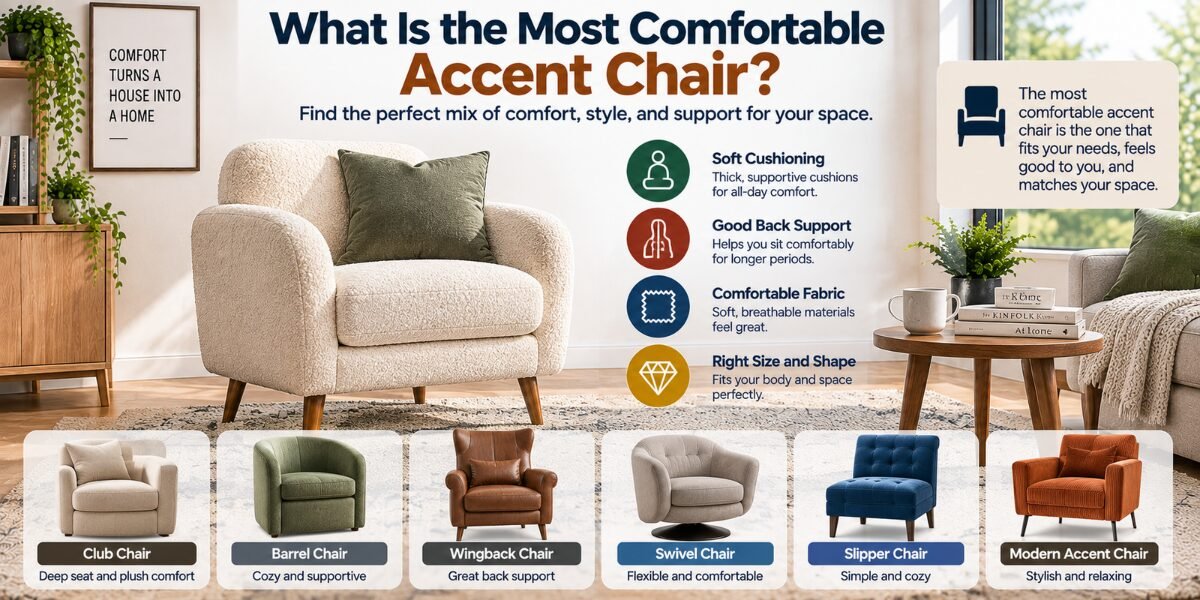
What Is the Most Comfortable Accent Chair?
The most comfortable accent chair is one that matches your body and the way you plan to sit. For most people, a supportive back, suitable seat depth, medium-firm cushioning, and relaxed arm height matter more than thick padding.
There is no single chair size that feels perfect for everyone. A tall person may prefer a deeper seat. A shorter person may need a shallower one. Someone who reads for an hour may also want more back support than someone who uses the chair for short chats.
So, I would start with comfort and fit before style.
What Makes an Accent Chair Comfortable?
Comfort comes from several parts working together. A chair may have a soft cushion, but that does not make it comfortable by itself.
Here are the main things I would check:
| Comfort factor | What to look for |
|---|---|
| Seat depth | Enough thigh support without pressing behind the knees |
| Seat height | Feet should rest flat on the floor |
| Back support | Supports your lower and upper back |
| Armrests | Let your shoulders stay relaxed |
| Cushion | Comfortable but not so soft that you sink |
| Seat width | Enough room to change position |
| Back angle | Slightly relaxed for reading and lounging |
| Frame | Stable and strong with little movement |
The best chair balances these details instead of focusing on just one.
Seat Depth May Matter More Than You Think
Seat depth is one of the first things I would check.
A seat that is too deep can cause a simple problem. Your back may not reach the backrest when your feet are in a good position. You may then slide forward or use a pillow behind your back.
A seat that is too shallow has the opposite problem. Your thighs may not get enough support.
For upright sitting, many accent-chair guides use roughly 20 to 22 inches as a useful starting range. Deeper seats can work well for lounging, but they may not suit shorter users.
The easiest test is simple. Sit with your back against the backrest. Your feet should stay flat, and the front edge of the seat should not press hard behind your knees.
Seat Height Can Change the Whole Experience
Seat height affects both sitting and standing.
A very low accent chair can feel cozy. But getting out of it may take more effort. This can be annoying if you use the chair often.
A very high chair can also feel wrong. Your feet may not sit flat on the floor, which can make the chair feel less stable.
For many adults, a seat height around 17 to 19 inches is a useful starting point. But your own leg length matters more than a fixed number.
If you can try the chair first, sit normally and check your feet. That small test tells you a lot.
Look for Real Back Support
A pretty chair with a low back can work well as a decorative piece. But if you want to read, watch TV, or sit for a long time, I would pay more attention to back support.
The back should support you without making you sit stiffly.
A slightly reclined back can feel relaxing. A more upright back may work better for conversation, reading, or sitting near a desk.
For longer sitting, a mid-height or high back often gives more support than a very low decorative back.
Armrests Should Feel Natural
Armrests are easy to ignore when shopping online. I would not ignore them.
When you rest your arms, your shoulders should feel relaxed. If the arms are too high, your shoulders may stay lifted. If they are too low, you may lean or slump to find support.
Padded arms can also make a chair feel more inviting. Hard wooden arms may look great but can feel less pleasant during long sitting.
This is one reason I prefer to judge the whole chair instead of choosing it from a photo.
Should a Comfortable Accent Chair Be Soft or Firm?
I would not automatically choose the softest chair.
A very soft cushion can feel wonderful for the first few minutes. But if your body sinks too far, getting proper support can become harder.
A medium-firm cushion is often a safer choice for everyday use. It can still feel comfortable while giving your body some support.
Your personal taste matters, too. If you like curling up with a blanket and book, you may prefer a softer lounge feel. If you sit upright for reading or conversation, more support may work better.
The goal is comfort without losing good support.
The Back Angle Matters for Relaxing
The angle between the seat and back changes how the chair feels.
A more upright chair works well for conversation. It keeps you ready to move and makes it easy to sit with good posture.
A more relaxed angle is better for reading, watching TV, or resting.
This is why the most comfortable accent chair for a living room may not be the best one for a bedroom reading corner.
Think about the main job of the chair before buying it.
Choose the Right Chair for How You Sit
I find it easier to choose an accent chair when I first decide how I will use it.
For Reading
Look for a supportive back, comfortable arms, and a seat depth that does not force you to lean forward.
A small footstool can also help if the chair is slightly deeper than you prefer.
For Watching TV
A relaxed back angle can make a big difference. You may also want a wider seat so you can shift positions.
For Conversation
A more upright chair usually works better. It keeps your body in a natural position and makes it easier to turn toward another person.
For Lounging
A deeper seat can be useful here. You may enjoy a softer cushion and a more relaxed back.
Just make sure the chair still supports you well.
For Small Spaces
I would choose a chair with a smaller footprint and a lighter frame. A large, deep chair can quickly make a small room feel crowded.
Does Upholstery Affect Comfort?
Yes, but comfort is not only about fabric.
Velvet can feel soft and warm. Bouclé has a cozy texture. Linen can feel lighter and more relaxed. Leather can feel firm at first and may change with use.
The right material depends on your home and habits.
If you have children or pets, I would think about cleaning before choosing a delicate fabric. A chair that feels great but is hard to maintain may become a source of stress.
For daily use, practical fabric can be just as important as softness.Read moreWhat Is an Accent Chair Used For?
How I Would Check an Accent Chair Before Buying
I would use a simple five-step check.
- Check the seat height.
- Check the usable seat depth.
- Look at the back support.
- Check the arm height.
- Measure the full chair footprint.
If possible, I would sit in the chair before buying it.
Stay seated for more than a few seconds. Change your position. Put your feet on the floor. Rest your arms. Lean back.
A quick showroom sit can miss problems that become obvious after ten or twenty minutes.
What If the Chair Is Comfortable but Too Deep?
You do not always need to return it.
A firm back cushion can reduce the usable depth. A small lumbar pillow can also bring your back forward.
A footstool can help when your feet do not reach the floor comfortably.
But these fixes should not be used to hide a major size mismatch. If you need several pillows just to sit normally, the chair may simply be the wrong fit.
What If the Chair Looks Great but Feels Uncomfortable?
This happens often.
A chair can have beautiful fabric, curved arms, and a stylish frame while still having poor comfort for your body.
If comfort is your main goal, I would not buy based on appearance alone.
Check the dimensions first. Then look at the seat shape, back angle, arms, and cushion. Style should come after fit.
That order can save you from buying a chair that becomes a decoration instead of a seat.
Accent Chair Size Guide
There is no universal size for every person or room. Still, these ranges can give you a starting point.
| Chair feature | Useful starting point |
|---|---|
| Seat height | About 17–19 inches |
| Seat depth | About 20–22 inches for upright sitting |
| Wider lounge depth | Often 22 inches or more |
| Seat width | Around 20–24 inches can work for many adults |
| Back height | Choose based on desired back and head support |
These are starting points, not strict rules. Your height, leg length, sitting style, and chair design all affect comfort.
Common Mistakes When Buying an Accent Chair
Choosing Style First
A beautiful chair is not useful if you avoid sitting in it.
Buying a Very Deep Seat
Deep seating can feel luxurious but may be uncomfortable for shorter users.
Picking the Softest Cushion
Soft does not always mean supportive.
Ignoring Arm Height
Poor arm height can make a chair feel awkward even when the seat is good.
Forgetting the Room
A chair can be comfortable and still be too large for your space.
Checking Only Overall Dimensions
Overall depth is not the same as usable seat depth. Always look for the actual sitting area when the information is available.
My Simple Comfort Checklist
When I compare accent chairs, I would ask these questions:
- Can I keep my feet flat?
- Does the seat support my thighs?
- Does my back reach the backrest?
- Do my shoulders stay relaxed?
- Are the arms comfortable?
- Is the cushion supportive?
- Can I sit for a long time without shifting constantly?
- Does the chair fit the room?
- Can I clean the fabric easily enough?
- Will I actually use it every day?
If the answer is yes to most of these, the chair is much more likely to feel right.
FAQs
What is the most comfortable accent chair for long sitting?
Look for a supportive back, suitable seat depth, comfortable arms, and medium-firm cushioning. A mid-height or high back can also help during longer reading or TV sessions.
Is a deep accent chair more comfortable?
Not always. Deep chairs can feel great for lounging, but they may leave shorter users without proper back support. The right depth depends on your body and sitting style.
What seat height is best for an accent chair?
Around 17 to 19 inches is a useful starting range for many adults. Your leg length matters more than the number, so your feet should rest flat when you sit normally.
Are soft accent chairs more comfortable?
A soft chair can feel cozy, but very soft padding may give poor support. A balanced cushion that feels comfortable while still holding your body is often a better choice.
What type of accent chair is best for reading?
A reading chair should have good back support, comfortable arms, and a seat depth that lets you sit back without losing foot contact. A footstool can add extra comfort.
How do I make an uncomfortable accent chair more comfortable?
Try a supportive back cushion, lumbar pillow, or footstool if the size is close to right. If the chair is much too deep, high, low, or narrow, accessories may not fully fix the problem.
Conclusion
So, what is the most comfortable accent chair? The answer is the one that fits your body and your main way of sitting.
I would focus on seat depth, seat height, back support, arm position, cushion feel, and room size before worrying about color or style.
The best accent chair should look good, but it should also make you want to sit down. When the size and support are right, comfort becomes much easier to find.