
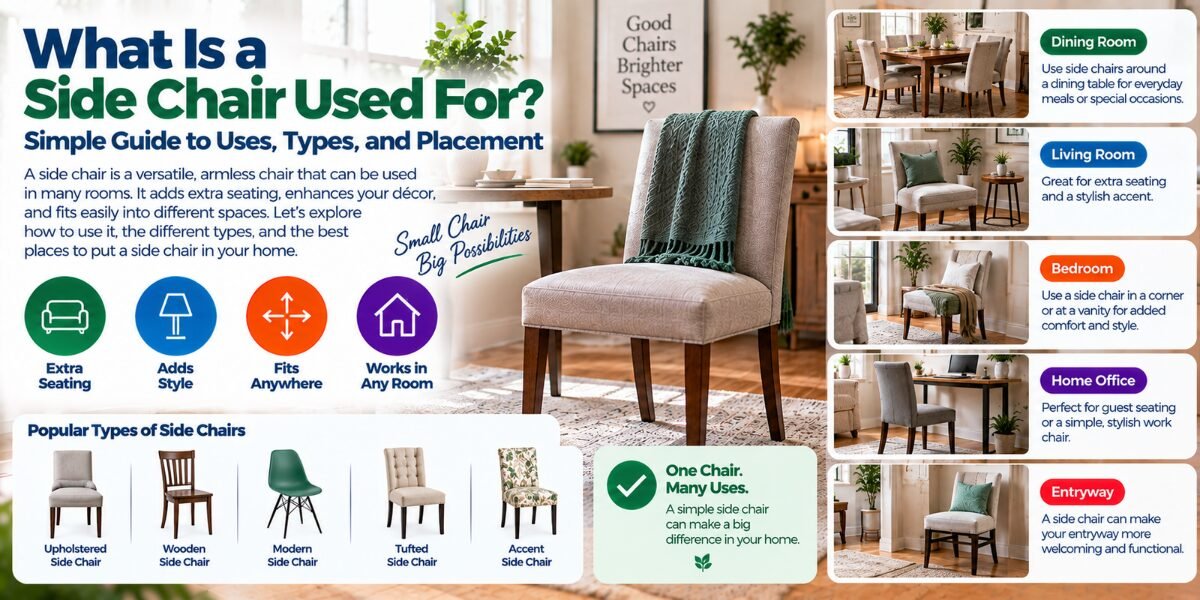
A side chair is one of those pieces of furniture that can fit almost anywhere. It is usually a smaller chair without wide arms. You can use it for extra seating, dining, working, reading, or simply filling an empty corner.
So, what is a side chair used for? Its main job is to provide flexible seating without taking up too much room. That makes it useful in homes, offices, dining rooms, bedrooms, entryways, and even waiting areas.
I like side chairs because they are easy to move. You can pull one up when guests arrive or move it to another room when you need an extra seat.
What Is a Side Chair?
A side chair is a simple chair designed for general seating. It often has a seat, back, and four legs. Many side chairs do not have arms.
The simple shape is what makes a side chair so useful. It can slide under a table, sit beside a sofa, or stand in a corner without taking over the room.
Side chairs come in many styles. You can find wood, metal, plastic, fabric, and upholstered designs. Some look formal, while others have a casual feel.
The best choice depends on where you plan to use it.
What Is a Side Chair Used For?
The most common use of a side chair is extra seating.
You can keep one at a dining table, place one beside a desk, or use one in a living room. It can also serve as a temporary seat when you have more guests than your main furniture can handle.
A side chair can also add style to a room. A chair with an interesting shape or fabric can fill an empty space without needing a large piece of furniture.
Its small footprint is another big benefit. You get a useful seat without using as much floor space as a large armchair.
Side Chairs in the Dining Room
Dining rooms are one of the most common places to use side chairs.
A dining side chair usually has a fairly upright seat. This helps you sit comfortably at the table while eating or talking.
Many dining chairs are side chairs because they can slide close to the table. This keeps the room neat and makes it easier to move around.
When choosing one, check the seat height. The chair should work well with your table height.
Also think about cleaning. Dining chairs can deal with food, spills, and daily use. A material that is easy to wipe or clean can be a practical choice.
Side Chairs in the Living Room
A side chair can add an extra seat without making the living room feel crowded.
You can place it beside a sofa or across from a coffee table. It can also create a small conversation area.
A side chair is useful when you want more seating but do not want another large sofa.
I also like the flexibility here. If you need more floor space, you can move the chair. A large sofa is much harder to relocate.
For a living room, comfort becomes more important. Look for good back support and a seat that feels natural for longer sitting.
Side Chairs for a Home Office
A side chair can also be useful in a home office.
It can give visitors a place to sit without taking up the space needed for your main desk chair.
You can place it across from a desk or near a small meeting table. It can also work as a quick seat when you need to put on shoes, check papers, or take a short break.
However, a side chair is not always a replacement for an office chair.
If you work at a desk for many hours, you may need a chair with better support and adjustment. A basic side chair is often better for short periods of sitting.
Side Chairs in the Bedroom
A bedroom can benefit from a small side chair too.
You can place one near a window, beside a dresser, or in an unused corner. It can give you a place to sit while getting dressed or reading.
A chair can also make a bedroom feel more complete.
If the room is small, choose a chair with a narrow frame. You do not need a large seat to make good use of a corner.
Just avoid placing the chair where it blocks drawers, doors, or walking paths.
Side Chairs in an Entryway
A side chair can be very handy near an entry door.
It gives you a place to sit while putting on or removing shoes. It can also provide a spot for a guest to sit while waiting.
A small chair works especially well in a narrow entryway.
Before placing one there, measure the walkway. The chair should not make the entrance hard to use.
If your entryway is tight, a slim side chair may work better than a wide bench.
Side Chairs as Accent Furniture
Side chairs do not always need to serve a purely practical purpose.
You can use one as an accent piece. This means the chair adds visual interest to the room while still giving you a useful seat.
For example, a simple room may benefit from a chair with a different fabric or frame style.
The chair can help break up a large empty area. It can also bring together colors or materials already used in the room.
The key is balance. The chair should look like part of the room, not like something that was placed there at the last minute.
What Is the Difference Between a Side Chair and an Armchair?
The biggest difference is the arms.
A side chair usually has no arms. An armchair has armrests on both sides.
This makes side chairs easier to place around tables and in smaller spaces. You can often push them closer together or slide them under a table.
Armchairs can feel more comfortable for relaxed sitting because the arms give you another place to rest your body.
Neither type is automatically better.
If you need flexible seating and easy movement, a side chair may be the better choice. If you want a more relaxed seat, an armchair may make more sense.
Side Chair vs. Dining Chair
The terms can sometimes overlap.
Many dining chairs are side chairs because they have no arms. But not every side chair is designed for dining.
A dining chair needs to work with a table. It should have a suitable height and shape for eating.
A side chair made for a bedroom or living room may have a different seat height, cushion, or back angle.
Before using any side chair at a dining table, check its measurements.
Comfort also matters. Meals can last a long time, so a chair that feels fine for 10 minutes may not feel good after an hour.Read moreWhat Is a Long Chair Called: The Simple Answer and the Main Types
What Materials Are Best for Side Chairs?
Side chairs come in many materials, and each has different benefits.
Wood
Wood side chairs have a classic look. They can work well in dining rooms, kitchens, bedrooms, and living spaces.
They are also available in many finishes.
Metal
Metal chairs can have a clean and modern look. They can work well in dining areas, offices, and other spaces with a simple design.
Some metal seats may feel hard without a cushion.
Plastic
Plastic side chairs are often light and easy to move. This can be useful when you need flexible seating.
They can also be easy to clean, depending on the design.
Upholstered Fabric
Fabric chairs can feel softer and warmer.
They are often a good choice for living rooms, bedrooms, and dining spaces where comfort matters.
The downside is that some fabrics can be harder to clean after spills.
How to Choose the Right Side Chair
Start with the main purpose.
If the chair will be used at a dining table, focus on height and sitting comfort. If it is for a living room, think more about cushioning and back support.
Next, measure your space.
Check the chair’s width and depth. Then think about how much room you need to pull it out, sit down, and walk around it.
You should also consider weight. A lighter chair is easier to move between rooms.
Finally, look at the material and care needs. A chair that looks great but is difficult to maintain may not be the best fit for daily use.
Common Side Chair Mistakes
One common mistake is choosing a chair based only on appearance.
A beautiful chair may still be uncomfortable or too large for your space.
Another mistake is ignoring the table height. This is especially important when buying dining side chairs.
People also forget about movement. A chair needs enough room around it to be pulled out and used comfortably.
I would also avoid buying more chairs than you need. A room can quickly feel crowded when every open area becomes a place for furniture.
How Many Side Chairs Do You Need?
The number depends on the room and purpose.
For a dining table, the table size usually determines how many chairs you need. For a living room, one or two side chairs may be enough to add flexible seating.
In a bedroom, one chair can often do the job.
Think about how many people normally use the room. Then consider how often you need extra seating.
You do not need to fill every empty corner.
A little open space can make a room feel easier to use.
FAQs About Side Chairs
What is a side chair used for?
A side chair is mainly used for flexible seating. It can work in dining rooms, living rooms, bedrooms, offices, and entryways.
Can a side chair be used as a dining chair?
Yes, if its height and design work with your dining table. Check the seat height and available legroom before using it for meals.
What is the main difference between a side chair and an armchair?
A side chair usually has no arms, while an armchair has armrests. Side chairs are often easier to move and fit into smaller spaces.
Are side chairs comfortable?
They can be very comfortable when the seat, back angle, and height suit your needs. Comfort varies greatly between different designs.
Where should I put a side chair?
You can place one beside a sofa, at a dining table, near a desk, in a bedroom, or by an entryway. Choose a spot where the chair adds useful seating without blocking movement.
Conclusion
So, what is a side chair used for?
A side chair is a flexible seating option that works in many parts of the home. It can provide dining seats, guest seating, a bedroom spot, office seating, or a simple accent piece.
Its biggest advantage is flexibility. Because side chairs are often smaller and easier to move, you can use them in different ways as your needs change.
Before buying one, think about where it will go, how often it will be used, and who will sit in it. Then check the size, height, comfort, material, and space around it.
A good side chair does not need to be complicated. It just needs to fit the room and do its job well.