
A reliable desk chair costs between $300 and $600 for daily professional use. Budget models under $150 work for occasional sitting but lack durable mechanisms, while premium ergonomic chairs exceed $1,000 with longer warranties. Your actual price depends on how many hours you sit each day.
Desk chair price ranges
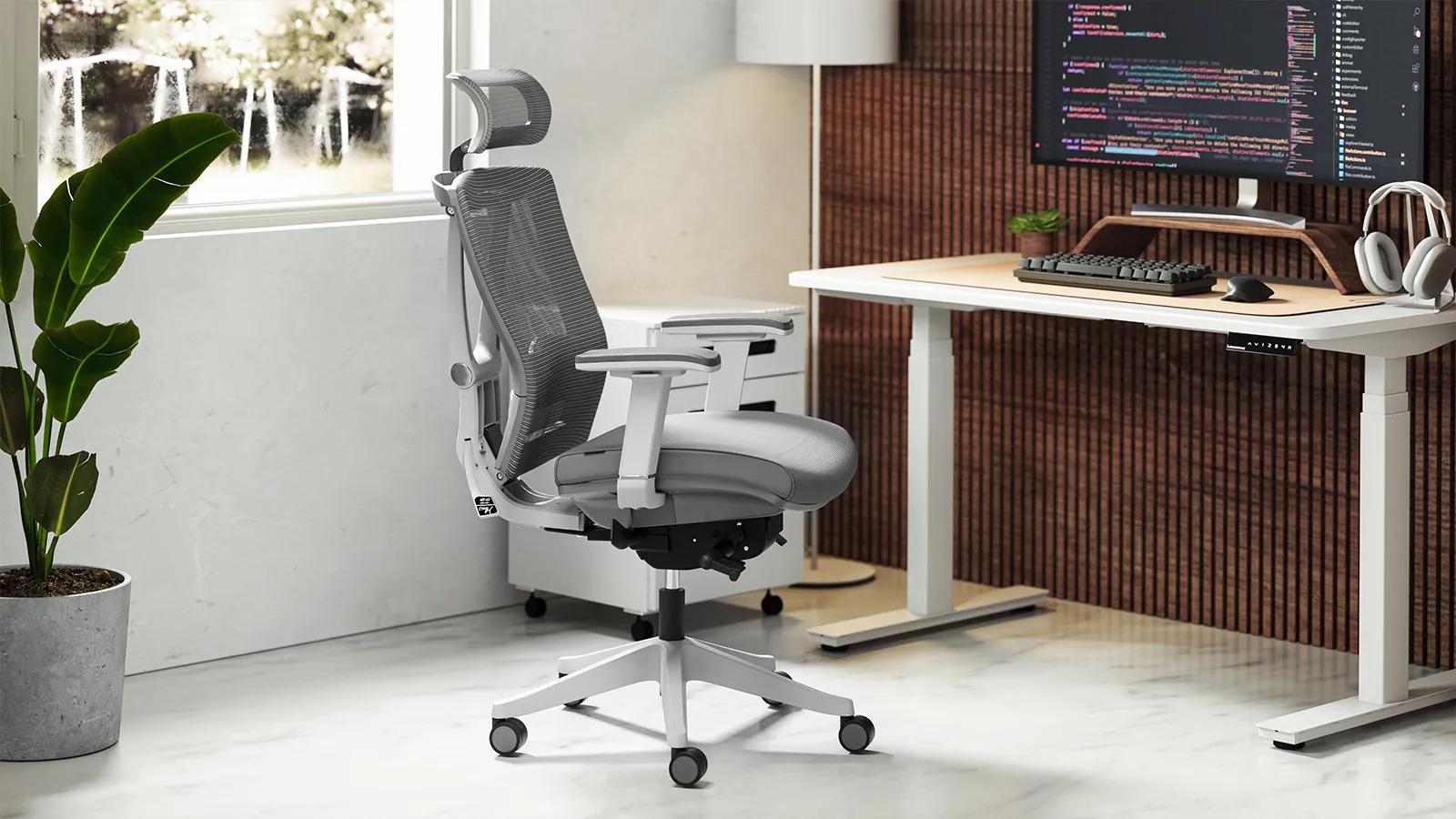
- Budget chairs ($50–$200) suit light use under four hours daily.
- Mid-range task chairs ($300–$600) support eight-hour workdays reliably.
- Premium ergonomic chairs ($800–$1,500+) offer 12-year warranties and full adjustability.
- Refurbished premium models cost $400–$700 with shorter dealer warranties.
- Fabric upholstery typically costs $50–$100 less than leather or mesh options.
- Added features like headrests or lumbar pumps increase base price by $100–$300.
Why prices vary so much
Mechanism quality drives the real cost difference between cheap and expensive seating. A synchronized tilt mechanism that moves the seat and back together requires precise machining and steel components, unlike simple swivel plates in budget chairs. This engineering prevents the user from sliding forward when reclining and maintains proper eye level during movement.
Material density determines whether a chair lasts two years or twelve. High-density molded foam retains its shape after thousands of compression cycles, while low-density cut foam flattens quickly and exposes the hard pan beneath. Mesh quality matters equally; high-tension elastomeric mesh distributes weight evenly without creating pressure points on the thighs or lower back.
Certified durability testing separates commercial furniture from disposable goods. The BIFMA e3 sustainability standard verifies that materials and manufacturing processes meet strict environmental benchmarks. Chairs passing these tests withstand 100,000+ cycle tests on casters, tilts, and armrests, ensuring the price reflects verified longevity rather than marketing claims alone.
When desk chair costs change

| Situation | What changes | What to do instead |
|---|---|---|
| Sitting under 4 hours daily | Lower durability acceptable | Buy $150–$250 basic task chair |
| User exceeds 300 lbs | Standard mechanisms fail early | Choose big-and-tall rated models ($500+) |
| Shared hot-desking environment | Adjustments wear faster | Select multi-user certified commercial grade |
| Buying refurbished premium | Warranty drops to 1-3 years | Verify dealer certification before purchasing |
| Needing specialized ergonomics | Custom parts add $200-$400 | Get professional assessment first |
| Purchasing in bulk (10+) | Volume discounts apply | Request contract pricing directly |
Choosing the right desk chair
- Measure your seated hip width and add two inches to determine minimum seat pan width needed.
- Calculate total daily sitting hours to select the appropriate durability class and warranty length.
- Test the tilt tension knob at maximum and minimum settings to ensure smooth resistance throughout range.
- Check cylinder height adjustment covers your desk surface height plus three inches of clearance.
- Verify armrest width fits between your desk legs or keyboard tray before finalizing purchase.
- Confirm return policy includes free pickup if the chair doesn’t fit your body properly.
- Compare warranty terms specifically covering gas cylinders, casters, and upholstery against expected lifespan.
- Read assembly instructions beforehand to identify required tools and estimated setup time accurately.
Common desk chair buying mistakes
- Ignoring seat depth adjustment causes thigh pressure or inadequate back support within weeks.
- Choosing mesh solely for breathability leads to sagging if tension rating isn’t verified.
- Skipping return shipping cost checks results in $100+ fees when returning ill-fitting chairs.
- Assuming higher price equals better fit wastes money on premium features your body doesn’t need.
- Overlooking caster type damages flooring or creates dangerous rolling resistance on carpet surfaces.
Frequently asked questions
How long should a desk chair last?
Seven to ten years is typical for mid-range chairs used eight hours daily. Premium models with 12-year warranties often reach fifteen years with normal maintenance. Budget chairs under $200 usually require replacement every two to three years under similar use conditions.
Is it safe to buy used office chairs?
Yes, if purchased from certified refurbishers who replace gas cylinders and inspect mechanisms. Avoid private sellers where hidden damage or expired safety components can’t be verified. Always test all adjustments and check for BIFMA compliance labels before completing any secondhand purchase transaction.
Can I expense a desk chair for taxes?
Yes, if used primarily for business purposes according to IRS guidelines. Self-employed individuals deduct the full cost as a business expense, while W-2 employees generally can’t deduct unreimbursed chair costs under current federal tax law. Consult a tax professional for your specific employment situation.
Does expensive mean more comfortable?
Not necessarily, since comfort depends on individual body dimensions matching chair adjustability range. A $400 chair fitting your measurements perfectly outperforms a $1,200 model that doesn’t. Prioritize adjustable seat depth, lumbar position, and armrest width over brand prestige or premium materials.
What happens if my chair breaks during warranty?
Manufacturers typically ship replacement parts free within five to seven business days for covered defects. Labor coverage varies significantly; some include on-site repair while others require self-installation. Keep your original receipt and serial number accessible to expedite warranty claims without unnecessary delays.
How much does assembly cost professionally?
Professional assembly runs $75 to $150 depending on chair complexity and local labor rates. Most mid-range chairs assemble in thirty minutes with included tools, making DIY feasible. Complex ergonomic models with multiple adjustment mechanisms justify professional installation to prevent misalignment or voided warranties.
Why do gaming chairs cost less than office chairs?
Gaming chairs prioritize aesthetics over commercial ergonomic durability standards. They use bonded leather and simpler tilt mechanisms that degrade faster under continuous eight-hour use, unlike true ergonomic task chairs built for decades of daily professional use.
Conclusion
Your ideal spending amount sits where verified durability meets your specific body measurements and daily usage pattern. Spending beyond that point buys marginal comfort gains, while spending below it guarantees premature replacement costs that exceed initial savings.