
A typical sectional couch usually weighs between 200 and 450 pounds, depending heavily on the materials used in the frame, the density of the cushions, and the total number of modular sections included. Smaller two-piece loveseat sectionals may weigh as little as 150 pounds, while large, U-shaped configurations featuring solid hardwood frames and sleeper mechanisms can easily exceed 600 pounds. Understanding these figures is essential for planning your next room layout or preparing for a professional delivery.
Key Takeaways
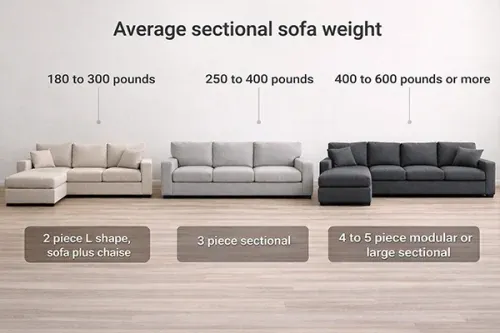
- Most standard three-piece sectionals fall into the 250 to 350-pound range.
- Solid hardwood frames add significant weight compared to plywood or particleboard alternatives.
- Always measure your doorways and hallways to ensure the pieces will fit before moving.
- Removing cushions and legs can reduce the total weight by 20% to 30%.
- Use furniture sliders to protect your floors and make heavy lifting much easier.
How Heavy Is A Sectional Couch?
The weight of a sectional depends on its construction components. A basic model made from softwoods and foam will be significantly lighter than a luxury piece featuring kiln-dried hardwood, heavy-duty springs, and high-density down-blend cushions. When shopping, always check the product specifications sheet provided by the manufacturer, as weight is rarely uniform across different styles.
Weight Estimates by Configuration
| Configuration Type | Typical Weight Range (lbs) |
|---|---|
| Two-piece loveseat sectional | 150 – 250 |
| Standard L-shape (3 pieces) | 250 – 400 |
| Large U-shape (4+ pieces) | 450 – 700 |
| Sleeper sectional (with bed) | 350 – 600 |
Factors That Influence Weight
Several design choices dictate how much effort is required to move your furniture. Understanding these factors helps you determine if you need professional movers or if a few friends can handle the task.
- Frame Material: Solid oak or maple frames are much heavier than pine or composite wood.
- Upholstery Type: Thick top-grain leather adds significantly more weight than lightweight synthetic fabrics.
- Internal Mechanisms: Reclining features and pull-out sleeper beds add heavy metal components.
- Cushion Density: High-resiliency foam or dense down-wrapped cushions add more mass than standard fiber-fill.
Preparing For The Move
Before attempting to relocate a heavy sectional, you must clear the path. Use a tape measure to confirm that the width of your doorways is at least two inches wider than the depth of the couch sections.
Essential Moving Supplies
- Furniture sliders for carpet or hard floors.
- Heavy-duty moving blankets to protect corners.
- A four-wheel furniture dolly for long hallways.
- Sturdy work gloves with rubberized grips.
Can You Lighten The Load?

Yes, you can make a heavy sectional much more manageable by breaking it down. Most modern sectionals are modular, meaning the pieces lock together with metal brackets. By separating these sections, you distribute the weight into smaller, easier-to-carry loads. You should also remove all loose cushions, decorative pillows, and even the legs if they’re threaded. These small adjustments can shave off significant pounds, making the couch easier to navigate around tight corners and stairwells.
Safe Lifting Techniques
When you do have to lift, prioritize your physical safety to avoid injury. Always lift with your legs, keeping your back straight and your core engaged. If a piece feels too heavy, never force it; instead, use a dolly or seek an extra pair of hands. Avoid twisting your torso while carrying, as this is the most common cause of back strain during furniture relocation.
| Lifting Step | Safety Procedure |
|---|---|
| Preparation | Remove cushions and clear floor debris |
| The Lift | Squat down and keep weight close to your body |
| The Move | Use small, controlled steps, no twisting |
| Positioning | Use furniture sliders to glide into place |
Dealing With Sleeper Sectionals
Sleeper sectionals are the heaviest category due to the internal metal frame and mattress. If you’re moving one of these, it’s highly recommended to remove the mattress first. If the frame itself is bolted into the base, consult the manual before attempting to disassemble it, as the spring-loaded mechanisms can be dangerous if handled incorrectly.
Why Weight Matters For Floors

If you have delicate hardwood or antique flooring, the weight of a sectional can cause permanent indentations. To mitigate this, use wide-base furniture cups under each leg. These distribute the weight over a larger surface area, preventing the legs from digging into your floors. Check these pads every few months to ensure they haven’t cracked or worn through.
Related guides
Frequently Asked Questions
Is it safe to move a sectional alone?
Moving a sectional alone is generally not recommended, even if the pieces are modular. The risk of personal injury or damaging your walls and flooring is high. Even if you can physically lift the weight, the bulky dimensions make it difficult to maintain balance and visibility. Always enlist at least one other person to help navigate turns and doorways safely.
How do I weigh my sectional?
If you need an accurate weight for shipping or moving purposes, use a digital bathroom scale. Place the scale on a hard floor and carefully weigh one section at a time. If the section is too wide for the scale, place a sturdy piece of plywood across it to create a platform. Add the weights of all individual pieces to get your total.
Do sectional legs affect weight?
The legs themselves don’t add much weight, but they’re crucial for stability and floor protection. If your sectional feels wobbly, the weight may not be distributed evenly, which can lead to structural damage over time. Ensure all legs are tightened and that the couch is sitting level on the floor to prevent unnecessary stress on the frame.
Should I remove the fabric before moving?
No, you should never remove the upholstery from a sectional to make it lighter. The fabric is often stapled or tacked to the frame in a way that requires professional tools to reattach. Removing the fabric can ruin the aesthetics of your furniture and isn’t worth the negligible weight savings. Focus instead on removing cushions and internal metal components.
Does a sectional lose weight over time?
A sectional generally doesn’t lose weight unless the internal foam cushions begin to disintegrate or lose density. While the couch might feel “softer” or “flatter” after years of use, the change in actual weight is usually minimal. If you find your cushions are significantly lighter, it may be a sign that the internal foam is breaking down and needs to be replaced.
Conclusion
Moving a heavy sectional requires patience, the right tools, and a clear plan of action. By breaking the unit into its individual modules and removing all loose components, you can significantly reduce the physical strain of relocation. Start by measuring your space and gathering the necessary lifting equipment, then enlist a friend to assist you in navigating your home safely.