
A sleeper armchair, a convertible chaise, a pull-out chair, and a futon chair are the main options when you want a chair that can turn into a bed. The main difference between them is the mechanical frame inside.
Comparing chairs that turn into beds
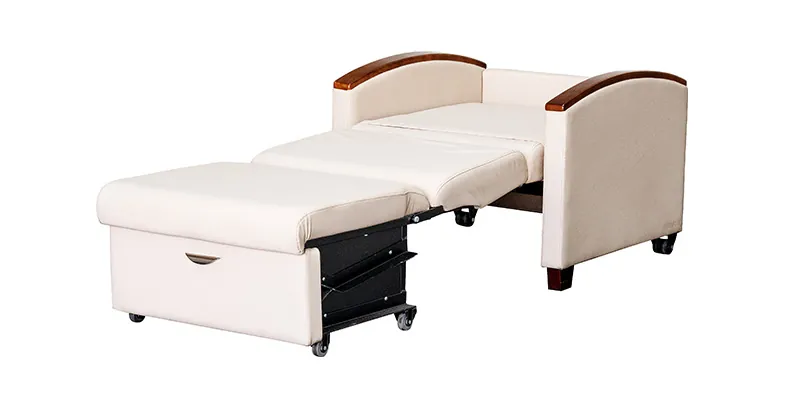
Every convertible seat uses a different mechanism to open into a mattress. Your room layout decides which style fits best.
| Chair type | Best for | Typical example |
|---|---|---|
| Pull-out sleeper chair | Long-term guest sleeping | Twin metal-frame sofa chair |
| Flip-out foam chair | Small kids and playrooms | Multi-fold floor foam cushion |
| Click-clack chair bed | Small home offices | Reclining backrest lounge seat |
| Convertible chaise lounger | Reading and daily naps | Deep padded daybed chair |
| Roll-out ottoman bed | Tight multi-use rooms | Fold-flat storage cube |
Pull-out sleeper chair
A pull-out chair contains a folded steel frame and a thin mattress hidden under the seat cushion. It suits adult guests who need actual back support across a full weekend.
- Keeps the mattress separate from the everyday seat cushion so it wears down slower.
- Uses standard twin sheets that fit neatly over the inner mattress.
- Provides a level sleeping surface supported by strong metal crossbars.
A standard 36-inch wide armchair opens out into a 75-inch long twin mattress when you remove the cushions and pull the internal frame forward.
Flip-out foam chair
A flip-out chair skips mechanical parts entirely and relies on high-density foam blocks joined with fabric hinges. It suits playrooms and college dorms because it weighs very little and costs less than steel-framed models.
- Contains no sharp metal joints, springs, or pinch points for small children.
- Moves between rooms easily because a single adult can carry it under one arm.
- Unfolds flat against the carpet in three seconds with no lifting effort.
A three-tiered foam cushion folds out flat into an unraised floor bed measuring four inches thick and 60 inches long.
Click-clack convertible chair
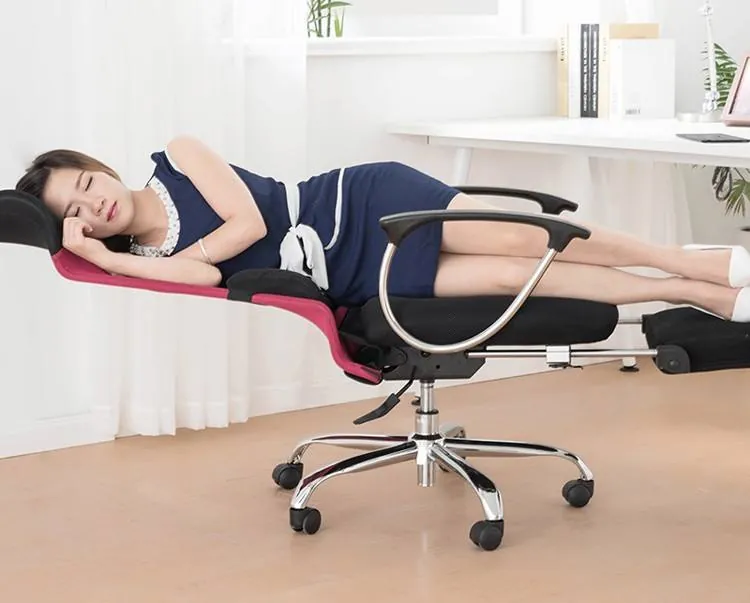
A click-clack chair features a ratcheting hinge on the backrest that drops flat to create a narrow sleeping surface. It suits occasional sleepers in home offices who need clean lines during work hours.
- Switches from an upright desk seat to a flat bed with one forward push.
- Sits up on elevated legs to keep floor dust away from the sleeper.
- Leaves open floor space underneath for slim under-bed storage containers.
The honest limit is bed length, which varies by manufacturer and can be verified directly on the box label or product dimension sheet before buying. This model needs about ten inches of wall clearance to let the backrest recline fully flat.
Roll-out ottoman sleeper
A roll-out ottoman looks like a regular square footrest until you unfold its top panels and extend the front legs. It suits narrow bedrooms that lack the wall clearance for a full armchair.
- Functions as a footrest or bench when folded down into a simple cube.
- Skips wide armrests to save about eight inches of horizontal room space.
- Wheels smoothly across wood floors on locking front casters.
A compact 30-inch storage cube opens forward to form an elevated single cot measuring 72 inches long.
Other convertible seating options
- Single futon lounger: Built with an exposed wooden frame and a thick cotton-batting cushion for people who like firm, low-to-the-ground bedding.
- Trundle armchair: Features a pull-out bottom drawer that rises level with the seat to form a flat bed for small apartments.
- Wall-hugger sleeper: Glides forward on hidden floor tracks so you can place it tight against bedroom drywall without scraping paint.
Choosing your chair bed
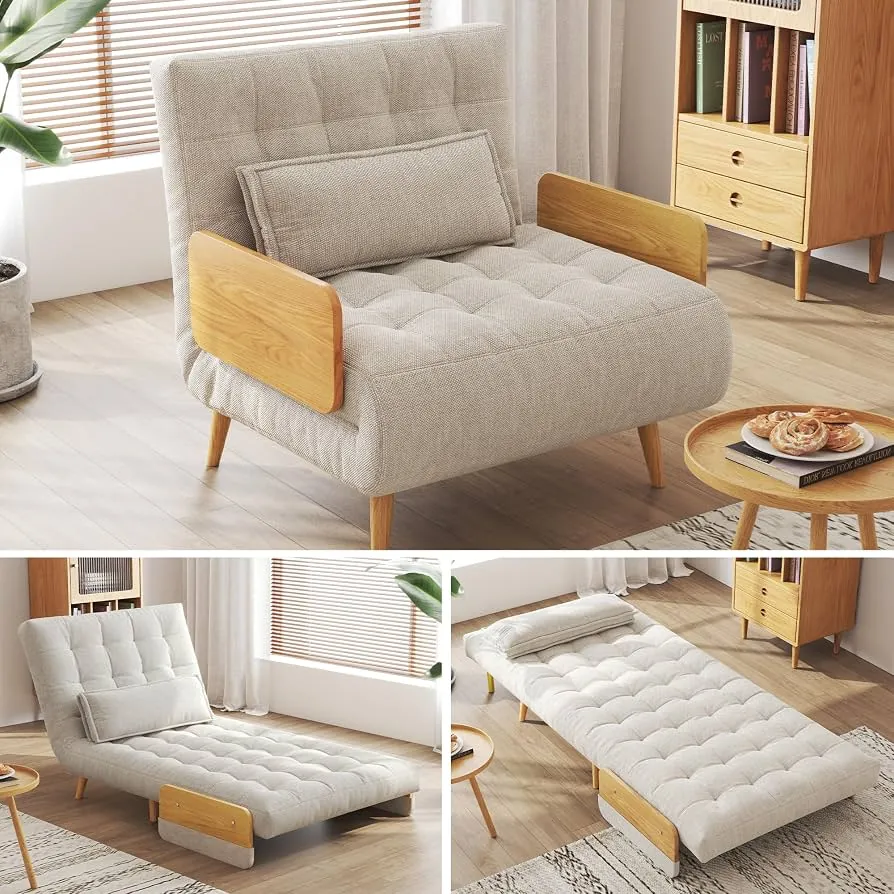
Floor clearance and usage frequency determine the best build. Choose a pull-out chair for adults or a foam block for kids.
Thick spring mattresses offer better sleep but are heavy, while light foam seats are portable but sit on cold floors. Avoid pulling frames by their fabric edges to prevent torn seams. Upholstered furniture must also meet fire codes, such as the CPSC standard for upholstery flammability, which limits flame spread in household cushions.
Frequently asked questions
Can adults sleep comfortably on a convertible chair?
Yes, healthy adults can sleep fine if the mattress uses high-density foam or steel coils. Thin foam versions under four inches thick will cause back aches by morning.
How much wall clearance does a click-clack chair need?
A click-clack chair needs eight to twelve inches of open clearance between the frame and the wall. Without this gap, the backrest strikes the drywall and fails to lock flat.
What size sheets fit a standard sleeper chair?
Standard twin sheets fit most pull-out chairs measuring between 36 and 39 inches wide. Flip-out models are often narrower, requiring fitted sheet straps or loose twin flat sheets instead.
How long does a foam flip-out chair bed last?
A foam chair bed typically lasts for a period of regular guest use before body impressions soften the foam core. Keep it away from damp floors to prevent mildew.
What happens if you exceed the seat weight limit?
Exceeding the stated weight limit bends the folding scissor joints and cracks the base frame. A bent hinge locks the mechanism, preventing the bed from folding back up.
Is it safe to fold the bed with sheets on?
No, folding the frame with thick sheets or duvets still attached will jam the steel hinges. The extra fabric thickness bends internal tension bars and voids your warranty.
Why does a sleeper chair feel firmer than a bed?
The cushions feel firm because the foam needs enough density to support sitting weight without bottoming out. Sitting pushes more weight onto a smaller area than lying down does.
What to do next
Measure your floor space from the back baseboard out to 80 inches into the room using a steel tape. A good fit leaves at least two feet of walking room around the extended mattress frame. If your measured floor space blocks a doorway, stop immediately and look at a smaller ottoman bed instead.